
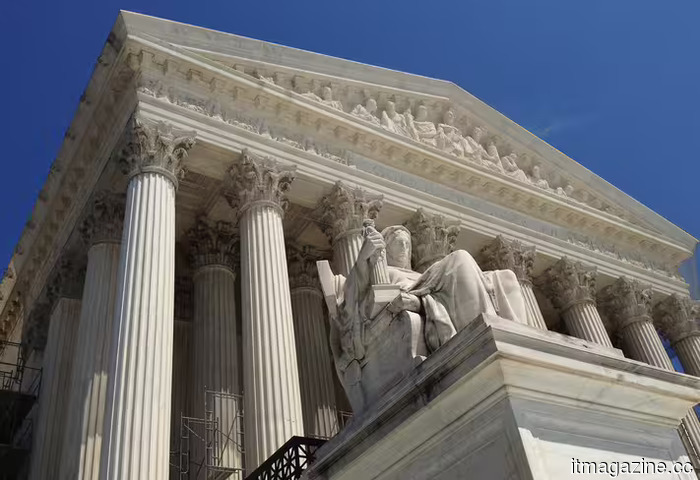
The Supreme Court will not interfere with Texas's age verification requirement for app stores.
Texas now requires Apple and Google to verify users' ages before they can download apps, as the Supreme Court has upheld this regulation. According to the Associated Press, the U.S. Supreme Court has declined to block a Texas law that mandates app stores to confirm the ages of users and obtain parental consent for minors who wish to download apps or make in-app purchases. Justice Samuel Alito dismissed the challenge in two brief orders, as reported by SCOTUSblog.
The App Store Accountability Act remains in effect while the legal battle continues in lower courts.
Details of the law
The onus of age verification falls on Apple and Google. When a user in Texas creates an account, the app store must categorize them into an age group: under 13, 13 to 15, 16 to 17, or adult. Users under 18 require a linked guardian's approval for downloads and purchases. Developers are also expected to fulfill their own responsibilities.
Texas is not the first state to implement such a law; Utah enacted a similar measure before others followed suit. Proponents advocate it as essential child protection, while critics express concerns about privacy risks. Effective age verification often necessitates sharing more personal information.
A First Amendment dispute
The challenge was brought by the student organization Students Engaged in Advancing Texas and the Computer and Communications Industry Association, which includes app stores among its members. They argue that the law restricts free speech by limiting access to legal content. A Fifth Circuit decision had already allowed the law to take effect, and the Supreme Court has opted not to intervene.
Implications of the ruling
This ruling points the U.S. toward a scenario where app stores, rather than websites, act as the gatekeepers for age verification online. This aligns with the preference of Apple and Google for a single point of verification over multiple checks. Similar initiatives are taking place internationally, as seen in the U.K. reforming app-store regulations and Australia experimenting with bans on social media for users under 16, while U.S. lawmakers continue advocating for online safety legislation for children.
Each of these initiatives presents a challenging question: how can one verify a child’s age online without infringing on the privacy of others? The same court has imposed new digital privacy constraints in different cases and has recently agreed to assess Apple's authority in managing its app store.
For now, in Texas, the age verification process is active.
Other articles
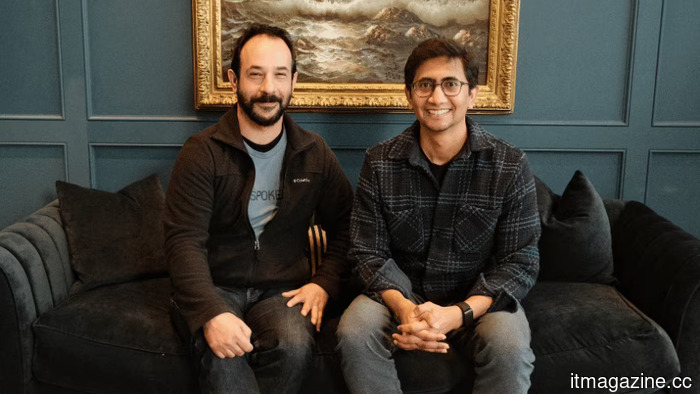 Bespoke Labs secures $40 million to develop dependable AI agents.
Bespoke Labs has secured $40 million from Wing VC, 8VC, and insiders from Anthropic, OpenAI, and Meta to develop the settings used for training and testing AI agents.
Bespoke Labs secures $40 million to develop dependable AI agents.
Bespoke Labs has secured $40 million from Wing VC, 8VC, and insiders from Anthropic, OpenAI, and Meta to develop the settings used for training and testing AI agents.
 DeepSeek is said to be developing its own AI chip to bypass US restrictions.
Reuters reports that DeepSeek is in the process of developing its own inference AI chip, which is purportedly being manufactured at SMIC. These allegations come from anonymous sources, so here is what can be substantiated.
DeepSeek is said to be developing its own AI chip to bypass US restrictions.
Reuters reports that DeepSeek is in the process of developing its own inference AI chip, which is purportedly being manufactured at SMIC. These allegations come from anonymous sources, so here is what can be substantiated.
 Nobel laureate Christopher Pissarides states that AI will not bring back a period of swift economic expansion.
Nobel laureate economist Christopher Pissarides states that AI will not restore rapid productivity growth, as up to 40% of jobs in the UK and US remain largely unaffected.
Nobel laureate Christopher Pissarides states that AI will not bring back a period of swift economic expansion.
Nobel laureate economist Christopher Pissarides states that AI will not restore rapid productivity growth, as up to 40% of jobs in the UK and US remain largely unaffected.
 AI data centers are increasing electricity costs at factories in America's Rust Belt.
Capacity charges have skyrocketed throughout the PJM grid, and manufacturers from Ohio to Pennsylvania are bearing the costs of the AI surge.
AI data centers are increasing electricity costs at factories in America's Rust Belt.
Capacity charges have skyrocketed throughout the PJM grid, and manufacturers from Ohio to Pennsylvania are bearing the costs of the AI surge.
 AI data centers are increasing electricity costs for factories in America's Rust Belt.
Capacity charges have surged throughout the PJM grid, resulting in manufacturers from Ohio to Pennsylvania footing the bill for the AI expansion.
AI data centers are increasing electricity costs for factories in America's Rust Belt.
Capacity charges have surged throughout the PJM grid, resulting in manufacturers from Ohio to Pennsylvania footing the bill for the AI expansion.
 Google supports the 'crisis actor' video in Australia.
A manager from Google informed an Australian investigation that a YouTube video labeling a Sydney shooting survivor as a 'crisis actor' complied with their guidelines and would remain online.
Google supports the 'crisis actor' video in Australia.
A manager from Google informed an Australian investigation that a YouTube video labeling a Sydney shooting survivor as a 'crisis actor' complied with their guidelines and would remain online.
The Supreme Court will not interfere with Texas's age verification requirement for app stores.
The US Supreme Court chose not to intervene against Texas’s law requiring Apple and Google to verify users' ages and obtain parental approval for minors’ app downloads.