
AI data centers are increasing electricity costs at factories in America's Rust Belt.
For many years, electricity prices at the Belden Brick Company in Sugarcreek, Ohio, remained relatively stable. However, last year they surged by 90%, largely due to the growing number of data centers in the area to support the artificial intelligence boom. The 141-year-old manufacturer, whose bricks are used in notable structures like the Alamo and the University of Notre Dame, identified the majority of the financial strain to a specific line item on its bill. Its monthly capacity charge increased from $1,600 to $12,000, reflecting the same pressures currently felt as households in Europe are urged to conserve energy and U.S. utilities prepare for $1.4 trillion in grid investments.
Belden Brick is among many manufacturers in the Midwest dealing with rising costs, based on a review of energy data by Reuters and discussions with nearly a dozen companies. The expense of power for factories, a crucial expenditure, is increasing at a faster pace than for most residential consumers and businesses.
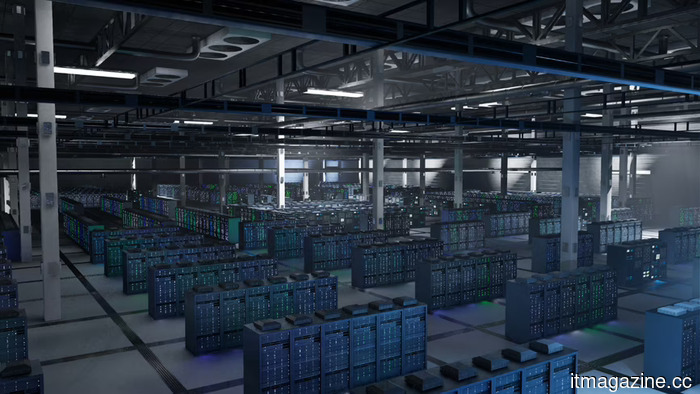
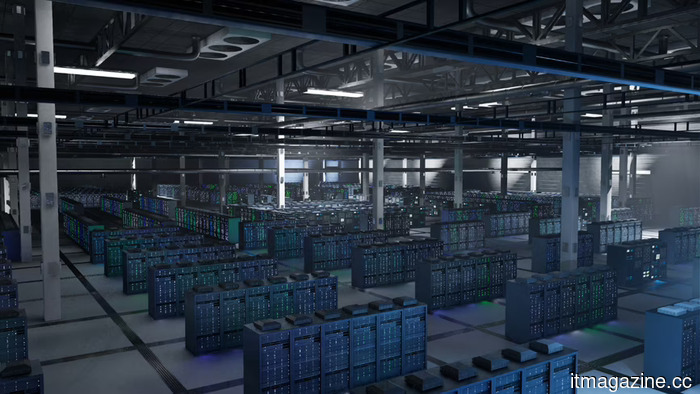
The pressure is particularly significant in the 13-state area managed by PJM Interconnection, which stretches from New Jersey to northern Illinois and down to Tennessee. A single data center can consume as much electricity as a medium-sized town, with five of the eight states identified as new data center hubs located within the Rust Belt, according to Synergy Research Group.
Capacity charges, which compensate generators for maintaining available power during peak periods, have skyrocketed. PJM’s price jumped from $28.92 per megawatt-day in 2024 to $329.17 now, marking an increase of approximately 1,038%, primarily driven by data centers, which accounted for about 40% of the record $16.4 billion in costs from its latest auction.
These charges are distributed unevenly. From December 2024, average industrial electricity costs rose by 31% in Pennsylvania and 26% in Ohio, in contrast to a national increase of 7%, according to Reuters' analysis of Energy Department data. Households in those states experienced more moderate hikes of 14% and 9%.
The supply of electricity is not keeping up. “Data centers can be constructed more rapidly than the generation capacity needed to support them,” stated PJM spokesperson Jeff Shields. Recently, the operator requested certain users to reduce their energy consumption to prevent rolling blackouts, as a heatwave drove peak demand to an all-time high.
Proponents of data centers argue that this surge is necessitating long-overdue upgrades to the grid. Aaron Tinjum of the Data Center Coalition also highlighted plant closures and transmission limitations as contributing factors.
For companies with narrow profit margins, even a slight increase in costs can be significant. Belden has increased brick prices by 4%, yet profits have still declined. "There will be some companies that are operating on the edge," remarked company president Brad Belden.
Others are finding ways to adapt. Plaskolite, a manufacturer of plastics, saw its annual capacity charges at its Pennsylvania and Ohio facilities rise to $1.2 million from $200,000 and is considering a direct natural gas supply. Tosoh SMD, an electronics materials company in Grove City, Ohio, is contemplating night shifts when electricity is less expensive.
Regulators are taking action, although not always in favor of manufacturers. Factories fall under the same rate classification as data centers, meaning regulations designed to protect households can also affect them.
The Federal Energy Regulatory Commission aims to require companies with onsite generation to pay transmission fees for that power, which manufacturers are contesting, and at least 10 states have their own proposed regulations regarding data centers. This situation resembles a recent House vote concerning who is responsible for the energy costs of AI data centers.
The implications are significant. Rising bills may jeopardize some manufacturing plants just as President Donald Trump advocates for domestic production. The White House has claimed he has met with technology firms signing a "ratepayer protection pledge” and ordered new power plants from PJM, funded by tech companies. Meanwhile, the industry is increasingly looking to nuclear energy, including an unprecedented series of Small Modular Reactor agreements.
“Manufacturers are not data centers,” stated Paul Cicio of the Industrial Energy Consumers of America. For now, the expansion that promises an industrial resurgence in America is quietly increasing the costs of operating its oldest factories.
Other articles
 BAE-supported Expeditions secures €197 million fund for European defense startups.
Warsaw’s Expeditions, supported by BAE Systems and the NATO Innovation Fund, has finalized a €197 million fund to finance Europe’s upcoming defense technology startups.
BAE-supported Expeditions secures €197 million fund for European defense startups.
Warsaw’s Expeditions, supported by BAE Systems and the NATO Innovation Fund, has finalized a €197 million fund to finance Europe’s upcoming defense technology startups.
 AI data centers are increasing electricity costs for factories in America's Rust Belt.
Capacity charges have increased significantly throughout the PJM grid, and manufacturers from Ohio to Pennsylvania are bearing the costs of the AI surge.
AI data centers are increasing electricity costs for factories in America's Rust Belt.
Capacity charges have increased significantly throughout the PJM grid, and manufacturers from Ohio to Pennsylvania are bearing the costs of the AI surge.
 Premium for 20 thousand. Dreame crossed a vacuum cleaner with a mop.
It seems that home appliance manufacturers have finally come to the conclusion that the modern person is lazy and wants to see a minimum number of devices in the house. Just as we got used to the idea that a robot vacuum cleaner is a person's friend, new vertical monsters are stepping onto the stage, trying to replace the mop, broom, and dustpan all at once.
Premium for 20 thousand. Dreame crossed a vacuum cleaner with a mop.
It seems that home appliance manufacturers have finally come to the conclusion that the modern person is lazy and wants to see a minimum number of devices in the house. Just as we got used to the idea that a robot vacuum cleaner is a person's friend, new vertical monsters are stepping onto the stage, trying to replace the mop, broom, and dustpan all at once.
 DeepSeek is said to be developing its own AI chip to bypass US restrictions.
Reuters reports that DeepSeek is in the process of developing its own inference AI chip, which is purportedly being manufactured at SMIC. These allegations come from anonymous sources, so here is what can be substantiated.
DeepSeek is said to be developing its own AI chip to bypass US restrictions.
Reuters reports that DeepSeek is in the process of developing its own inference AI chip, which is purportedly being manufactured at SMIC. These allegations come from anonymous sources, so here is what can be substantiated.
 Google supports the 'crisis actor' video in Australia.
A Google manager informed an Australian inquiry that a YouTube video discrediting a Sydney shooting survivor as a 'crisis actor' complied with their guidelines and would remain available.
Google supports the 'crisis actor' video in Australia.
A Google manager informed an Australian inquiry that a YouTube video discrediting a Sydney shooting survivor as a 'crisis actor' complied with their guidelines and would remain available.
 DeepSeek is said to be developing its own AI chip to circumvent US restrictions.
According to Reuters, DeepSeek is developing its own AI inference chip, which is reportedly being manufactured at SMIC. The information comes from anonymous sources, so here's what is substantiated.
DeepSeek is said to be developing its own AI chip to circumvent US restrictions.
According to Reuters, DeepSeek is developing its own AI inference chip, which is reportedly being manufactured at SMIC. The information comes from anonymous sources, so here's what is substantiated.
AI data centers are increasing electricity costs at factories in America's Rust Belt.
Capacity charges have skyrocketed throughout the PJM grid, and manufacturers from Ohio to Pennsylvania are bearing the costs of the AI surge.