
Broadcom has expanded its collaboration with Apple on chip development by securing a new custom-silicon agreement that extends through 2031.
Broadcom has prolonged its longstanding partnership with Apple until 2031 by signing new multi-year contracts to design and supply various custom chips for the iPhone manufacturer. This agreement strengthens a vital supplier connection in the consumer electronics sector, leading to a roughly 4% rise in Broadcom's shares, as investors interpret it as a commitment to years of guaranteed revenue. This development comes as the entire industry is seeking stable long-term chip supply.
Broadcom has been integrated into Apple’s products for years, even if its branding is seldom seen. The company provides radio-frequency components that enable iPhones to connect to cellular networks, in addition to Wi-Fi and Bluetooth chips and other networking elements, all crucial for mobile communication. The new agreements encompass custom ASIC products, which are application-specific chips designed for specific tasks, for several future iterations of Apple hardware.
The commercial significance of this partnership is mutual. Analysts suggest that Apple represents about 20% of Broadcom's annual income, positioning the iPhone maker as one of its largest clients and giving this extension substantial implications for Broadcom’s revenue predictability. Having a fifth of one's revenue secured until 2031 is a level of certainty that chip suppliers rarely experience.
For Apple, this strategy enhances supply-chain resilience. The company has focused in recent years on securing long-term agreements with its key chip suppliers to shield against shortages and geopolitical upheavals that have frequently shaken the electronics sector. Securing years' worth of Broadcom silicon helps streamline a supply chain that Apple is striving to make more reliable.
This agreement builds upon a foundation established in 2023 when both companies revealed a multibillion-dollar contract for Broadcom to develop and produce 5G radio-frequency components in the United States. That earlier arrangement was equally about where the chips would be manufactured as it was about their function, and the new agreements continue this early and long-term commitment strategy.
There’s also a more nuanced implication in the timing. Apple has aimed for years to design a greater portion of its own connectivity silicon to reduce its dependence on external suppliers, and a contract lasting until 2031 suggests that this transition is progressing slower than anticipated. Analysts interpret the duration of the contract as an indication that Apple's shift to in-house radio chips may take several more years to fully realize.
The context includes an industry that is rapidly developing custom silicon for various applications. From large tech companies creating their own AI accelerators to Google working on its next-generation TPU, major technology firms increasingly seek chips tailored to their specific requirements rather than generic components. Broadcom has established itself as a key partner in this endeavor, and its agreement with Apple exemplifies this successful business model.
Broadcom's custom-silicon sector has emerged as the more compelling aspect of its narrative. The company's efforts in designing specialized AI chips for substantial cloud clients have significantly contributed to its recent share price increase, with a primary client like Apple committing for another five years reinforcing the notion that Broadcom is a pivotal supplier to companies shaping the future of computing, rather than merely a legacy component provider.
Moreover, aligning with Broadcom affords Apple increased flexibility. Having a reliable partner secured until 2031 allows Apple to develop its own connectivity chips at its convenience without the risk of supply issues in the event that its efforts face delays, making this deal both a safeguard for Apple's internal aspirations and a sign of confidence in Broadcom.
However, the agreement does not alter the immediate product roadmap in any noticeable manner. The chips it pertains to will discreetly appear in future iPhones and other devices, facilitating connectivity tasks that most users overlook. The structural importance lies in the mutual decision of two companies that depend on each other to remain connected for another five years, and the market responded favorably to this news for both parties.
Other articles
 Klarna submits an application for a banking license in the United States.
Klarna has submitted an application to establish Klarna Bank USA, an FDIC-insured institution based in Utah, expanding its operations beyond BNPL and entering the competition for a US charter alongside Revolut and Bunq.
Klarna submits an application for a banking license in the United States.
Klarna has submitted an application to establish Klarna Bank USA, an FDIC-insured institution based in Utah, expanding its operations beyond BNPL and entering the competition for a US charter alongside Revolut and Bunq.
 EU called to take action following the impact of Pegasus on its spyware investigation.
Activists are calling on the European Commission to address Europe's spyware issue following the hacking of a PEGA committee member with Pegasus during their investigation.
EU called to take action following the impact of Pegasus on its spyware investigation.
Activists are calling on the European Commission to address Europe's spyware issue following the hacking of a PEGA committee member with Pegasus during their investigation.
 Skello secures €200M for a European HR consolidation.
Skello, a French company, has secured €200 million in funding, spearheaded by Bridgepoint, to enhance its AI HR software designed for frontline teams, while the founders have increased their ownership.
Skello secures €200M for a European HR consolidation.
Skello, a French company, has secured €200 million in funding, spearheaded by Bridgepoint, to enhance its AI HR software designed for frontline teams, while the founders have increased their ownership.
 How Claude assisted my 65-year-old father in finally moving away from his handwritten ledgers.
My dad has relied on handwritten ledgers for his small business for years. Here's how I utilized Claude to help him transition from paper to Excel, all without needing coding or technical skills.
How Claude assisted my 65-year-old father in finally moving away from his handwritten ledgers.
My dad has relied on handwritten ledgers for his small business for years. Here's how I utilized Claude to help him transition from paper to Excel, all without needing coding or technical skills.
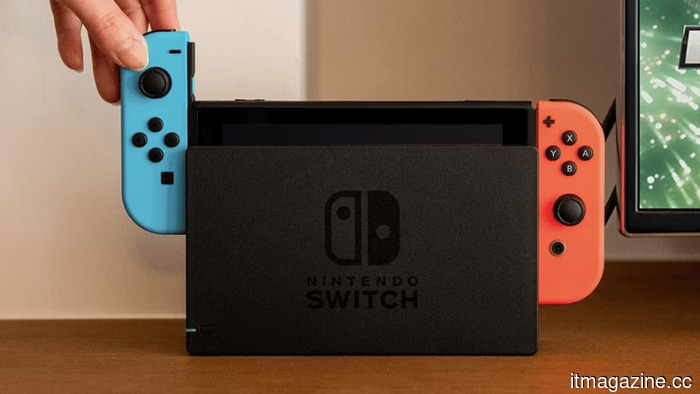 Nintendo halts sales of the original Switch in Europe.
Nintendo will cease sales of the original Switch in Europe starting February 2027 to comply with new EU regulations on replaceable batteries, which will also influence the design of the Switch 2.
Nintendo halts sales of the original Switch in Europe.
Nintendo will cease sales of the original Switch in Europe starting February 2027 to comply with new EU regulations on replaceable batteries, which will also influence the design of the Switch 2.
 Broadcom expands its partnership with Apple on chip development until 2031 with a new custom-silicon agreement.
Apple and Broadcom have extended their collaboration until 2031, entering into new agreements to create custom chips for various generations of Apple products.
Broadcom expands its partnership with Apple on chip development until 2031 with a new custom-silicon agreement.
Apple and Broadcom have extended their collaboration until 2031, entering into new agreements to create custom chips for various generations of Apple products.
Broadcom has expanded its collaboration with Apple on chip development by securing a new custom-silicon agreement that extends through 2031.
Apple and Broadcom have extended their collaboration until 2031, entering into new agreements to develop custom chips for various generations of Apple devices.