
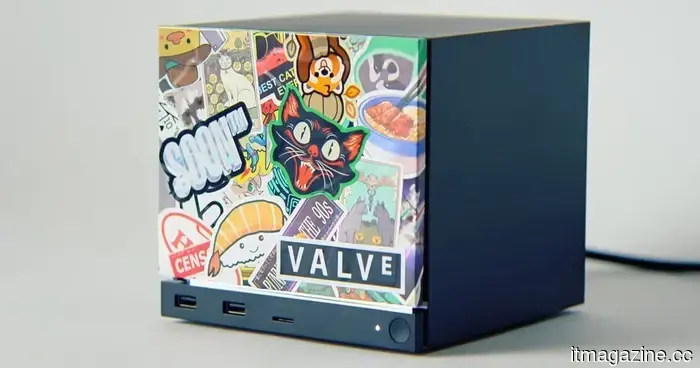
Valve has just released the design for its most impressive Steam Machine modification.
Valve is sharing the blueprint instead of the finalized product, and honestly, we're fine with that.
While the Steam Machine from Valve debuted at a higher-than-anticipated price due to the shortage of AI-driven chips, the company is still actively working to enhance the product's appeal to users.
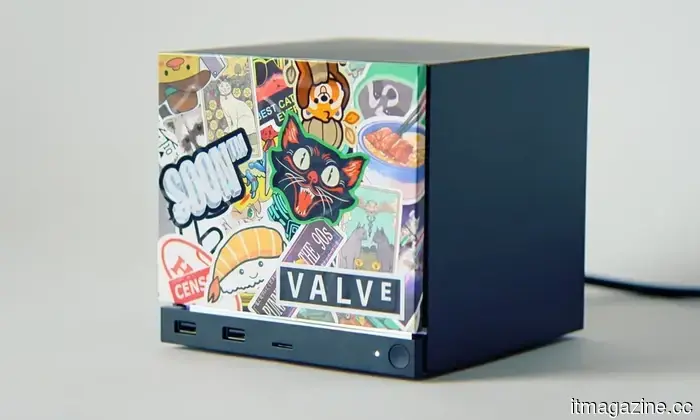
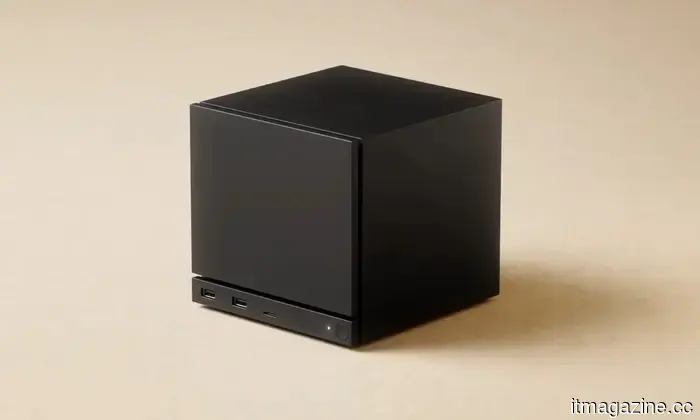
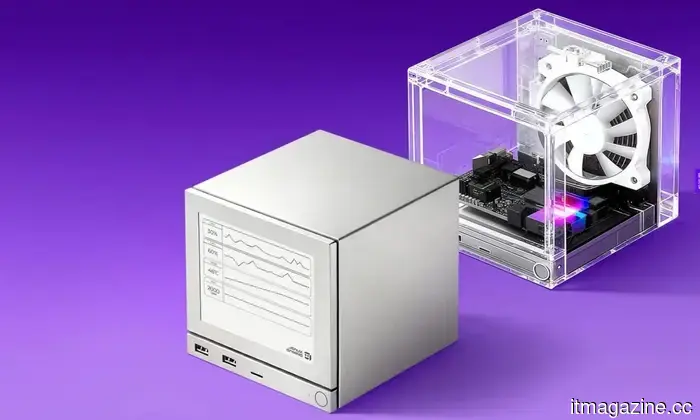
One of the standout features of the Steam Machine is its customizable front faceplate, and Valve has just improved upon it. The company has open-sourced its "Inkterface" project, which enables users to create their own e-ink faceplate for the Steam Machine.
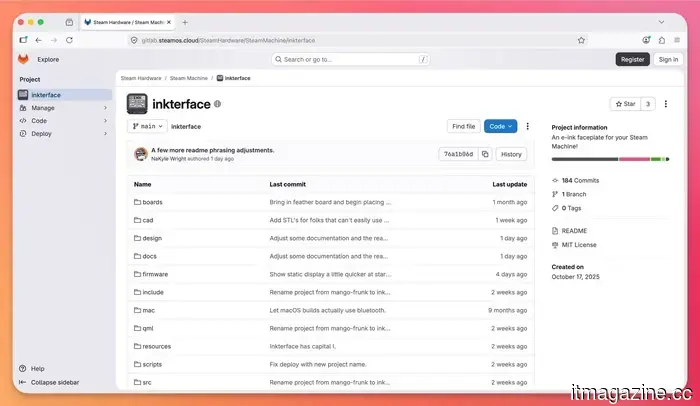
Valve has uploaded the complete bill of materials, 3D print files, and guidelines for those interested in constructing their own E-Ink faceplate for the Steam Machine. The "Inkterface" was first showcased during last year's initial Steam Hardware announcements.
If you possess technical expertise and have access to a 3D printer, you can create your own e-ink faceplate for the Steam Machine.
Valve has provided all the essentials, including 3D files and firmware.
They have uploaded the entire bill of materials, 3D print files, and assembly instructions on GitLab. The parts include an Adafruit ESP32 Feather board, an eInk Breakout Friend, a 5.83-inch eInk panel, M2.5 screws, and small magnets to attach it all to your Steam Machine.
Once you obtain the hardware, you'll simply need to 3D print the cover, assemble the components, and flash the firmware onto the ESP32 board. Valve has also released an assembly video to guide you through the process.
Valve has stated that an official companion app will eventually be available on Steam, although it is not yet operational. In the meantime, you can create your own AppImage using the instructions available on GitLab. Once paired with your Steam Machine via Bluetooth, the faceplate can display real-time hardware statistics, custom images, and more.
Why is this significant?
Valve previously indicated that the E-Ink faceplate would remain an internal prototype, disappointing many fans who had seen it display CPU and GPU temperatures at the unveiling event. Instead of keeping it under wraps, Valve opted to open-source the entire project for the community to construct on their own.
It's also a strategic move, as third-party creators like Jsaux were already hinting at their own E-Ink panels for the Steam Machine. Valve essentially got ahead by providing the plans for free. If you own a 3D printer, your Steam Machine could soon showcase live statistics right on its front.
Rachit is an experienced tech journalist with over a decade of expertise reporting on the consumer technology sector.
Brave’s new Container feature is a game-changer for anyone managing multiple accounts.
With this feature, you won't have to open multiple browsers.
Brave has introduced Containers to its desktop browser, allowing users to effortlessly keep different accounts, sessions, and browsing activities distinct. This feature is part of Brave 1.92 for Windows, macOS, and Linux, and is being rolled out in phases over the upcoming days. Containers have been a frequently requested feature, particularly for users who often switch between work, personal, developer, or creator accounts. Once activated, they enable users to open tabs in designated spaces where cookies and site storage are not shared across those containers.
Intel may revive older desktop CPUs as DDR5 prices become increasingly prohibitive.
Older Intel Core CPUs from the 10th to the 14th generation may receive a new lease on life.
Intel appears to be considering an unexpected response to the current memory shortage. According to Chinese source ITHome, citing ChannelGate, the company’s latest production plan involves restarting the production of 13th and 14th generation Core processors. This move is anticipated to boost supply across Intel’s 10th, 12th, 13th, and 14th generation CPU families, especially within mainland China. For DIY PC builders, the timing is crucial, as DDR5 memory prices have surged, making it challenging to justify newer platforms for those looking to build an affordable gaming PC.
Amazon aims to develop in-house chips for its Kindles, Fire TV, and Echo speakers.
Apple was the pioneer in this approach. Now, Amazon is following suit, starting with the production of 40 million chips annually and collaborating with a relatively unknown partner.
Apple's choice to design its own chips has transformed the consumer electronics sector. Amazon may be poised to make a similar decision, albeit nearly two decades later. Supply chain analyst Ming-Chi Kuo reports that Amazon intends to transition away from externally sourced processors for its consumer electronics lineup, marking what he refers to as the company's first significant processor procurement change in 20 years. This transition is projected to commence in 2027.




Other articles
 Amazon's competitor to Starlink plans to launch satellite internet services later this year.
Amazon intends to roll out its first Leo satellite internet service later this year, having successfully positioned nearly 400 satellites in orbit, which poses a significant challenge to SpaceX's Starlink.
Amazon's competitor to Starlink plans to launch satellite internet services later this year.
Amazon intends to roll out its first Leo satellite internet service later this year, having successfully positioned nearly 400 satellites in orbit, which poses a significant challenge to SpaceX's Starlink.
 Palmer Luckey's Erebor Bank is targeting a valuation of $8 billion.
Erebor, the bank supported by Thiel and established by Anduril's Palmer Luckey, is in discussions to raise funds at a valuation exceeding $8 billion, following a significant increase in deposits, which have nearly quadrupled to $4 billion.
Palmer Luckey's Erebor Bank is targeting a valuation of $8 billion.
Erebor, the bank supported by Thiel and established by Anduril's Palmer Luckey, is in discussions to raise funds at a valuation exceeding $8 billion, following a significant increase in deposits, which have nearly quadrupled to $4 billion.
 Brave's latest Container feature is a game-changer for those managing several accounts.
Brave now allows desktop users to open tabs in different Containers, enabling them to use multiple accounts of the same website simultaneously.
Brave's latest Container feature is a game-changer for those managing several accounts.
Brave now allows desktop users to open tabs in different Containers, enabling them to use multiple accounts of the same website simultaneously.
 Argentina's AI-driven companies still rely on human input.
The proposed legislation in Argentina for AI-operated 'non-human corporations' still mandates the presence of a human legal representative and a human promoter who holds unlimited liability.
LALIGA in Spain has blocked over 500,000 websites.
A study by OONI reveals that the anti-piracy IP blocks implemented by Spain's LALIGA affected over 500,000 legitimate websites, including those of Amnesty and Greenpeace, and disrupted traffic.
Argentina's AI-driven companies still rely on human input.
The proposed legislation in Argentina for AI-operated 'non-human corporations' still mandates the presence of a human legal representative and a human promoter who holds unlimited liability.
LALIGA in Spain has blocked over 500,000 websites.
A study by OONI reveals that the anti-piracy IP blocks implemented by Spain's LALIGA affected over 500,000 legitimate websites, including those of Amnesty and Greenpeace, and disrupted traffic.
 Anduril rocket engine detonates at testing location in Mississippi.
A solid rocket motor detonated at Anduril's testing facility in Mississippi. The $61 billion defense startup refers to it as a regular occurrence, but sources suggest that the timeline is falling behind.
Anduril rocket engine detonates at testing location in Mississippi.
A solid rocket motor detonated at Anduril's testing facility in Mississippi. The $61 billion defense startup refers to it as a regular occurrence, but sources suggest that the timeline is falling behind.
Valve has just released the design for its most impressive Steam Machine modification.
Valve has made its Inkterface E-Ink faceplate for the Steam Machine open-source, providing 3D files, a bill of materials (BOM), and firmware so that anyone can create one.