
Amazon's competitor to Starlink plans to launch satellite internet services later this year.
After deploying close to 400 satellites, Amazon has announced that its Leo broadband service is set to go live later this year.
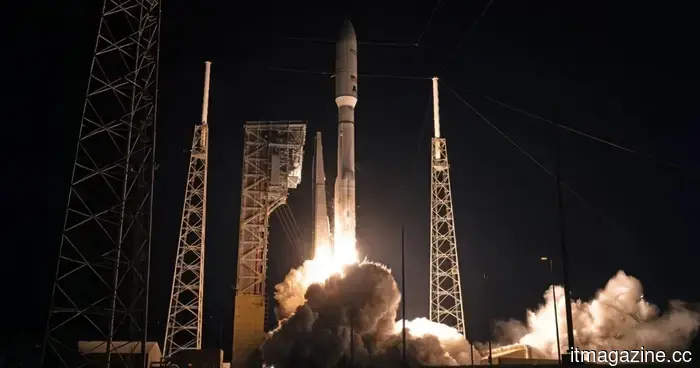
Amazon's long-anticipated response to SpaceX's Starlink is finally approaching launch. As reported exclusively by Reuters, the company plans to introduce its Leo satellite internet service later this year, following its recent rocket launch that added to the constellation, bringing the total to 394 satellites in orbit.
The components are aligning for Project Kuiper.
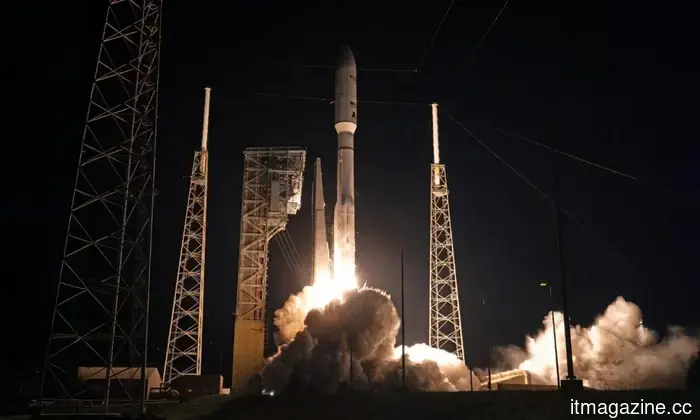
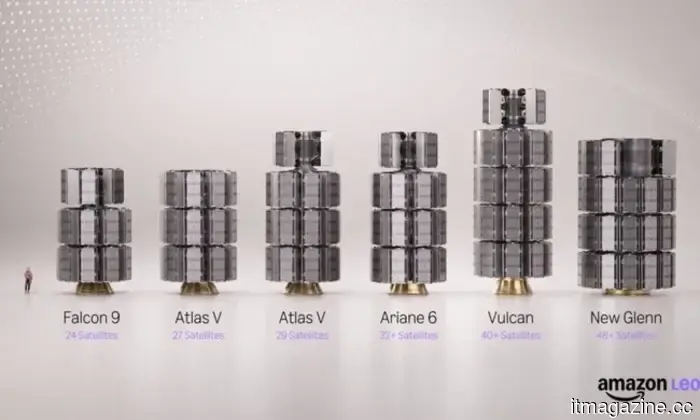
This milestone was achieved when Amazon's recent mission launched 29 additional satellites aboard a United Launch Alliance (ULA) Atlas V rocket. Chris Weber, vice president of Amazon Leo (previously known as Project Kuiper), noted that while there is still work to be done before the satellites can operate at their final positions, Amazon has successfully completed enough launches to start the initial rollout this year.
The last few launches have been crucial for @AmazonLeo – increasing the number of deployed satellites to over 390, which is sufficient to provide continuous service across initial latitudes. There is still much to accomplish, including raising all these new satellites to their designated altitudes, but we’ve achieved enough... pic.twitter.com/UZb404fXRq— Chris Weber (@Weber44Chris) July 2, 2026
Amazon has not disclosed which countries or regions will be served first. However, Reuters indicates that coverage is anticipated to begin near the Earth's north and south poles, progressively extending towards the equator as more satellites are integrated into the network. Ultimately, Leo aims to deploy over 3,200 satellites to deliver global broadband service.
A formidable new competitor to Starlink.
Unlike conventional satellite internet services that depend on a small number of satellites positioned at great heights above the Earth, Low Earth Orbit (LEO) constellations deploy thousands of satellites much closer to the planet. This setup significantly lessens latency and enhances speeds, making the technology far more suitable for various applications like streaming, video calls, online gaming, and remote work.
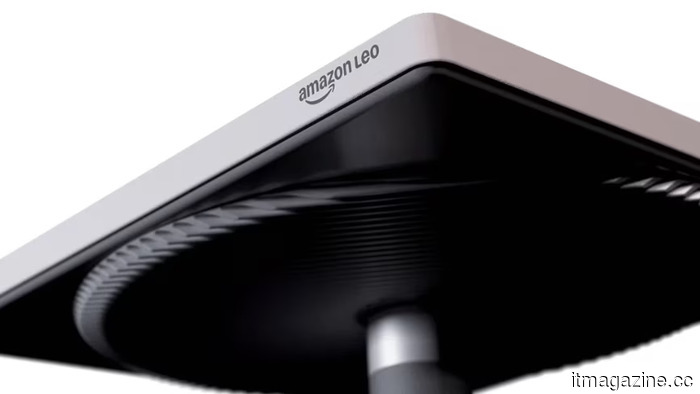
Amazon is keen to enter this market. Similar to Starlink, the company aims to provide internet service to households utilizing specialized user terminals, while also targeting businesses, government entities, and industries such as aviation. With Starlink currently operating around 10,000 satellites, Amazon has a considerable gap to close. However, the entry of another significant contender in the LEO internet arena could ultimately lead to increased competition, improved coverage, and potentially lower prices for consumers in the coming years.
Amazon's Starlink competitor has just reached a significant milestone, but don't anticipate flawless internet service immediately.
Amazon has made notable progress toward launching its eagerly awaited satellite internet service. After its latest rocket launch, the company has successfully deployed 396 Project Kuiper satellites in low-Earth orbit, which is enough to start providing continuous service in certain regions. This achievement keeps Amazon on track to meet its previously stated goal of initiating commercial service by mid-2026.




Other articles
 Brave’s new Container feature is a game-changer for anyone managing several accounts.
Brave now allows desktop users to open tabs in individual Containers, enabling different accounts of the same website to function simultaneously.
Spain's LALIGA has shut down over 500,000 websites.
A study by OONI reveals that the anti-piracy IP blocks from Spain's LALIGA have resulted in the shutdown of over 500,000 legitimate websites, including organizations like Amnesty and Greenpeace, as well as disrupted traffic.
Brave’s new Container feature is a game-changer for anyone managing several accounts.
Brave now allows desktop users to open tabs in individual Containers, enabling different accounts of the same website to function simultaneously.
Spain's LALIGA has shut down over 500,000 websites.
A study by OONI reveals that the anti-piracy IP blocks from Spain's LALIGA have resulted in the shutdown of over 500,000 legitimate websites, including organizations like Amnesty and Greenpeace, as well as disrupted traffic.
 AI agent conducts the initial complete ransomware attack.
Sysdig reports that it identified the first ransomware attack executed entirely by an AI agent. The attack breached a system, erased a database, and demanded a ransom that the victim is unable to pay.
AI agent conducts the initial complete ransomware attack.
Sysdig reports that it identified the first ransomware attack executed entirely by an AI agent. The attack breached a system, erased a database, and demanded a ransom that the victim is unable to pay.
 Brave's latest Container feature is a game-changer for those managing several accounts.
Brave now allows desktop users to open tabs in different Containers, enabling them to use multiple accounts of the same website simultaneously.
Brave's latest Container feature is a game-changer for those managing several accounts.
Brave now allows desktop users to open tabs in different Containers, enabling them to use multiple accounts of the same website simultaneously.
 Amazon Leo possesses a sufficient number of satellites to rival Starlink.
Amazon states that its recent launch has brought the total number of Amazon Leo satellites to approximately 396, which is sufficient to initiate commercial internet services this year, aiming to compete with Starlink.
Amazon Leo possesses a sufficient number of satellites to rival Starlink.
Amazon states that its recent launch has brought the total number of Amazon Leo satellites to approximately 396, which is sufficient to initiate commercial internet services this year, aiming to compete with Starlink.
 Crusoe is said to be in discussions to secure $3 billion, which would triple its valuation.
According to Bloomberg, AI infrastructure firm Crusoe is in discussions to secure approximately $3 billion in funding, which could elevate its valuation to around $30 billion.
Crusoe is said to be in discussions to secure $3 billion, which would triple its valuation.
According to Bloomberg, AI infrastructure firm Crusoe is in discussions to secure approximately $3 billion in funding, which could elevate its valuation to around $30 billion.
Amazon's competitor to Starlink plans to launch satellite internet services later this year.
Amazon intends to roll out its first Leo satellite internet service later this year, having successfully positioned nearly 400 satellites in orbit, which poses a significant challenge to SpaceX's Starlink.