
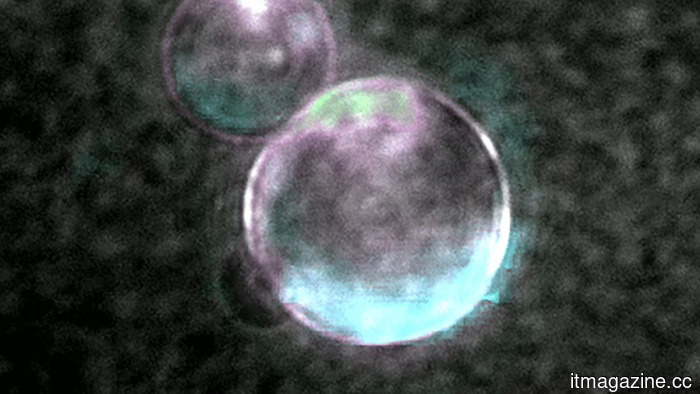
SpudCell: the pioneering synthetic cell that possesses a complete life cycle.
Scientists in Minnesota have created a synthetic cell from the ground up. This cell is capable of feeding, growing, and dividing, even competing with its own progeny. However, its creators do not assert that it is truly alive. This development blurs the distinction between chemistry and biology significantly.
The team at the University of Minnesota has named their invention SpudCell and claims it is the first synthetic cell to complete a full life cycle. Previous attempts involved reducing a living microbe to its essential components, whereas SpudCell was constructed entirely from scratch, using only known chemicals that are not alive. A preprint detailing this research is pending peer review.
The construction process is surprisingly straightforward. Each cell consists of a small lipid bubble encasing a genome with approximately 90,000 base pairs, divided across seven DNA strands. Inside, there are 36 purified enzymes that read this DNA and synthesize proteins.
The cell grows by merging with "feeder" bubbles that supply lipids and nutrients. It divides without the internal structure most cells use, splitting when proteins accumulate on its surface until the membrane ruptures.
The most notable outcome is the emergence of competition. The researchers introduced a genetic modification that caused the cells to produce more of a critical protein, leading to faster growth and more offspring. After five generations, the faster-growing variant outperformed the original, illustrating natural selection in a fully synthetic environment.
This work also challenges a long-standing assumption. Previous estimates suggested that the minimum genome for a living cell was around 113,000 base pairs, yet SpudCell operates with 90,000. Lead scientist Kate Adamala explained to The Register that the focus is not solely on the cell itself.
“SpudCell demonstrates what is achievable,” she stated. It illustrates that non-living molecules can come together to form something that exhibits life-like behavior.
Nonetheless, SpudCell is, according to Adamala, an “incredibly wimpy organism.” It lacks the ability to produce its own ribosomes, the machinery responsible for protein synthesis, necessitating constant external nourishment. Each lineage survives for only five to ten generations before the borrowed components fail. It divides roughly every 12 hours at a maintained temperature of 30°C, which is significantly slower than E. coli, and cannot survive outside the laboratory.
These limitations are crucial for the overarching question: is it alive? Most researchers, including the team, conclude that it is not. John Glass, a synthetic-cell scientist at the J. Craig Venter Institute, who was not involved in the study, remarked to the New York Times that being considered alive is not a strictly defined criterion, akin to the old saying about obscenity: you know it when you see it. Nevertheless, he assessed that SpudCell is much closer to being alive than any previous constructs in the bottom-up field.
The motivation behind creating a cell is the potential for control. Engineers can reprogram a cell once they understand each of its components. Adamala envisions a future “bioeconomy” where engineered cells produce medications, capture carbon, or create materials that traditional industrial chemistry cannot achieve. This ambition is part of the broader engineering-biology boom.
This boom encompasses advancements such as self-replicating living robots, stem-cell life forms, the first approved CRISPR therapy, and major AI endeavors in biology, such as Anthropic’s biotech acquisitions.
Such capability raises concerns. Currently, SpudCell cannot survive outside the lab, which biosecurity experts argue means it poses no imminent threat. However, the field is attentive. As one expert pointed out, the tools themselves are neutral. To prevent the science from becoming monopolized, Adamala’s team has established a nonprofit called Biotic, allowing other laboratories to replicate and build upon their work, including both the excitement and constraints involved.
The name SpudCell was initially "Potato Cell," reflecting Adamala's Polish heritage before it was shortened. The idea of a spud competing for survival could outdo the de-extinction efforts seen with projects like Colossal’s dire wolves.
Other articles
 Tesla introduces the six-seat Model Y Long Wheelbase in the United States.
Tesla has introduced the six-seat Model Y Long Wheelbase in the US and Puerto Rico, which includes an extended cabin, a range of 325 miles, and enhanced comfort features.
Tesla introduces the six-seat Model Y Long Wheelbase in the United States.
Tesla has introduced the six-seat Model Y Long Wheelbase in the US and Puerto Rico, which includes an extended cabin, a range of 325 miles, and enhanced comfort features.
 HCLTech secures a $1.14 billion contract with a European company, marking its largest deal since 2023.
India's HCLTech has secured a $1.14 billion digital transformation contract with an undisclosed Fortune Global 50 European company, marking its biggest victory since the Verizon deal in 2023.
HCLTech secures a $1.14 billion contract with a European company, marking its largest deal since 2023.
India's HCLTech has secured a $1.14 billion digital transformation contract with an undisclosed Fortune Global 50 European company, marking its biggest victory since the Verizon deal in 2023.
 An EU legislator who looked into the misuse of spyware was targeted and hacked using Pegasus.
According to Citizen Lab, Stelios Kouloglou, a former Member of the European Parliament who participated in the EU's spyware investigation, was targeted by NSO Group's Pegasus malware during the course of the inquiry.
An EU legislator who looked into the misuse of spyware was targeted and hacked using Pegasus.
According to Citizen Lab, Stelios Kouloglou, a former Member of the European Parliament who participated in the EU's spyware investigation, was targeted by NSO Group's Pegasus malware during the course of the inquiry.
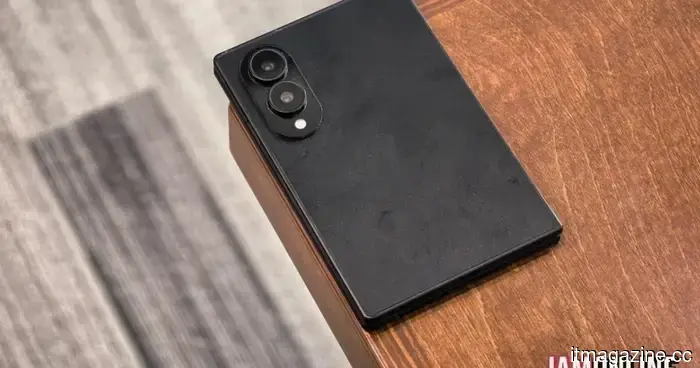 If these leaks are accurate, the Galaxy Z Fold 8 Wide might resolve the main issue with the Fold.
Recent leaks of the Galaxy Z Fold 8 reveal a graphite-colored dummy model, along with a comparison to the Galaxy S26 Ultra. These unveilings suggest that Samsung's upcoming foldable device may offer a more traditional smartphone experience when closed.
If these leaks are accurate, the Galaxy Z Fold 8 Wide might resolve the main issue with the Fold.
Recent leaks of the Galaxy Z Fold 8 reveal a graphite-colored dummy model, along with a comparison to the Galaxy S26 Ultra. These unveilings suggest that Samsung's upcoming foldable device may offer a more traditional smartphone experience when closed.
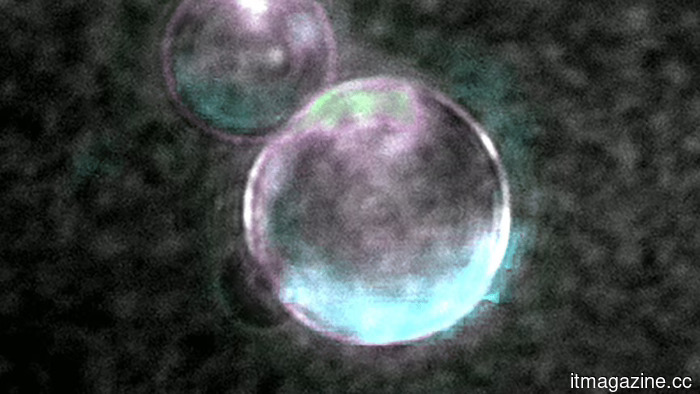 SpudCell: the inaugural synthetic cell capable of completing a full life cycle.
Scientists have created SpudCell, the first synthetic cell capable of growth, division, and evolution, all made from non-living chemicals. However, they still refrain from labeling it as alive.
SpudCell: the inaugural synthetic cell capable of completing a full life cycle.
Scientists have created SpudCell, the first synthetic cell capable of growth, division, and evolution, all made from non-living chemicals. However, they still refrain from labeling it as alive.
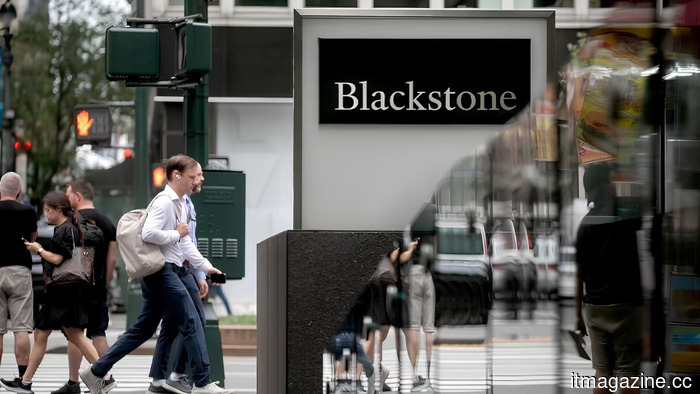 Blackstone’s QTS has canceled its Digital Gateway data center project in Virginia.
QTS has discontinued its last legal appeal, bringing to a close its plans for what would have been among the largest data center campuses globally in Prince William County.
Blackstone’s QTS has canceled its Digital Gateway data center project in Virginia.
QTS has discontinued its last legal appeal, bringing to a close its plans for what would have been among the largest data center campuses globally in Prince William County.
SpudCell: the pioneering synthetic cell that possesses a complete life cycle.
Researchers have created SpudCell, the first synthetic cell made entirely from non-living chemicals that can grow, divide, and evolve. However, they still refrain from labeling it as alive.