
Amazon's competitor to Starlink has just reached a significant milestone, but don't anticipate flawless internet service just now.
Amazon has made significant progress toward the launch of its expected satellite internet service. After its most recent rocket launch, the company has placed 396 Project Kuiper satellites into low-Earth orbit, which is sufficient to start providing continuous coverage in certain regions. This achievement keeps Amazon aligned with its previously stated objective of commencing commercial services by mid-2026.
Recent launches have been important for @AmazonLeo, allowing the deployment of over 390 satellites that now support continuous service within the initial latitudes. While there’s still much to be done, including elevating the new satellites to their designated altitudes, we have achieved a significant milestone… pic.twitter.com/UZb404fXRq— Chris Weber (@Weber44Chris) July 2, 2026
However, past experiences indicate that initial users may not experience the refined service currently provided by SpaceX’s Starlink. Like all satellite internet constellations, Project Kuiper will require additional years of launches to realize its full capabilities.
Amazon is now prepared to activate Project Kuiper
Chris Weber, Amazon’s Vice President overseeing the business and product strategy for Project Kuiper, has confirmed that the company now possess enough satellites in orbit to ensure continuous coverage across its initial service latitudes. This announcement follows Amazon's latest launch, which increased its satellite constellation to 396 active satellites. While this number is sufficient to start providing internet access in selected areas, it is just a small part of Amazon’s ultimate target of deploying 3,232 satellites in low-Earth orbit.
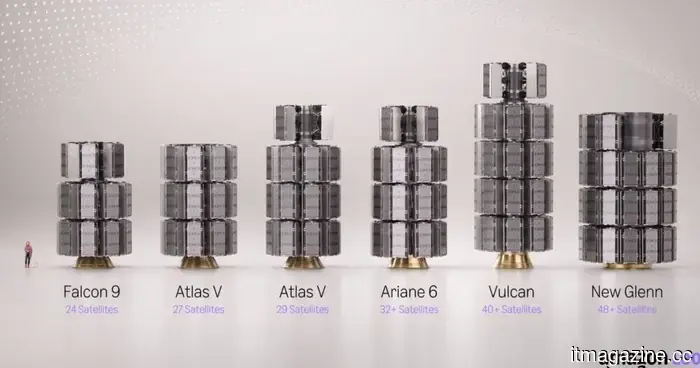
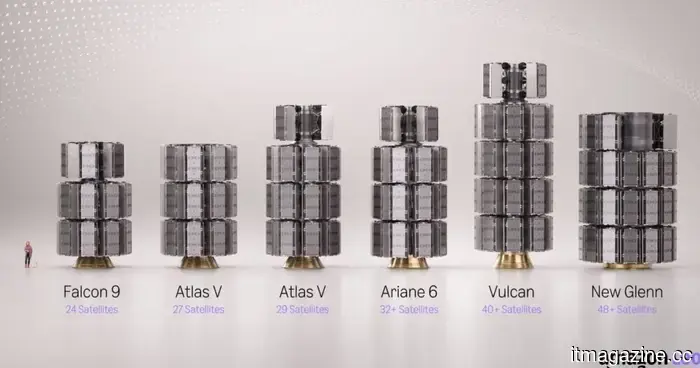
The ULA Atlas V rocket successfully lifted off with the first 27 Project Kuiper satellites.
Project Kuiper is Amazon’s solution to SpaceX’s Starlink, with the goal of delivering high-speed broadband connectivity to homes, businesses, and remote areas that lack traditional internet infrastructure. Amazon has consistently projected that commercial availability will kick off by mid-2026, and the latest satellite deployment indicates that the company is still on track despite previous launch delays.
Starlink demonstrates that patience is essential
Although Amazon has reached a crucial milestone, its network remains in the early stages compared to Starlink. When SpaceX launched its "Better Than Nothing Beta" in 2020, it had nearly 900 satellites in orbit. At that point, the service was limited to certain regions in the United States and Canada, with users frequently experiencing connection instability, issues with obstructions such as trees and buildings, download speeds between 50Mbps and 150Mbps, and latency ranging from 20ms to 40ms.
These issues gradually diminished as SpaceX continued its satellite launches. Currently, Starlink operates more than 10,000 satellites, providing services to customers in over 160 countries across residential, maritime, aviation, and business sectors. Depending on the plan and location, users can typically expect median download speeds around 200Mbps, upload speeds between 10Mbps and 40Mbps, and latency close to 25ms.
The United Launch Alliance (ULA) successfully deployed 29 Amazon Leo satellites into low Earth orbit.
Amazon aims to follow a similar path, but it has a longer journey ahead. The company must still launch thousands more satellites before Project Kuiper can achieve comparable capacity, coverage, and performance. One factor contributing to this challenge has been the availability of launches. Amazon has depended on various launch providers while also waiting for Blue Origin’s New Glenn rocket, supported by Amazon founder Jeff Bezos, to begin regular commercial operations.
If Amazon can keep up its launch pace, Project Kuiper could eventually become a serious large-scale competitor to Starlink. For now, however, this latest achievement should be seen as the start of the journey rather than the end goal.

Other articles
 The Chevy Silverado EV is considered one of the finest electric trucks ever made, so why aren’t more people purchasing it?
GM sold approximately 14,000 Silverado EVs last year, while the gasoline version sells ten times that amount every quarter, and a more affordable battery is still two years from being available.
The Chevy Silverado EV is considered one of the finest electric trucks ever made, so why aren’t more people purchasing it?
GM sold approximately 14,000 Silverado EVs last year, while the gasoline version sells ten times that amount every quarter, and a more affordable battery is still two years from being available.
 npm packages associated with North Korea are masquerading as Rollup polyfill tools to extract sensitive information from developers.
Malicious npm packages that imitate Rollup polyfill tools are stealing browser data, cryptocurrency wallets, and credentials for AI tools in a campaign linked to Lazarus.
npm packages associated with North Korea are masquerading as Rollup polyfill tools to extract sensitive information from developers.
Malicious npm packages that imitate Rollup polyfill tools are stealing browser data, cryptocurrency wallets, and credentials for AI tools in a campaign linked to Lazarus.
 The Chevy Silverado EV is among the finest electric trucks ever made, yet why are sales so low?
Last year, GM sold about 14,000 Silverado EVs, whereas the gasoline version sells ten times that amount each quarter, and a more affordable battery is still two years off.
The Chevy Silverado EV is among the finest electric trucks ever made, yet why are sales so low?
Last year, GM sold about 14,000 Silverado EVs, whereas the gasoline version sells ten times that amount each quarter, and a more affordable battery is still two years off.
 Amazon's competitor to Starlink has just achieved a significant milestone, but don’t anticipate flawless internet service immediately.
Amazon has placed enough Project Kuiper satellites in orbit to launch commercial internet services; however, the network still significantly lags behind Starlink.
Amazon's competitor to Starlink has just achieved a significant milestone, but don’t anticipate flawless internet service immediately.
Amazon has placed enough Project Kuiper satellites in orbit to launch commercial internet services; however, the network still significantly lags behind Starlink.
 This flower identification app transforms each stroll into a Pokémon Go experience for plants.
Flormie transforms flower identification into a more relaxed collection experience similar to Pokémon Go, encouraging iPhone users to scan, save, and appreciate real flowers on their daily walks, all without the typical chaos of social games.
This flower identification app transforms each stroll into a Pokémon Go experience for plants.
Flormie transforms flower identification into a more relaxed collection experience similar to Pokémon Go, encouraging iPhone users to scan, save, and appreciate real flowers on their daily walks, all without the typical chaos of social games.
 Why developing AI for educational institutions is more challenging than creating a chatbot: an overview of Smartschool's strategy for exam preparation.
Smartschool, an edtech startup from Palo Alto established by three Polish entrepreneurs, developed a proprietary mathematical reasoning engine that boasts a 99.6 percent accuracy rate for high school mathematics. This technology has been embraced by 30 school districts in the United States, including New York City and Boston.
Why developing AI for educational institutions is more challenging than creating a chatbot: an overview of Smartschool's strategy for exam preparation.
Smartschool, an edtech startup from Palo Alto established by three Polish entrepreneurs, developed a proprietary mathematical reasoning engine that boasts a 99.6 percent accuracy rate for high school mathematics. This technology has been embraced by 30 school districts in the United States, including New York City and Boston.
Amazon's competitor to Starlink has just reached a significant milestone, but don't anticipate flawless internet service just now.
Amazon has launched enough Project Kuiper satellites into orbit to initiate commercial internet service, although its network significantly lags behind Starlink.