
Amazon's competitor to Starlink has just achieved a significant milestone, but don’t anticipate flawless internet service immediately.
Amazon has made a substantial advancement towards the long-anticipated launch of its satellite internet service. After its latest rocket launch, the company has successfully placed 396 Project Kuiper satellites into low-Earth orbit, which is sufficient to initiate continuous service in select areas. This achievement keeps Amazon aligned with its previously set objective of starting commercial service by mid-2026.
Recent launches have been pivotal for @AmazonLeo, resulting in the deployment of over 390 satellites, enough to establish continuous service in initial latitudes. There remains considerable work ahead, including elevating these new satellites to their designated altitudes, but we have reached a significant milestone... pic.twitter.com/UZb404fXRq— Chris Weber (@Weber44Chris) July 2, 2026
However, historical trends indicate that early users may not receive the refined experience that SpaceX’s Starlink currently provides. Like any satellite internet constellation, Project Kuiper will require years of additional launches to realize its complete potential.
Amazon is now prepared to initiate Project Kuiper.
Chris Weber, the Vice President at Amazon responsible for Project Kuiper’s business and product strategy, affirmed that the company has sufficient satellites in orbit to ensure continuous coverage in its initial service latitudes. This announcement follows Amazon's recent launch, which expanded its constellation to 396 operational satellites. While this is enough to start providing internet access in chosen regions, it remains only a small portion of Amazon's long-term goal of deploying 3,232 satellites in low-Earth orbit.
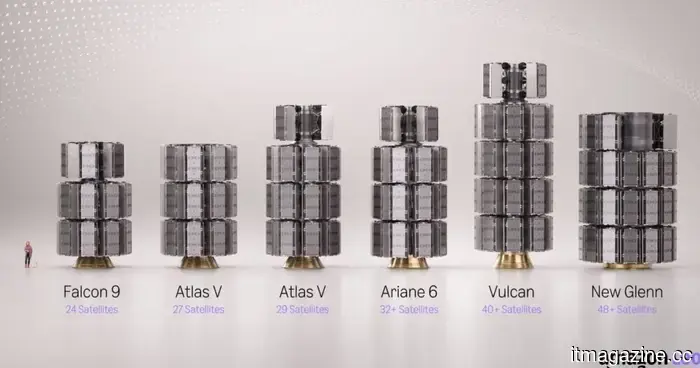
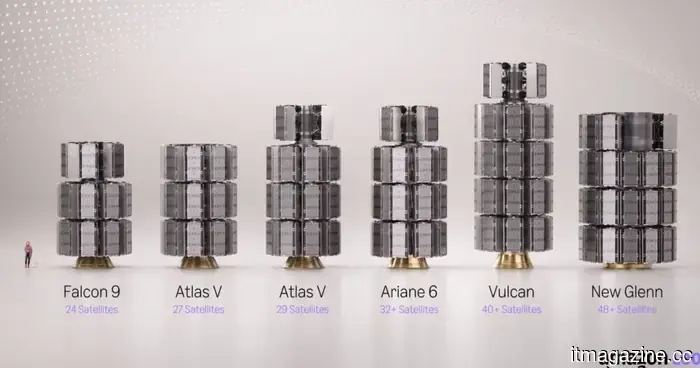
ULA Atlas V rocket launching with the first 27 Project Kuiper satellites. Amazon
Project Kuiper is Amazon's response to SpaceX's Starlink, designed to deliver high-speed broadband connectivity to households, businesses, and remote areas lacking traditional internet infrastructure. Amazon has reiterated that commercial availability is anticipated to commence in mid-2026, and this latest satellite deployment indicates that the company is on track despite previous launch delays.
Starlink illustrates the necessity for patience.
Even though Amazon has reached a key milestone, its network is still in the early stages compared to Starlink. When SpaceX launched its “Better Than Nothing Beta” in 2020, the company had nearly 900 satellites in orbit. At that time, service was restricted to parts of the United States and Canada, with users frequently experiencing connectivity issues, sensitivity to obstacles like trees and buildings, download speeds between 50Mbps and 150Mbps, and latency ranging from 20ms to 40ms.
These limitations diminished as SpaceX continued its launches. Presently, Starlink operates over 10,000 satellites, catering to customers across more than 160 countries in residential, maritime, aviation, and enterprise sectors. Depending on the subscription plan and location, users can typically expect median download speeds of around 200Mbps, upload speeds between 10Mbps and 40Mbps, and latency close to 25ms.
The United Launch Alliance (ULA) successfully placed 29 Amazon Leo satellites into low Earth orbit. Amazon
Amazon aspires to follow a similar path, but it still has a lengthy journey ahead. The company must deploy thousands more satellites before Project Kuiper can deliver comparable capacity, coverage, and performance. A part of this challenge has been the availability of launch opportunities. Amazon has utilized multiple launch providers while also awaiting Blue Origin’s New Glenn rocket, which is supported by Amazon founder Jeff Bezos, to begin regular commercial operations.
If Amazon can sustain its launch pace, Project Kuiper could eventually present itself as Starlink’s first significant large-scale competitor. For now, however, the latest milestone should be regarded as the onset of the journey rather than its conclusion.

Other articles
 The Chevy Silverado EV is among the finest electric trucks ever made, yet why are sales so low?
Last year, GM sold about 14,000 Silverado EVs, whereas the gasoline version sells ten times that amount each quarter, and a more affordable battery is still two years off.
The Chevy Silverado EV is among the finest electric trucks ever made, yet why are sales so low?
Last year, GM sold about 14,000 Silverado EVs, whereas the gasoline version sells ten times that amount each quarter, and a more affordable battery is still two years off.
 Tesla introduces the six-seat Model Y Long Wheelbase in the US, priced at $61,990.
Tesla's extended Model Y features a third row of seating, captain's chairs, and includes bundled Full Self-Driving (FSD) for $61,990, with deliveries commencing from Giga Texas in September.
Tesla introduces the six-seat Model Y Long Wheelbase in the US, priced at $61,990.
Tesla's extended Model Y features a third row of seating, captain's chairs, and includes bundled Full Self-Driving (FSD) for $61,990, with deliveries commencing from Giga Texas in September.
 Tesla introduces the six-seat Model Y Long Wheelbase in the US with a price tag of $61,990.
Tesla's elongated Model Y features a third row, captain's chairs, and includes bundled Full Self-Driving (FSD) for $61,990, with deliveries from Giga Texas set to begin in September.
Tesla introduces the six-seat Model Y Long Wheelbase in the US with a price tag of $61,990.
Tesla's elongated Model Y features a third row, captain's chairs, and includes bundled Full Self-Driving (FSD) for $61,990, with deliveries from Giga Texas set to begin in September.
 This plant identification app transforms each stroll into a Pokémon Go experience for flora.
Flormie transforms flower identification into a more tranquil collection experience similar to Pokémon Go, providing iPhone users with an opportunity to scan, save, and appreciate actual flowers during their daily strolls, all without the typical frenzy of social gaming.
This plant identification app transforms each stroll into a Pokémon Go experience for flora.
Flormie transforms flower identification into a more tranquil collection experience similar to Pokémon Go, providing iPhone users with an opportunity to scan, save, and appreciate actual flowers during their daily strolls, all without the typical frenzy of social gaming.
 This flower identification app transforms each stroll into a Pokémon Go experience for plants.
Flormie transforms flower identification into a more relaxed collection experience similar to Pokémon Go, encouraging iPhone users to scan, save, and appreciate real flowers on their daily walks, all without the typical chaos of social games.
This flower identification app transforms each stroll into a Pokémon Go experience for plants.
Flormie transforms flower identification into a more relaxed collection experience similar to Pokémon Go, encouraging iPhone users to scan, save, and appreciate real flowers on their daily walks, all without the typical chaos of social games.
 The Chevy Silverado EV is considered one of the finest electric trucks ever made, yet sales are lacking. Why is that?
GM sold about 14,000 Silverado EVs last year, while the gasoline version sells around ten times that amount each quarter, with a more affordable battery expected to be available in two years.
The Chevy Silverado EV is considered one of the finest electric trucks ever made, yet sales are lacking. Why is that?
GM sold about 14,000 Silverado EVs last year, while the gasoline version sells around ten times that amount each quarter, with a more affordable battery expected to be available in two years.
Amazon's competitor to Starlink has just achieved a significant milestone, but don’t anticipate flawless internet service immediately.
Amazon has placed enough Project Kuiper satellites in orbit to launch commercial internet services; however, the network still significantly lags behind Starlink.