
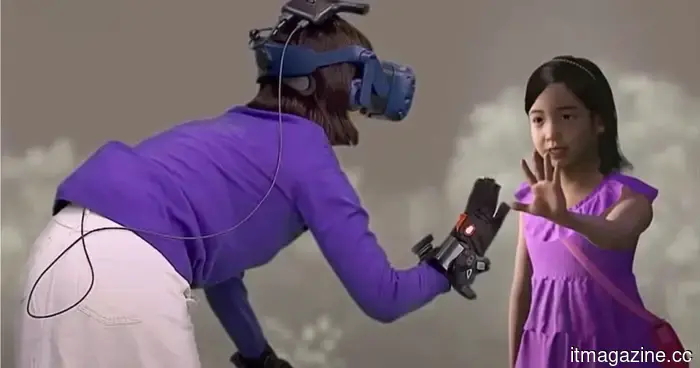
A study reveals that people are willing to converse with AI representations of deceased individuals as if they are reincarnations, which is quite unsettling.
The initial AI ghost study has been released, and the outcomes are as complex as anticipated.
A recent study conducted by the University of Colorado Boulder reveals something both striking and troubling: individuals find significant meaning in engaging with AI simulations of deceased loved ones, and most express a desire to experience it again.
The researchers coined the term "generative ghost," a clear reference to generative AI, though I would still describe it as eerie.
What did the study actually discover?
Doctoral candidate Jack Manning and associate professor Jed Brubaker enlisted 16 participants aged 22 to 50, all of whom had experienced the loss of someone close.
During individual Zoom meetings, a second researcher utilized a large language model (LLM) to construct a ghost of the deceased in real time based on information provided by the participant, essentially a form of AI-assisted reincarnation.
Each participant interacted with two versions of the generative ghost: one that communicated in the first person (“I remember going to the beach together”) and another that spoke in the third person (“She loved going to the beach with you,” where "you" refers to the participant).
Participants unanimously favored the first-person "reincarnation" over the third-person "representative," which I find particularly unsettling.
So who is developing these, and why is it significant?
Participants were forgiving of minor factual inaccuracies during their interactions. However, incorrect terms of endearment were a different story. For example, when a stepfather's ghost referred to his stepson as “champ,” a term he’d never used, the participant almost ended the session.
This research represents the first exploration of user experience concerning AI ghosts, published by the Association for Computing Machinery (via CU Boulder). Additionally, commercial services like Project December and HereAfterAI are already offering AI ghosts as a product.
Participants in the study raised a major concern. While everyone indicated they would use a ghost again, nearly all expressed worries that those grieving their loved ones might become reliant on them. The lab has already begun a follow-up study with mental health professionals to evaluate the psychological benefits and potential risks associated with generative ghost interactions.
For over five years, Shikhar has been adept at clarifying advancements in consumer technology and sharing them…
Apple’s M6 chip isn’t even available yet, but you can expect M7 Macs to appear in early 2027.
Apple is reportedly accelerating its upcoming silicon timeline, even before the M6's launch.
While the M6 chip is anticipated to be unveiled later this year, Apple may be prepping for the following generation already. According to a recent report by Mark Gurman for Bloomberg, the company plans to introduce its first M7 devices as early as the first half of 2027, indicating a much quicker update to their silicon than previously thought.
M7 could launch alongside new Macs and iPads.
The entry-level MacBook Pro is set for a design refresh in 2027, and it’s high time for one.
After five years with the same chassis, both tiers of the MacBook Pro are slated for a makeover simultaneously.
Bloomberg reports that Apple has a new MacBook Pro scheduled for release early next year, including a 14-inch model in the first half of 2027. The most surprising element will be an entirely new design concept described as "a revamped entry-level MacBook Pro, code-named K104."
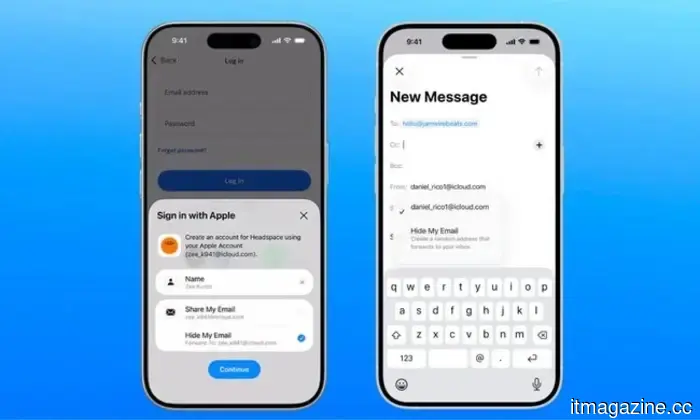
Apple’s Hide My Email feature has an unresolved bug that exposes email addresses.
This vulnerability has proven 100% exploitable in limited tests, known since June 2025, and remains unaddressed as of now.
Apple has marketed Hide My Email to keep users' real email addresses private, but it possesses a flaw that does the opposite. Alarmingly, the company has been aware of this issue for a year. Hide My Email, part of Apple’s paid iCloud+ service, allows users to create anonymous email addresses for signing up on websites, ensuring their personal or work email remains free of promotional emails and spam.






Other articles
 SpaceX, led by Elon Musk, might be developing an AI gadget that is thinner than the iPhone.
Se informa que SpaceX de Elon Musk ha presentado a los inversores un prototipo temprano de un dispositivo de IA similar a un teléfono, aunque no está claro si se convertirá en un producto.
SpaceX, led by Elon Musk, might be developing an AI gadget that is thinner than the iPhone.
Se informa que SpaceX de Elon Musk ha presentado a los inversores un prototipo temprano de un dispositivo de IA similar a un teléfono, aunque no está claro si se convertirá en un producto.
 SwitchBot's latest outdoor security camera employs AI to provide descriptions of activities happening around your home.
The new Outdoor Pan/Tilt Cam 3K captures video in 3K resolution, follows motion, summarizes events using AI, and assists users in locating footage through straightforward prompts.
SwitchBot's latest outdoor security camera employs AI to provide descriptions of activities happening around your home.
The new Outdoor Pan/Tilt Cam 3K captures video in 3K resolution, follows motion, summarizes events using AI, and assists users in locating footage through straightforward prompts.
 SpaceX, led by Elon Musk, may be developing an AI device that is more compact than the iPhone.
Se ha informado que SpaceX, la compañía de Elon Musk, ha presentado a los inversores un prototipo inicial de un dispositivo de inteligencia artificial similar a un teléfono, aunque no está claro si se convertirá en un producto.
SpaceX, led by Elon Musk, may be developing an AI device that is more compact than the iPhone.
Se ha informado que SpaceX, la compañía de Elon Musk, ha presentado a los inversores un prototipo inicial de un dispositivo de inteligencia artificial similar a un teléfono, aunque no está claro si se convertirá en un producto.
 SwitchBot’s latest outdoor security camera employs AI technology to provide descriptions of the activity occurring around your residence.
The new Outdoor Pan/Tilt Cam 3K captures video in 3K resolution, follows movement, uses AI to summarize events, and assists users in locating footage through straightforward prompts.
SwitchBot’s latest outdoor security camera employs AI technology to provide descriptions of the activity occurring around your residence.
The new Outdoor Pan/Tilt Cam 3K captures video in 3K resolution, follows movement, uses AI to summarize events, and assists users in locating footage through straightforward prompts.
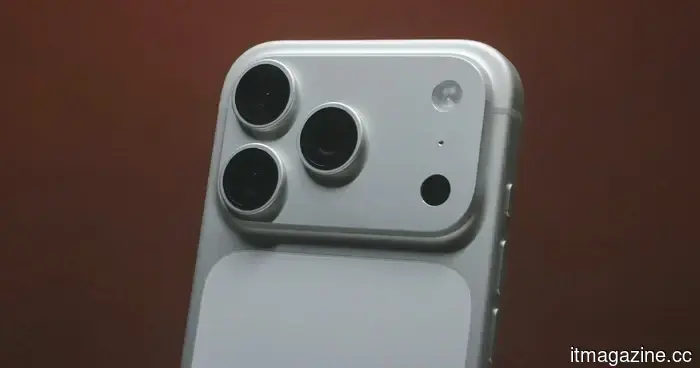 The iPhone 18 Pro may be released in these three colors, and black is still not among them.
According to the latest leak, the only colors for the iPhone 18 Pro could be Dark Cherry, Light Blue, and Silver-Gray, with black once again missing from the selection.
The iPhone 18 Pro may be released in these three colors, and black is still not among them.
According to the latest leak, the only colors for the iPhone 18 Pro could be Dark Cherry, Light Blue, and Silver-Gray, with black once again missing from the selection.
 The iPhone 18 Pro may be released in these three colors, and black still isn’t among them.
According to the latest leak, the only colors for the iPhone 18 Pro may be Dark Cherry, Light Blue, and Silver-Gray, with black once again missing from the options.
The iPhone 18 Pro may be released in these three colors, and black still isn’t among them.
According to the latest leak, the only colors for the iPhone 18 Pro may be Dark Cherry, Light Blue, and Silver-Gray, with black once again missing from the options.
A study reveals that people are willing to converse with AI representations of deceased individuals as if they are reincarnations, which is quite unsettling.
The initial AI ghost study at CU Boulder revealed that all participants preferred first-person simulations of deceased individuals, with each one expressing a desire to return.