
South Korea has accused Google of misusing its power in the Android app store in relation to ‘Project Hug.’
South Korea’s competition authority has accused Google of misusing its dominant status in the Android app market and indicated it will suggest corrective actions and impose a financial penalty. The Korea Fair Trade Commission (KFTC) stated on Wednesday that its Market Surveillance Bureau identified conduct linked to 14.16 trillion won, approximately $9.1 billion, in relevant revenue, as reported by Reuters.
The crux of the case revolves around a program Google referred to as "Project Hug" internally, officially known as the Games or Google Velocity Program. From July 2019 to March 2026, the KFTC claims that Google provided financial assistance to game developers contingent on services like Cloud, Ads, and YouTube, with the stipulation that they launch titles on Play under terms at least as favorable as those of any competing store.
The contracts were designed to incentivize loyalty; support increased as developers earned more revenue through Play, which according to the regulator, strengthened the incentive to favor Google’s marketplace over rivals. The duration of the program spans nearly seven years, concluding only in March, contributing to the substantial affected revenue figure and the corresponding potential penalty.
Korean media outlets report that the alleged coercion included some of the country’s largest studios. The Korea JoongAng Daily highlighted NCSoft and Netmarble as developers pressured to remain on Play and accept higher commissions.
The financial risk presents a significant figure; under Korean fair trade law, abuses of market dominance could incur penalties up to 6% of the affected revenue. For the $9.1 billion figure, this maximum penalty could reach approximately 849.6 billion won, or about $547 million, though any final amount would be determined only if the full commission supports the findings.
This distinction is crucial because the bureau’s report is merely an accusation and not a judgment, allowing Google the opportunity to contest it before the commission makes a ruling. Google has eight weeks from receipt of the examiner’s report to submit a written response and review the evidence, according to the KFTC. The bureau noted it would bring together the full commission and issue a final ruling after ensuring due-process rights are respected.
The case rekindles a conflict Korea has previously engaged in with Google. In 2023, the KFTC fined the company around $32 million for inhibiting developers from releasing games on a rival platform. Korea has also legislated in areas where enforcement was lagging, passing a significant law mandating that Google and Apple allow alternative in-app payment options. Regulators have since cautioned that Google’s billing modifications might still violate this law.
The push for reform in Korea remains strong, with lawmakers seeking to curtail the commission dominance held by both app stores. The scrutiny is not limited to Seoul, as Google is involved in antitrust disputes across multiple continents, with the Play Store's business model consistently under fire, including a monopoly case from US states concerning the Play Store.
What distinguishes the Korean case is its emphasis on payments to developers rather than charges levied on them. The rationale is that these incentives, rather than just the commissions, can entrench a market's position. Most scrutiny of app stores thus far has concentrated on the percentage they keep at checkout. Korea is exploring whether the funds flowing from platform to developer, laden with conditions, can be considered anticompetitive.
If the commission agrees, it would expand how regulators interpret loyalty agreements among platforms, with potential ramifications extending beyond the gaming sector. Google has not accepted this viewpoint and will present its case to the KFTC; a final decision and any imposed fine remain months away.
The gaming industry holds significant importance in Korea, where domestic studios rank among the world’s largest and Play serves as the primary storefront on most devices. A ruling against Google would be pivotal for the country’s most lucrative app category. For developers in Korea, the outcome will determine whether directing revenue to Play will remain a strategic choice or transform into a disadvantage.
Other articles
 Visa, Mastercard, and 140 companies have introduced Open USD, a stablecoin designed to compete with Circle.
A consortium of 140 members, featuring Visa, Mastercard, Stripe, and Coinbase, has introduced Open USD, a stablecoin with shared governance that targets Circle and Tether.
Visa, Mastercard, and 140 companies have introduced Open USD, a stablecoin designed to compete with Circle.
A consortium of 140 members, featuring Visa, Mastercard, Stripe, and Coinbase, has introduced Open USD, a stablecoin with shared governance that targets Circle and Tether.
 Bending Spoons prices its IPO above the expected range to generate $1.68 billion prior to its debut on Nasdaq.
Bending Spoons, the owner of Vimeo, along with its investors, raised $1.68 billion by pricing shares at $29 above the expected range, marking one of the largest listings in Europe this year.
Bending Spoons prices its IPO above the expected range to generate $1.68 billion prior to its debut on Nasdaq.
Bending Spoons, the owner of Vimeo, along with its investors, raised $1.68 billion by pricing shares at $29 above the expected range, marking one of the largest listings in Europe this year.
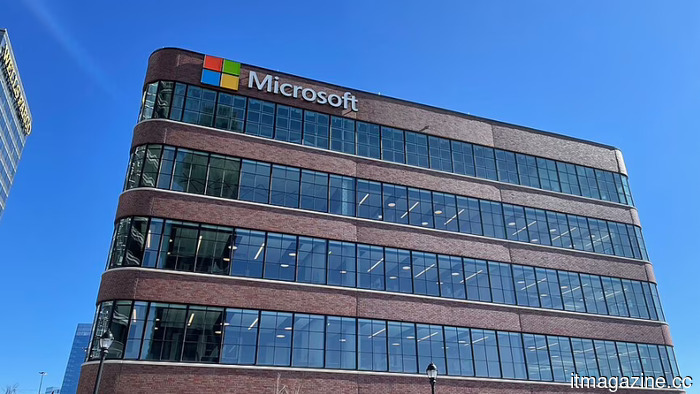 Microsoft intends to reduce its workforce by less than 2.5% in a new wave of layoffs.
Microsoft is set to reduce its workforce by less than 2.5% as early as next week, affecting sales, consulting, and Xbox, according to Business Insider.
Microsoft intends to reduce its workforce by less than 2.5% in a new wave of layoffs.
Microsoft is set to reduce its workforce by less than 2.5% as early as next week, affecting sales, consulting, and Xbox, according to Business Insider.
 Bending Spoons sets IPO price above the expected range to secure $1.68 billion before its debut on Nasdaq.
Bending Spoons, the owner of Vimeo, along with its investors, secured $1.68 billion by pricing shares at $29 above the initial range, marking one of the largest listings in Europe this year.
Bending Spoons sets IPO price above the expected range to secure $1.68 billion before its debut on Nasdaq.
Bending Spoons, the owner of Vimeo, along with its investors, secured $1.68 billion by pricing shares at $29 above the initial range, marking one of the largest listings in Europe this year.
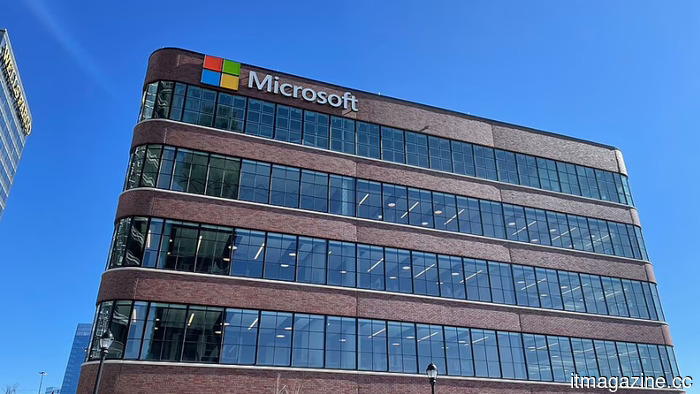 Microsoft is set to reduce its workforce by less than 2.5% in a new wave of layoffs.
According to Business Insider, Microsoft is set to lay off less than 2.5% of its workforce as early as next week, affecting its sales, consulting, and Xbox divisions.
Microsoft is set to reduce its workforce by less than 2.5% in a new wave of layoffs.
According to Business Insider, Microsoft is set to lay off less than 2.5% of its workforce as early as next week, affecting its sales, consulting, and Xbox divisions.
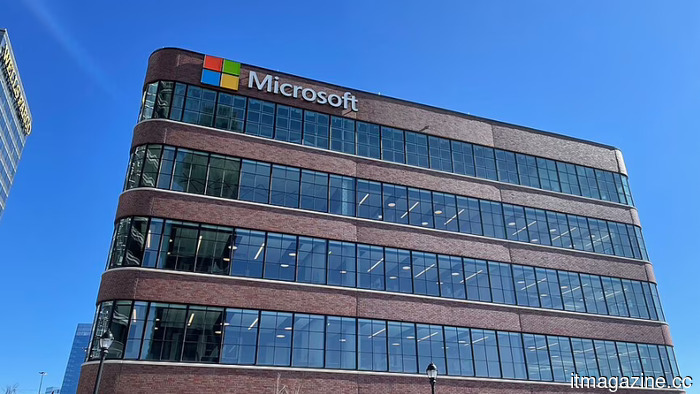 Microsoft intends to reduce its workforce by less than 2.5% in a new wave of layoffs.
According to Business Insider, Microsoft is set to reduce its workforce by less than 2.5% as early as next week, affecting its sales, consulting, and Xbox divisions.
Microsoft intends to reduce its workforce by less than 2.5% in a new wave of layoffs.
According to Business Insider, Microsoft is set to reduce its workforce by less than 2.5% as early as next week, affecting its sales, consulting, and Xbox divisions.
South Korea has accused Google of misusing its power in the Android app store in relation to ‘Project Hug.’
Korea's antitrust authority alleges that Google pressured game developers to prioritize its Play store, indicating a potential fine of approximately $547 million.