
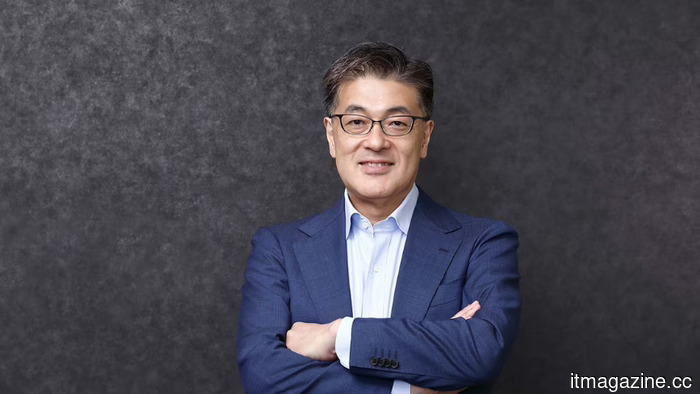
Panasonic is set to localize battery production for data centers in the US, according to the CEO.
The Japanese company intends to start mass-producing data-centre battery cells in Kansas by fiscal 2028, reallocating a significant portion of its AI infrastructure investment toward energy storage. Manufacturers that previously focused on electric car batteries are now identifying a new and demanding clientele: the data centre sector.
Panasonic aims to establish local production of data-centre battery cells in the United States, as stated by its energy unit's CEO. The company plans to manufacture these cells in Kansas instead of importing them, as it pursues a market that barely existed a few years prior. The mass production at the Kansas facility is projected to commence in the financial year ending in March 2029, which Panasonic accounts for as fiscal 2028.
This plant enables Panasonic to provide a domestic supply to American data-centre operators directly, offering a significant advantage, especially at a time when tariffs, supply chain concerns, and the rapid expansion of AI have made domestic manufacturing a competitive asset rather than merely a cost to minimize.
The financial backing for this initiative is considerable. Panasonic is allocating approximately 350 billion yen, around $2.18 billion, from a previously announced 500 billion yen AI infrastructure investment aimed for fiscal 2026 to 2028 to its Energy unit, which also supplies Tesla; the remainder of 150 billion yen will go to its Industry segment.
This allocation indicates the company's perception of growth opportunities; the battery sector that emerged with electric vehicles is being repurposed to support server facilities. Panasonic Energy’s CEO Kazuo Tadanobu described the unit's 950 billion yen sales objective for data-centre related energy storage in fiscal 2028 as a "minimum commitment," with ambitions to exceed 1 trillion yen in sales. For a target to be regarded as a baseline rather than an ambition signals the company's expectation of swift growth in demand.
The rationale behind this is tied to the operation of modern data centres. These facilities, which train and serve AI models, place significant and unpredictable demands on power, and cannot afford even minor interruptions. This necessity makes large-scale battery storage critical for providing a consistent supply, bridging power outages, and balancing the demands of the grid with the immediate needs of the server racks. As AI computing expands, the associated storage must expand accordingly.
The specifications of the battery cells required by these facilities differ from those used in vehicles, as they are designed for grid-like duty cycles, rather than the weight and range limitations of cars. This distinction necessitates that an established battery manufacturer develop specialized production capabilities rather than simply adapting existing lines.
This increased demand is already putting pressure on surrounding systems. The expansion of data centres has pushed electricity grids to their limits, with operators in Denmark halting new connections and China grappling with how to align clean power with data-centre requirements, highlighting that on-site storage has become a necessity rather than a luxury.
Batteries are increasingly integral to the infrastructure of AI, rather than being an optional addition. Panasonic faces competition in this space, as Chinese battery manufacturers like CATL are also entering the data-centre storage market. This competition runs parallel to the broader race for the silicon technology used in these facilities, where Chinese companies are rapidly developing domestic alternatives to Nvidia.
The energy component of the AI infrastructure is evolving into a fiercely competitive area, just like the computational aspect. The Kansas facility is part of a broader strategy; Panasonic Energy is also planning a third plant in Mexico, with mass production slated for fiscal 2028, thus creating manufacturing capacity across North America.
Details regarding the output volumes of the Kansas site or the specific data-centre clients have not been disclosed, with commercial specifics likely to surface as production nears. What is evident is the emerging direction: a battery manufacturer that staked its future on automobiles is now placing a new bet on artificial intelligence technologies.
Other articles
 The debate over Taiwan's drone defense intensifies as the opposition advocates for an alternative proposal.
Taiwan's opposition party, the KMT, is suggesting a budget of NT$240 billion for unmanned systems just days after blocking the government's proposal, highlighting a dispute that holds significant consequences for the island's defense.
The debate over Taiwan's drone defense intensifies as the opposition advocates for an alternative proposal.
Taiwan's opposition party, the KMT, is suggesting a budget of NT$240 billion for unmanned systems just days after blocking the government's proposal, highlighting a dispute that holds significant consequences for the island's defense.
 Andreessen: Doctor ChatGPT outperforms 99% of physicians. Is that true?
Marc Andreessen claims that Doctor ChatGPT surpasses 99% of physicians. He did not provide any data, profits from health-related AI, and studies indicate that the bot failed to identify half of the emergency situations.
Andreessen: Doctor ChatGPT outperforms 99% of physicians. Is that true?
Marc Andreessen claims that Doctor ChatGPT surpasses 99% of physicians. He did not provide any data, profits from health-related AI, and studies indicate that the bot failed to identify half of the emergency situations.
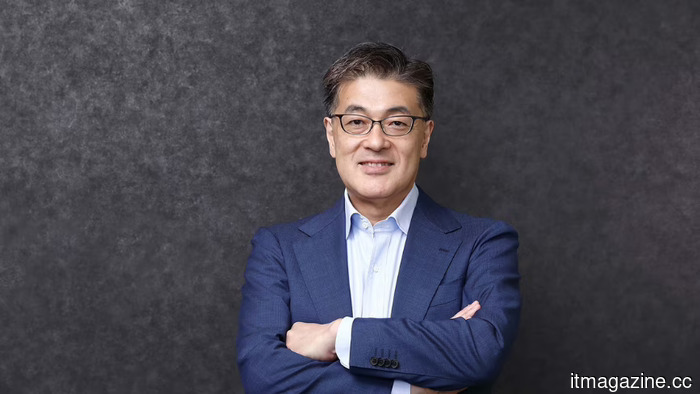 Panasonic plans to localize battery production for data centers in the U.S., according to the CEO.
Panasonic intends to begin mass production of battery cells for data centers in Kansas by fiscal 2028, as part of a 500 billion yen initiative to enhance AI infrastructure targeting a rapidly expanding storage market.
Panasonic plans to localize battery production for data centers in the U.S., according to the CEO.
Panasonic intends to begin mass production of battery cells for data centers in Kansas by fiscal 2028, as part of a 500 billion yen initiative to enhance AI infrastructure targeting a rapidly expanding storage market.
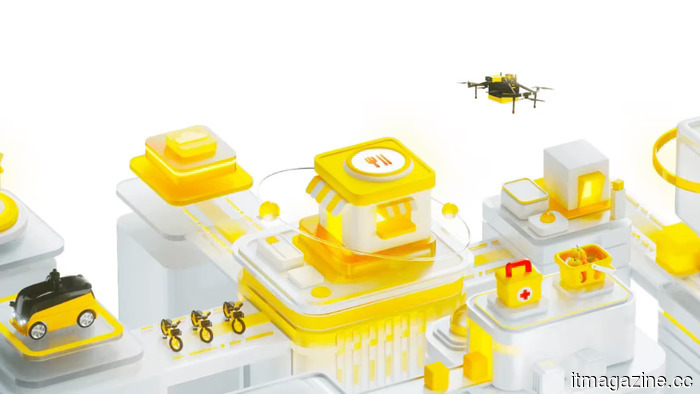 Meituan from China announced that its latest AI model was developed using domestic chips.
China reports that Meituan's LongCat-2.0, a model with 1.6 trillion parameters, is the first of its scale to be trained end-to-end on a domestic cluster of 50,000 chips, amidst the US export restrictions.
Meituan from China announced that its latest AI model was developed using domestic chips.
China reports that Meituan's LongCat-2.0, a model with 1.6 trillion parameters, is the first of its scale to be trained end-to-end on a domestic cluster of 50,000 chips, amidst the US export restrictions.
 Apple announced that it is releasing security updates sooner in response to the acceleration of hacking due to AI advancements.
Apple is separating security updates from its yearly iOS schedule and releasing them earlier, referencing AI's capability to reduce the time frame available to attackers.
Apple announced that it is releasing security updates sooner in response to the acceleration of hacking due to AI advancements.
Apple is separating security updates from its yearly iOS schedule and releasing them earlier, referencing AI's capability to reduce the time frame available to attackers.
 China’s Nexchip aims to raise as much as $890 million through a share sale in Hong Kong.
China's third-largest foundry is seeking to raise as much as $890 million in Hong Kong to finance a $5.1 billion facility in Hefei and advance towards 22nm technology, as Chinese chip manufacturers return to the city.
China’s Nexchip aims to raise as much as $890 million through a share sale in Hong Kong.
China's third-largest foundry is seeking to raise as much as $890 million in Hong Kong to finance a $5.1 billion facility in Hefei and advance towards 22nm technology, as Chinese chip manufacturers return to the city.
Panasonic is set to localize battery production for data centers in the US, according to the CEO.
Panasonic intends to begin mass production of battery cells for data centers in Kansas by fiscal 2028, as part of a 500 billion yen initiative focused on AI infrastructure targeting a rapidly expanding storage market.