
Deezer has introduced a remix tool that does not rely on AI and compensates artists for each stream.
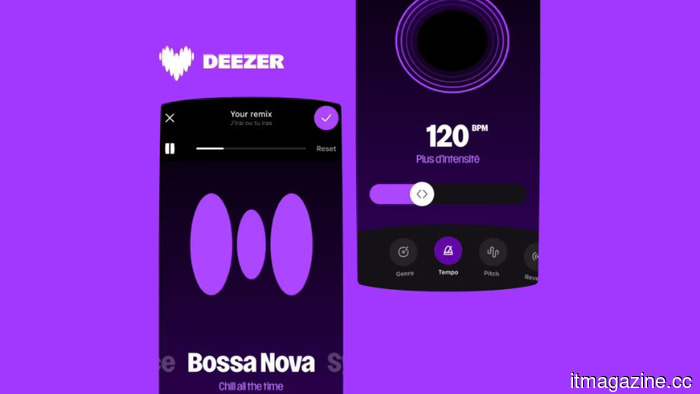
Deezer has introduced Remix Lab, a feature that enables fans to remix songs within the app using built-in tools and with the artists' consent, while ensuring that royalties are paid. This initiative intentionally avoids the use of artificial intelligence.
Users can access the tool on selected artists' pages in the Deezer app in France. According to Pierre Trochu, head of product, the functionality includes options to modify tempo, add effects like reverb, and even make more significant alterations such as changing a song's genre or style.
Deezer is consciously differentiating itself from competitors. For instance, Spotify, facing challenges with AI-generated content, entered into a major licensing agreement with Universal Music Group in May, allowing Premium users to create AI-driven covers and remixes of selected artists' works. YouTube's Dream Track program uses Google's AI to enable creators to adapt licensed tracks through text-based instructions.
In contrast, Deezer's remix tools are integrated into the app, with the outcome reliant on user adjustments rather than AI-generated productions. This aligns with Deezer's stance against AI-generated music on streaming platforms.
Earlier this month, Deezer rolled out a free tool that scans playlists from Spotify, Apple Music, and other services for AI-generated tracks. The company reports it receives almost 75,000 fully AI-produced tracks daily, accounting for over 44% of all uploads to its platform. Deezer actively removes AI-generated content from its recommendations and editorial playlists.
CEO Alexis Lanternier stated, “This remix tool perfectly embodies our vision of offering a product that enriches the listening experience for fans, allowing them to engage in the creative process and deepen their connection with their favorite music.” He emphasized that these features are developed with full artist participation, respecting rights, and maximizing earnings for each track.
The launch includes songs from Celine Dion, Alain Souchon, Alonzo, Ronisia, Mosimann, Tiakola, and Zaho. Users can also participate in contests via Deezer Club; winning remixes will be featured in a special Deezer playlist, with winners receiving tickets to a Deezer Purple Door event and artist merchandise. Announcements for contest winners will take place in early September.
Currently, the feature is available only in France, with plans to expand to additional countries, although Deezer has not specified a timeline for the wider rollout.
The industry is divided on how streaming services should manage remixes. Spotify and Universal assert that AI-generated fan covers, built on a consent-credit-compensation framework, provide artists with an additional revenue source. Critics, including researchers interviewed by WBUR, argue that AI remixes inundate platforms with synthetic content, making it more difficult for human artists to emerge in a saturated market.
Deezer is aligning with the other side of this debate. The company reported first-quarter revenue of 132 million euros, a slight decrease from the previous year, but its direct subscriber base grew by nine percent to 5,700,000. Though it remains significantly smaller than Spotify, this gives it less to lose and a stronger incentive to stand out.
It remains to be seen whether a non-AI remix tool focused solely on a limited selection of French artists can compete with Spotify's extensive AI-driven offerings. Nevertheless, for a company that has recently positioned itself as the anti-AI streaming service, Remix Lab represents a logical progression.
Other articles
 What features contribute to a laptop's effectiveness for remote work?
This article is presented in collaboration with Dell. The rise of remote and hybrid work has altered what individuals anticipate from a laptop. Many professionals no longer spend their entire day at a single desk. A standard work routine now includes morning Zoom or Microsoft Teams meetings, multiple browser tabs alongside Slack and email, and the need to move around.
What features contribute to a laptop's effectiveness for remote work?
This article is presented in collaboration with Dell. The rise of remote and hybrid work has altered what individuals anticipate from a laptop. Many professionals no longer spend their entire day at a single desk. A standard work routine now includes morning Zoom or Microsoft Teams meetings, multiple browser tabs alongside Slack and email, and the need to move around.
 House votes on legislation regarding energy costs for AI data centers.
Congress is looking to have Big Tech responsible for the energy expenses of AI data centers. This week, a House committee is voting to ensure that the costs related to the AI expansion do not get passed on to household electricity bills.
House votes on legislation regarding energy costs for AI data centers.
Congress is looking to have Big Tech responsible for the energy expenses of AI data centers. This week, a House committee is voting to ensure that the costs related to the AI expansion do not get passed on to household electricity bills.
 This Roborock robot vacuum has just received a significant price reduction and could be the most intelligent home improvement you make this summer.
Robot vacuums have significantly progressed from the novelty devices they used to be. The latest high-end models not only vacuum but also map your living space, navigate around obstacles, mop hard floors, and handle one of the most labor-intensive household tasks with little involvement from homeowners. This is precisely why the Roborock Qrevo S Pro has gained popularity.
This Roborock robot vacuum has just received a significant price reduction and could be the most intelligent home improvement you make this summer.
Robot vacuums have significantly progressed from the novelty devices they used to be. The latest high-end models not only vacuum but also map your living space, navigate around obstacles, mop hard floors, and handle one of the most labor-intensive household tasks with little involvement from homeowners. This is precisely why the Roborock Qrevo S Pro has gained popularity.
 Laifen Día Prime
Explore Laifen's Prime Day offers with a 40% discount on the SE 2 Hair Dryer and P3 Pro Electric Shaver—high-quality grooming devices crafted to make your daily routine easier.
Laifen Día Prime
Explore Laifen's Prime Day offers with a 40% discount on the SE 2 Hair Dryer and P3 Pro Electric Shaver—high-quality grooming devices crafted to make your daily routine easier.
 Deezer introduces a remix tool that operates without AI and compensates artists for each stream.
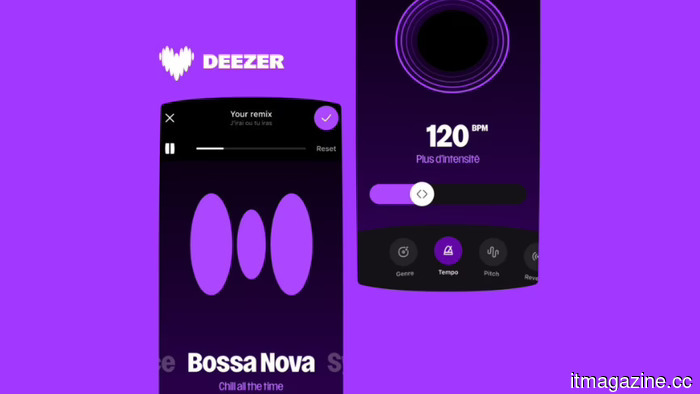
Deezer's Remix Lab enables fans to remix songs with the approval of artists using in-app tools, rather than AI, and provides royalties for every stream of the remixed songs.
Deezer introduces a remix tool that operates without AI and compensates artists for each stream.
Deezer's Remix Lab enables fans to remix songs with the approval of artists using in-app tools, rather than AI, and provides royalties for every stream of the remixed songs.
 China's projection for humanoid robots has been doubled to 50,000.
Morgan Stanley has increased its forecast for humanoid robots in China to 50,000 this year, marking its second revision, as these machines begin to appear in actual factories and stores.
China's projection for humanoid robots has been doubled to 50,000.
Morgan Stanley has increased its forecast for humanoid robots in China to 50,000 this year, marking its second revision, as these machines begin to appear in actual factories and stores.
Deezer has introduced a remix tool that does not rely on AI and compensates artists for each stream.
Deezer's Remix Lab allows fans to remix songs with the permission of the artists, utilizing in-app tools rather than AI, and provides royalties for each stream of the remixed songs.