

Tsuga secures $35 million to maintain AI-driven observability within the customer's own cloud environment.
The Paris-based startup, established by two former Datadog employees, aims to eliminate the per-byte pricing structure as AI workloads lead to a surge in telemetry data. Tsuga, which develops observability software tailored for the AI-driven era, has secured $35 million in Series A funding, a round that follows closely on the heels of its stealth launch just six months prior, positioning itself against the very industry its founders once contributed to.
The investment round is spearheaded by Singular, with General Catalyst returning as a backer, both of which had previously supported Tsuga’s $10 million seed funding in December 2025. New investors DST Global and Quantumlight have also joined, alongside Picus and Databricks. This latest funding raises the company's total to around $45 million in roughly six months, reflecting both investor enthusiasm for AI infrastructure and the promise of Tsuga itself.
The founders, Gabriel-James Safar and Sebastien Deprez, start their pitch by sharing a familiar grievance. After selling their prior venture, Madumbo, to Datadog in 2019, they spent years within the observability sector, ultimately concluding that the existing business model had become outdated. Traditional platforms gather customer telemetry, store it in the vendor's cloud, and escalate fees as the customer's infrastructure expands.
In AI systems, each agent loop and autonomous deployment generates data in quantities that these platforms were not designed to manage economically, leading to inflated costs. Tsuga's solution reverses this model. Instead of pulling telemetry into its cloud, it operates within the customer's environment, ensuring data remains within their perimeter and eliminating the per-byte ingestion fees.
Engineers are deployed on-site to collaborate with client teams, optimizing the setup and minimizing the volume of data processed and stored. Automated root-cause analysis is conducted on comprehensive, unsampled data, and a bundled MCP server along with a command-line tool permits engineering teams to create their own agents within their own security boundaries.
Keeping data localized also aligns with regulatory demands, particularly in Europe. The same reasoning that has led governments to prefer domestic alternatives to American software applies to telemetry that may contain sensitive information about a company's systems and AI models. For clients in regulated sectors, the assurance that observability does not transfer that data to a third-party cloud is viewed as a core product feature.
The market landscape is competitive. Observability has emerged as one of the more vibrant sectors within enterprise software, with venture capital increasingly directed towards AI-native monitoring solutions as buyers seek tools that can adapt to agent-based systems. Tsuga is betting that innovative architecture, rather than merely adding features to existing designs, will define the next generation of solutions.
The partnership aspect of Databricks' investment comes into play as Tsuga is a Databricks partner, allowing customers to directly route observability data into Databricks for advanced analysis. This collaboration aligns with Databricks' efforts to expand into security and operational data.
According to Tsuga, since its launch in December 2025, it has rapidly progressed, boasting several million dollars in contracted annual recurring revenue, with average contract sizes in the six figures, and has attracted clients like Le Monde, Camunda, Buk, and Black Forest Labs. Le Monde reportedly used the platform to oversee its infrastructure during the French municipal elections, while Camunda and Buk employ it across multi-cloud setups with stringent data-residency requirements.
Those figures are stated by the company and not audited, and the listed clients tend to represent European and AI-centric sectors for which the residency benefits are particularly appealing. According to CEO Safar, the new funding will be utilized to grow the team, enhance the Skills library and agent-building toolkit, and expand the forward-deployed engineering approach. Whether this model can sustain scalability as Tsuga grows remains a critical question, as the hands-on engineering approach can be costly to scale, with the assumption that customers will be willing to invest in it.
Other articles
 Prosus has introduced ToqanClaw, a tool builder similar to OpenClaw, aimed at its 5 million merchants.
Prosus has introduced ToqanClaw, a no-code platform that creates business applications through conversations, offering OpenClaw-style tools to over 5 million merchants.
Prosus has introduced ToqanClaw, a tool builder similar to OpenClaw, aimed at its 5 million merchants.
Prosus has introduced ToqanClaw, a no-code platform that creates business applications through conversations, offering OpenClaw-style tools to over 5 million merchants.
 Tsuga secures $35 million to maintain AI-driven observability within the customer's own cloud.
The Paris-based startup Tsuga, founded by former Datadog creators, has successfully secured $35 million in Series A funding, with Singular spearheading the investment, to provide observability solutions within the customer's own cloud environment.
Tsuga secures $35 million to maintain AI-driven observability within the customer's own cloud.
The Paris-based startup Tsuga, founded by former Datadog creators, has successfully secured $35 million in Series A funding, with Singular spearheading the investment, to provide observability solutions within the customer's own cloud environment.
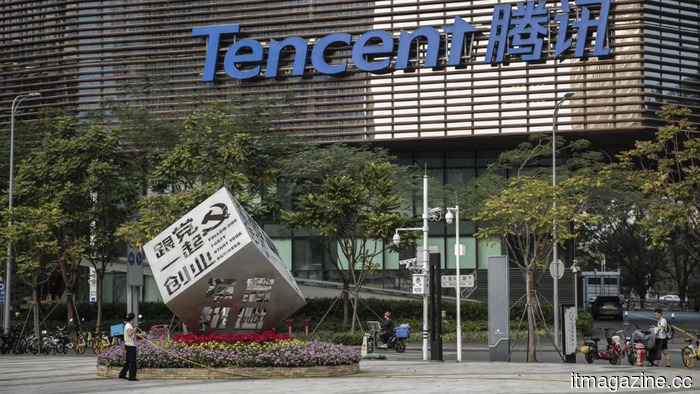 Tencent considers withdrawing from Marvelous and its other investments in Japanese gaming.
Tencent is in discussions to divest minority shares in Japanese game studios, such as Tokyo-listed Marvelous, occasionally reverting them to the founders and at a loss, according to Bloomberg.
Tencent considers withdrawing from Marvelous and its other investments in Japanese gaming.
Tencent is in discussions to divest minority shares in Japanese game studios, such as Tokyo-listed Marvelous, occasionally reverting them to the founders and at a loss, according to Bloomberg.
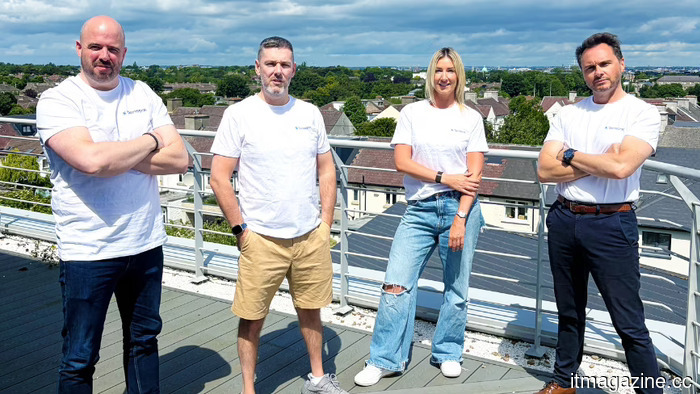 TensorX secures €8M to develop sovereign AI inference for Europe utilizing Nvidia Blackwell.
TensorX has secured €8 million to acquire Nvidia Blackwell B300 GPUs and enhance its AI inference platform, which complies with GDPR, operated from Dublin and Helsinki.
TensorX secures €8M to develop sovereign AI inference for Europe utilizing Nvidia Blackwell.
TensorX has secured €8 million to acquire Nvidia Blackwell B300 GPUs and enhance its AI inference platform, which complies with GDPR, operated from Dublin and Helsinki.
 Sceptre Prime Day 2026 Deals on Gaming Monitors: Save Up to $100 on Gaming Displays
Prime Day is an excellent opportunity to enhance your gaming setup, and Sceptre is providing discounts on its range of gaming monitors.
Sceptre Prime Day 2026 Deals on Gaming Monitors: Save Up to $100 on Gaming Displays
Prime Day is an excellent opportunity to enhance your gaming setup, and Sceptre is providing discounts on its range of gaming monitors.
 Samsung's latest UFS 5.0 chip offers enhanced on-device AI performance and improves your smartphone's battery life.
Samsung has introduced its quickest UFS 5.0 storage chip to date, achieving transfer speeds of 10.8GB per second to enhance on-device AI performance.
Samsung's latest UFS 5.0 chip offers enhanced on-device AI performance and improves your smartphone's battery life.
Samsung has introduced its quickest UFS 5.0 storage chip to date, achieving transfer speeds of 10.8GB per second to enhance on-device AI performance.
Tsuga secures $35 million to maintain AI-driven observability within the customer's own cloud environment.
The Paris-based startup Tsuga, founded by former Datadog creators, has secured $35 million in Series A funding, with Singular leading the investment, to manage observability within the customer's own cloud environment.