

Prosus has introduced ToqanClaw, a tool builder similar to OpenClaw, aimed at its 5 million merchants.
The group listed in Amsterdam is bringing conversational app development to the forefront for restaurants and shop owners, the very users it claims AI has previously overlooked. Prosus has introduced ToqanClaw, a platform that enables individuals to create apps, dashboards, and automations by simply describing their requirements in plain language, similar to how they would explain a task to a colleague. This technology group unveiled the platform today, positioning itself as the first in Europe to provide OpenClaw-style tools to its business partners on a large scale.
The concept aims to eliminate the need for an engineer in the process. For instance, a restaurant owner needing a delivery analytics dashboard, or a shopkeeper wanting to automate weekly reporting, can verbally describe their requirements to have the tool developed without any coding, ticket submissions, or waiting for IT assistance. Prosus claims the platform is immediately operational and intelligently navigates over 20 underlying AI models to identify the most suitable one for any given task, asserting it is more cost-effective than existing alternatives.
ToqanClaw is constructed on Toqan, the internal AI platform that Prosus has been developing for its own employees, and it adopts the same data management principles: the company assures customers that their data remains under their control and is not used to train external models. This aspect underscores the entire initiative. Previous reports indicated that Prosus was creating a competitor to OpenClaw to address European privacy concerns, and ToqanClaw is the outcome of that anticipation.
It represents a distinct approach compared to competitors that have built directly on existing platforms, such as Tencent with its ClawPro enterprise agents. The primary users targeted are those whom Prosus contends conventional AI has neglected. The platform is being made available to over five million restaurants, merchants, and entrepreneurs throughout its ecosystem, businesses that have typically lacked the technical resources to develop software independently.
The narrative aligns with the broader democratization theme that has accompanied the emergence of OpenClaw and its agent tools, now focused on small merchants instead of developers. Prosus has provided statistics to support its approach. CEO Fabricio Bloisi mentioned that the group spent 18 months on internal development, resulting in 60,000 agents and 10,000 applications created by individuals with no coding experience.
The company also disclosed that it has developed a specialized commerce model, labeled the Large Commerce Model, based on data from over a billion customers and 500 million daily interactions. Integrating this model with ToqanClaw enables agents to begin anticipating a business's needs instead of merely following commands.
During the launch, several customer case studies were showcased, all provided by the company. The Dutch cafe chain, Lebkov & Sons, reportedly reduced its financial reporting timeframe from weeks to just 30 minutes. Burger & Frites, a Rotterdam burger chain, created a delivery analytics agent that the company claims saves approximately €21,000 monthly. Additionally, Poke Perfect, a poke-bowl chain, developed a WhatsApp-based operations assistant that cut down routine staff queries by 70%. These statistics are from Prosus and have not been independently verified.
In conjunction with ToqanClaw, Prosus has also expanded the reach of Zapia, a consumer-oriented AI assistant it supports. Zapia manages tasks from start to finish, with an example of finding a restaurant, narrowing down choices in a family group chat, waiting for votes, and booking a table. Prosus states that over six million individuals are currently using Zapia, primarily in Latin America. It is now accessible on the App Store, Google Play, and the web, featuring a free tier for most personal usage and a paid plan for more active users.
Both launches coincided with Prosus Forward, the group’s inaugural product event, where it presented an AI-first strategy centered on the idea that possessing data and maintaining customer relationships, rather than controlling the model, is the key advantage. The more challenging assessment, like with any tool that claims to create software from simple commands, will be whether merchants continue to utilize the applications they develop after the initial demonstration.
Other articles
 Devil May Cry has just arrived on your Switch 2, and it’s available for only $30 until July 7.
Devil May Cry 5: Devil Hunter Edition is making its debut on Switch 2, marking its first appearance on a portable Nintendo device, and is available for $30 until July 7.
Devil May Cry has just arrived on your Switch 2, and it’s available for only $30 until July 7.
Devil May Cry 5: Devil Hunter Edition is making its debut on Switch 2, marking its first appearance on a portable Nintendo device, and is available for $30 until July 7.
 Sceptre Prime Day 2026 Deals on Gaming Monitors: Save Up to $100 on Gaming Displays
Prime Day is an excellent opportunity to enhance your gaming setup, and Sceptre is providing discounts on its range of gaming monitors.
Sceptre Prime Day 2026 Deals on Gaming Monitors: Save Up to $100 on Gaming Displays
Prime Day is an excellent opportunity to enhance your gaming setup, and Sceptre is providing discounts on its range of gaming monitors.
 Devil May Cry has just arrived on your Switch 2, and it’s priced at only $30 until July 7.
Devil May Cry 5: Devil Hunter Edition makes its debut on Switch 2, marking its first appearance on a portable Nintendo device, available for $30 until July 7.
Devil May Cry has just arrived on your Switch 2, and it’s priced at only $30 until July 7.
Devil May Cry 5: Devil Hunter Edition makes its debut on Switch 2, marking its first appearance on a portable Nintendo device, available for $30 until July 7.
 The UN calls on AI companies to be transparent about their environmental impacts.
A report from a UN University indicates that the environmental impact of AI in terms of carbon, water, and land usage is increasing rapidly. Meanwhile, Antonio Guterres urges AI companies to reveal their expenses and transition to renewable energy sources.
The UN calls on AI companies to be transparent about their environmental impacts.
A report from a UN University indicates that the environmental impact of AI in terms of carbon, water, and land usage is increasing rapidly. Meanwhile, Antonio Guterres urges AI companies to reveal their expenses and transition to renewable energy sources.
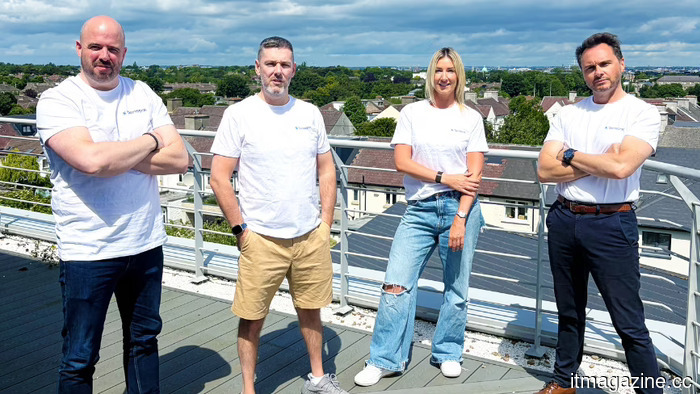 TensorX secures €8M to develop sovereign AI inference for Europe utilizing Nvidia Blackwell.
TensorX has secured €8 million to acquire Nvidia Blackwell B300 GPUs and enhance its AI inference platform, which is GDPR-compliant and operated from Dublin and Helsinki.
TensorX secures €8M to develop sovereign AI inference for Europe utilizing Nvidia Blackwell.
TensorX has secured €8 million to acquire Nvidia Blackwell B300 GPUs and enhance its AI inference platform, which is GDPR-compliant and operated from Dublin and Helsinki.
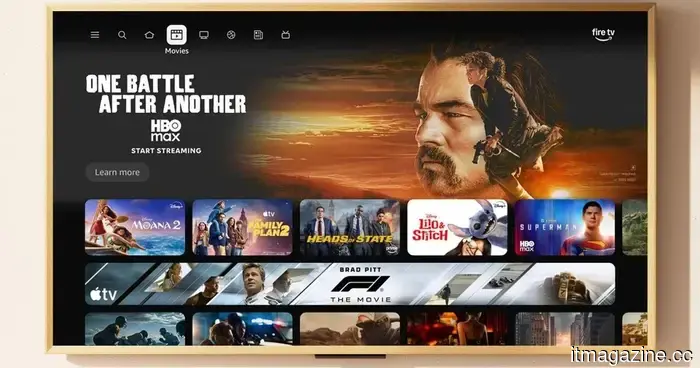 The updated Fire TV interface from Amazon is now being made available on additional devices.
Amazon has begun to release its updated Fire TV interface, which features a more streamlined appearance, improved speed, and integrated Alexa+ functionality.
The updated Fire TV interface from Amazon is now being made available on additional devices.
Amazon has begun to release its updated Fire TV interface, which features a more streamlined appearance, improved speed, and integrated Alexa+ functionality.
Prosus has introduced ToqanClaw, a tool builder similar to OpenClaw, aimed at its 5 million merchants.
Prosus has introduced ToqanClaw, a no-code platform that creates business applications through conversations, offering OpenClaw-style tools to over 5 million merchants.