
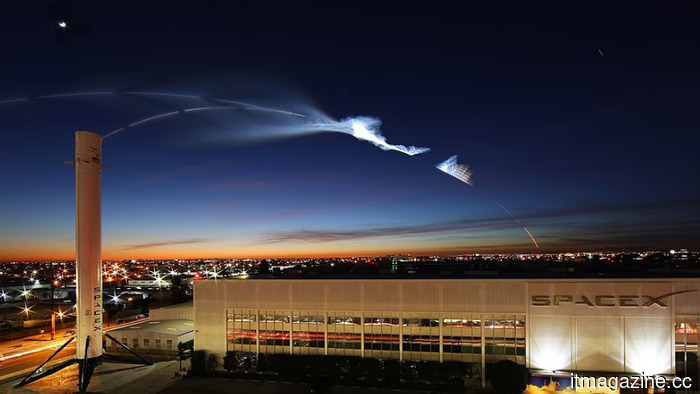
SpaceX garners $89 billion in demand for its inaugural bond sale, marking one of the largest offerings in the US this year.
SpaceX garnered approximately $89 billion in investor interest for its inaugural bond sale, as it aims to raise between $20 billion and $25 billion through five tranches to refinance bridge loan debt, according to a Bloomberg report on Tuesday. This offering is poised to be one of the largest investment-grade sales of the year. At the lower end of the range, investor demand would surpass the amount offered by over four times.
The pricing for the longest-dated tranche, scheduled to mature in 2056, was tightened by about 0.25 percentage points to 1.75 percentage points above Treasury rates. The five banks facilitating the sale—Goldman Sachs, Morgan Stanley, JPMorgan Chase, Bank of America, and Citigroup—either did not respond or chose not to comment.
Funds raised will be used to refinance a $20 billion bridge loan previously utilized by SpaceX to alleviate around $17.5 billion of high-interest junk debt incurred by X and xAI. This bridge loan, arranged by the same five banks, had an effective interest rate of about 4.5%, approximately half the rate of the junk bonds it replaced. The bond issuance will convert this interim financing into a more permanent capital market debt.
This sale follows closely on the heels of SpaceX's completion of the largest initial public offering in history, where it raised $75 billion by selling shares at $135 each, leading to a valuation of approximately $1.75 trillion. Initially, shares surged to $225 but then experienced a steep decline, with the stock dropping over 30% from its peak as investors evaluated the company's spending plans and cash depletion.
On June 18, all three major credit rating agencies granted SpaceX investment-grade ratings just days after the IPO, with Moody’s assigning Baa1, Fitch giving a BBB-plus, and S&P rating it BBB, all maintaining stable outlooks. These agencies highlighted SpaceX’s leading position in orbital launches and Starlink’s 12 million users as advantages, while also noting execution risks linked to the company’s AI initiatives and concerns surrounding Musk’s concentrated control.
As of June 19, SpaceX reported approximately $101 billion in cash and $29 billion in long-term debt. However, these figures obscure considerable cash outflow, as the company recorded a net loss of nearly $5 billion in 2025 and an additional $4 billion loss in the first quarter of 2026, marking a free cash flow deficit of $14 billion last year, more than double the previous year’s burn.
Starlink produced $4 billion in operating profit in 2025, but the AI sector is depleting these gains. SpaceX acquired xAI in February 2026 as part of Musk’s effort to consolidate his companies and executed a $60 billion stock deal to buy AI coding startup Anysphere shortly after the IPO. The bond sale is integral to financing these acquisitions while also supporting its core rocket and satellite operations.
Bloomberg Intelligence analyst Robert Schiffman pointed out that this transaction provides investors with an opportunity to purchase debt from a first-time issuer while diversifying their investment in companies associated with the AI boom. Debt investors are typically more conservative compared to equity investors, and the four-times oversubscription indicates that cautious capital views SpaceX’s revenue sources, especially Starlink, as sufficiently stable to cover the debt.
The level of interest mirrors the IPO itself, where individual investors placed orders exceeding $10 billion. Within the span of two weeks, SpaceX has tapped both equity and debt markets, potentially raising up to $100 billion in total proceeds. No other company has pulled in such a significant amount from public markets in such a short period.
For bondholders, the pressing question is whether SpaceX can generate sufficient cash flow to service the debt while also funding Starship development, expanding Starlink, building AI infrastructure, and managing multiple acquisitions. With projected revenues of $19 billion in 2025, the company is spending significantly more than it earns. Thus far, the bond market's response has indicated a willingness to take that risk on day one.
Other articles
 Oracle reduces workforce by 21,000, citing AI in SEC filing.
Oracle reduced its workforce by 13% while investing $55.7 billion in data centers. Its filing with the SEC clearly states that the integration of AI is the reason for the job losses.
Oracle reduces workforce by 21,000, citing AI in SEC filing.
Oracle reduced its workforce by 13% while investing $55.7 billion in data centers. Its filing with the SEC clearly states that the integration of AI is the reason for the job losses.
 Meta's new prediction market application, Arena, has the potential to introduce betting to 3 billion users.
According to the New York Times, Mark Zuckerberg instructed Meta to develop a prediction market application named Arena to rival Polymarket and Kalshi.
Meta's new prediction market application, Arena, has the potential to introduce betting to 3 billion users.
According to the New York Times, Mark Zuckerberg instructed Meta to develop a prediction market application named Arena to rival Polymarket and Kalshi.
 I discovered the top Prime Day headphone bargains that are worth your investment and avoided the low-quality options.
Prime Day is bursting with headphone offers, but I would prioritize checking these discounts from Sony, Bose, Sennheiser, JBL, and Beats first.
I discovered the top Prime Day headphone bargains that are worth your investment and avoided the low-quality options.
Prime Day is bursting with headphone offers, but I would prioritize checking these discounts from Sony, Bose, Sennheiser, JBL, and Beats first.
 I looked at the Prime Day speaker offers, and these 5 are the ones that deserve your attention.
Avoid the nameless speaker distractions. These JBL and Bose Prime Day offers come with substantial discounts, practical features, and clear justifications for purchase.
I looked at the Prime Day speaker offers, and these 5 are the ones that deserve your attention.
Avoid the nameless speaker distractions. These JBL and Bose Prime Day offers come with substantial discounts, practical features, and clear justifications for purchase.
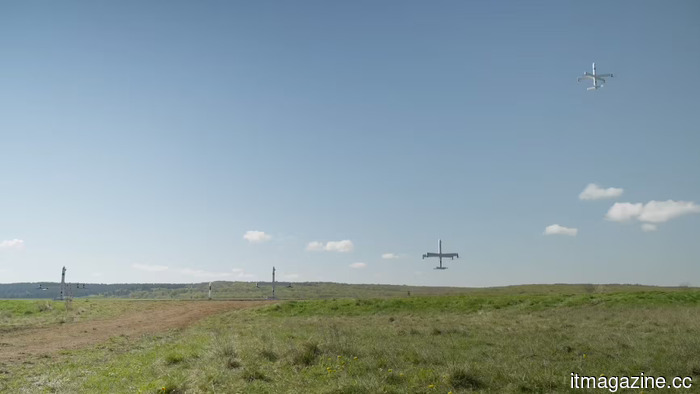 Stark Defence has secured €500 million in funding, led by Sequoia and Founders Fund, with a valuation exceeding €3.5 billion.
Berlin-based drone manufacturer Stark Defence secured €500 million in funding from Sequoia and Founders Fund, which places the two-year-old kamikaze drone startup's valuation at over three billion euros.
Stark Defence has secured €500 million in funding, led by Sequoia and Founders Fund, with a valuation exceeding €3.5 billion.
Berlin-based drone manufacturer Stark Defence secured €500 million in funding from Sequoia and Founders Fund, which places the two-year-old kamikaze drone startup's valuation at over three billion euros.
 Your $2,000 premium phone merits premium protection.
High-end smartphones are designed to attract attention while stretching the boundaries of innovation and costs. However, safeguarding them shouldn't entail sacrificing their attractiveness. This Prime Day, PITAKA is simplifying that decision.
Your $2,000 premium phone merits premium protection.
High-end smartphones are designed to attract attention while stretching the boundaries of innovation and costs. However, safeguarding them shouldn't entail sacrificing their attractiveness. This Prime Day, PITAKA is simplifying that decision.
SpaceX garners $89 billion in demand for its inaugural bond sale, marking one of the largest offerings in the US this year.
SpaceX secured $89 billion in orders for its inaugural investment-grade bond offering, aiming to raise as much as $25 billion to refinance a bridge loan from its initial public offering.