

IBM partners with OpenAI’s cybersecurity initiative to integrate cutting-edge AI into business security.
IBM has joined OpenAI’s Daybreak Cyber Partner Program, which the company claims will utilize advanced AI models within corporate security operations. This partnership has resulted in a tangible first product: a new application-security service that leverages OpenAI’s cybersecurity capabilities to identify and verify software vulnerabilities more swiftly than traditional tools.
According to IBM, the service offers more than standard code scanning. Instead of merely noting potential flaws, it employs AI to analyze an application and confirm whether a suspected weakness is actually exploitable—a notably time-consuming and costly task typically managed by human teams. IBM aims to assist enterprises in keeping up with rapidly evolving threats. The promise of validation particularly addresses a common frustration among security teams: traditional scanners inundate them with alerts, most of which are benign and few of which can be quickly prioritized.
The method by which AI interacts with sensitive code is crucial, and IBM has clarified this aspect. The service is provided through IBM Consulting Advantage, the company’s AI consulting delivery platform, which links a client’s application environment to the models in what IBM describes as a controlled, regulated manner. This entails operating within the client’s own environment, with read-only access to code repositories and limited execution capabilities, thereby allowing the AI to review software without the ability to alter it. The service is currently available, with further integrations planned under the Daybreak program.
This launch coincides with a larger, more ambitious initiative. IBM is also supporting Project Lightwell, which has a $5 billion commitment from both IBM and Red Hat. This project is described as an enterprise security clearinghouse that employs engineers to patch, validate, and manage open-source code throughout the software supply chain. Lightwell utilizes OpenAI’s cybersecurity capabilities alongside other leading models, targeting the open-source dependencies that frequently remain unexamined in modern software.
The timing aligns with a year in which AI has emerged as both a weapon and a defense. Google researchers recently employed an AI system to discover a previously unknown zero-day vulnerability, and Anthropic has identified models capable of uncovering bank-level vulnerabilities. The same logic that enables a model to detect a flaw for a defender can, in the wrong hands, assist an attacker in locating it first, which is the situation IBM aims to counteract.
Both vendors and governments have been forming alliances to stay ahead. Recent months have seen NATO-aligned cyber partnerships with companies like Microsoft and Palo Alto Networks, along with consolidation among tool developers, including Databricks’ acquisition of Panther Labs. IBM’s initiative secures its position as one of the established names in enterprise computing firmly on the defensive side of this expansion, with OpenAI’s models serving as the driving force.
Looking ahead, IBM has indicated that further capabilities will be introduced under the Daybreak program over time, which positions the application-security service as an initial step rather than the complete strategy. The Lightwell initiative, with its larger financial backing and focus on the supply chain, suggests that the company views the open-source layer as a more challenging and significant issue to address. For now, IBM asserts that the AI designed for writing code can also be effectively leveraged at scale to secure it.
Other articles
 Meta has halted its employee mouse-tracking initiative due to concerns about data security.
Meta has halted its Model Capability Initiative, which monitored employee mouse movements and keystrokes for AI training, following the exposure of sensitive data.
Meta has halted its employee mouse-tracking initiative due to concerns about data security.
Meta has halted its Model Capability Initiative, which monitored employee mouse movements and keystrokes for AI training, following the exposure of sensitive data.
 The Five Eyes alliance has cautioned that cyber threats from advanced frontier AI are just "months" away.
The Five Eyes intelligence alliance has cautioned that advanced AI, which could significantly enhance cyberattacks, is only a few months away from being publicly available, rather than years.
The Five Eyes alliance has cautioned that cyber threats from advanced frontier AI are just "months" away.
The Five Eyes intelligence alliance has cautioned that advanced AI, which could significantly enhance cyberattacks, is only a few months away from being publicly available, rather than years.
 The Five Eyes alliance has issued a warning that cyber threats from frontier AI are just ‘months’ on the horizon.
The Five Eyes intelligence alliance has cautioned that advanced AI, which could significantly enhance cyberattacks, is just months away from being released to the public, rather than years.
The Five Eyes alliance has issued a warning that cyber threats from frontier AI are just ‘months’ on the horizon.
The Five Eyes intelligence alliance has cautioned that advanced AI, which could significantly enhance cyberattacks, is just months away from being released to the public, rather than years.
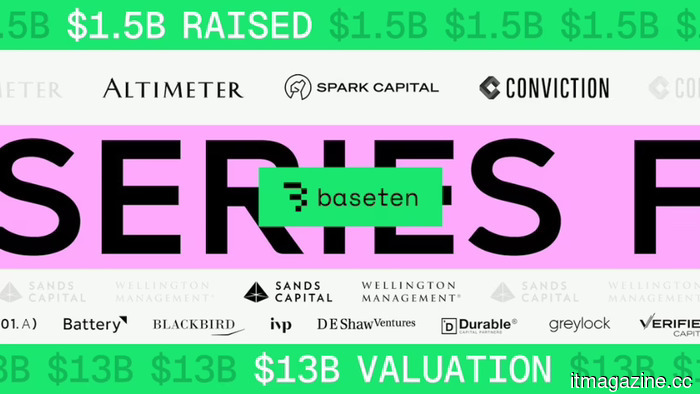 AI infrastructure startup Baseten secures $1.5 billion in funding, reaching a valuation of up to $13 billion.
AI startup Baseten secured $1.5 billion, achieving a valuation of as much as $13 billion, with Sands Capital and Wellington leading the round, while Blackbird VC made its largest investment to date.
AI infrastructure startup Baseten secures $1.5 billion in funding, reaching a valuation of up to $13 billion.
AI startup Baseten secured $1.5 billion, achieving a valuation of as much as $13 billion, with Sands Capital and Wellington leading the round, while Blackbird VC made its largest investment to date.
 Meta halts its employee mouse-tracking initiative due to concerns about data security.
Meta has halted its Model Capability Initiative, which monitored employee mouse movements and keystrokes for AI training, following an incident where sensitive data was inadvertently exposed.
Meta halts its employee mouse-tracking initiative due to concerns about data security.
Meta has halted its Model Capability Initiative, which monitored employee mouse movements and keystrokes for AI training, following an incident where sensitive data was inadvertently exposed.
 The UK considers requiring social media platforms to highlight reliable news sources.
The culture department of Britain is contemplating regulations that would mandate Facebook, YouTube, and TikTok to ensure that news from the BBC, ITV, and Channel 4 is more accessible in searches and feeds.
The UK considers requiring social media platforms to highlight reliable news sources.
The culture department of Britain is contemplating regulations that would mandate Facebook, YouTube, and TikTok to ensure that news from the BBC, ITV, and Channel 4 is more accessible in searches and feeds.
IBM partners with OpenAI’s cybersecurity initiative to integrate cutting-edge AI into business security.
IBM has become a part of OpenAI’s Daybreak Cyber Partner Program and has introduced an AI application-security service that accelerates the detection of software vulnerabilities.