

The Five Eyes alliance has issued a warning that cyber threats from frontier AI are just ‘months’ on the horizon.
The Five Eyes intelligence alliance has released a collective alert stating that the upcoming generation of artificial intelligence is set to significantly enhance offensive hacking capabilities, and that the opportunity to prepare for this threat is rapidly diminishing.
In a unified statement, the agencies from the United States, the United Kingdom, Canada, Australia, and New Zealand emphasized the urgent need for action, highlighting a remarkably short timeframe for the threat. “Frontier AI models are expected to surpass current industry expectations, fundamentally altering both offensive and defensive cyber capabilities,” the statement noted. “The timeline is not years; it is months.”
The agencies cautioned that AI models capable of inflicting substantial cyber damage will likely be accessible to the public within just “months,” significantly reducing the typical government risk assessment timeframe to something much nearer to the present moment.
Much of what the alliance referenced pertains to the mundane aspects of how organizations become victims of breaches. The statement pinpointed aging systems, slow patching processes, unnecessary internet exposure, insufficient identity and access controls, and a lack of proactive incident planning as vulnerabilities that more advanced AI will quickly identify and exploit.
These issues are not new; the assertion is that AI will enhance the exploitation of these vulnerabilities, shortening the period between the discovery of a vulnerability and an attacker exploiting it from weeks to a significantly shorter duration. The agencies suggested that a flaw that once required a skilled human team days to weaponize could soon be turned into an effective exploit by an AI model in a fraction of that time.
The familiarity of much of the underlying advice was, in a sense, intentional. The majority of the statement reiterated fundamental cybersecurity practices: patch promptly, avoid placing systems online unless necessary, restrict access to critical resources—guidance that defenders have been hearing for years.
Additionally, the agencies encouraged defenders to leverage the same technology against the threat, urging organizations to utilize AI “to enhance defense,” such as by identifying vulnerabilities sooner or responding to incidents more swiftly.
This perspective reflects a year in which the distinction between offensive and defensive tools has blurred: Google researchers employed an AI system to reveal a live zero-day exploit, while Anthropic has recorded models capable of identifying serious software vulnerabilities that are concerning to financial institutions.
The warning comes amid a broader rush to establish defenses before the capability gap expands. Governments and vendors have been forming international cyber partnerships, and the criminal application of AI is already emerging, as researchers track AI-assisted cryptocurrency thefts linked to North Korean hackers.
The Five Eyes statement effectively informs others in the field that similar tools will soon be widely available. The alliance issued an unusually urgent warning while directing organizations to return to basic practices, recognizing that much of the damage still arises from easily overlooked vulnerabilities.
What the statement did not provide was a specific deadline or any regulatory framework, leaving the responsibility for response to individual organizations and national agencies. It also refrained from naming specific AI labs or models, opting for a general warning instead of targeting any particular developer.
For defenders, the key takeaway is discomfortingly straightforward: while the advice remains unchanged, the timeframe for taking action, according to the alliance, is now counted in months rather than years.
Other articles
 Meta halts its employee mouse-tracking initiative due to concerns about data security.
Meta has halted its Model Capability Initiative, which monitored employee mouse movements and keystrokes for AI training, following an incident where sensitive data was inadvertently exposed.
Meta halts its employee mouse-tracking initiative due to concerns about data security.
Meta has halted its Model Capability Initiative, which monitored employee mouse movements and keystrokes for AI training, following an incident where sensitive data was inadvertently exposed.
 Tata Electronics breach reportedly reveals trade secrets of Apple and Tesla.
A ransomware group claims to have stolen 630GB of data from India's Tata Electronics, which supposedly includes component files from Apple and Tesla. Tata has acknowledged a breach, but the authenticity of the files remains unverified.
Tata Electronics breach reportedly reveals trade secrets of Apple and Tesla.
A ransomware group claims to have stolen 630GB of data from India's Tata Electronics, which supposedly includes component files from Apple and Tesla. Tata has acknowledged a breach, but the authenticity of the files remains unverified.
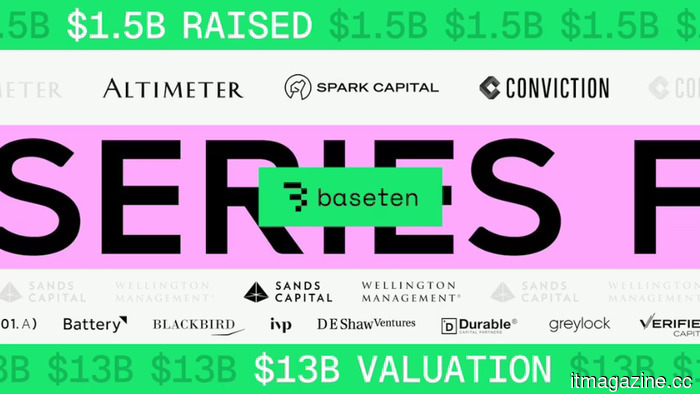 AI infrastructure company Baseten has secured $1.5 billion in funding, reaching a valuation of as much as $13 billion.
AI startup Baseten secured $1.5 billion at a valuation reaching $13 billion, with Sands Capital and Wellington leading the round, while Blackbird VC made its largest investment to date.
AI infrastructure company Baseten has secured $1.5 billion in funding, reaching a valuation of as much as $13 billion.
AI startup Baseten secured $1.5 billion at a valuation reaching $13 billion, with Sands Capital and Wellington leading the round, while Blackbird VC made its largest investment to date.
 Micron and Anthropic have entered into a multi-year agreement for AI memory supplies.
Micron and Anthropic have entered into a multi-year contract that includes the supply of AI memory and storage, the integration of Claude within Micron, and an investment by Micron in Anthropic.
Micron and Anthropic have entered into a multi-year agreement for AI memory supplies.
Micron and Anthropic have entered into a multi-year contract that includes the supply of AI memory and storage, the integration of Claude within Micron, and an investment by Micron in Anthropic.
 Tata Electronics breach reportedly reveals trade secrets of Apple and Tesla.
A ransomware gang claims to have stolen 630GB of data from Tata Electronics in India, which allegedly includes files related to components for Apple and Tesla. Tata has acknowledged the breach, but the authenticity of the files has not been verified.
Tata Electronics breach reportedly reveals trade secrets of Apple and Tesla.
A ransomware gang claims to have stolen 630GB of data from Tata Electronics in India, which allegedly includes files related to components for Apple and Tesla. Tata has acknowledged the breach, but the authenticity of the files has not been verified.
 Meta has halted its employee mouse-tracking initiative due to concerns about data security.
Meta has halted its Model Capability Initiative, which monitored employee mouse movements and keystrokes for AI training, following the exposure of sensitive data.
Meta has halted its employee mouse-tracking initiative due to concerns about data security.
Meta has halted its Model Capability Initiative, which monitored employee mouse movements and keystrokes for AI training, following the exposure of sensitive data.
The Five Eyes alliance has issued a warning that cyber threats from frontier AI are just ‘months’ on the horizon.
The Five Eyes intelligence alliance has cautioned that advanced AI, which could significantly enhance cyberattacks, is just months away from being released to the public, rather than years.