
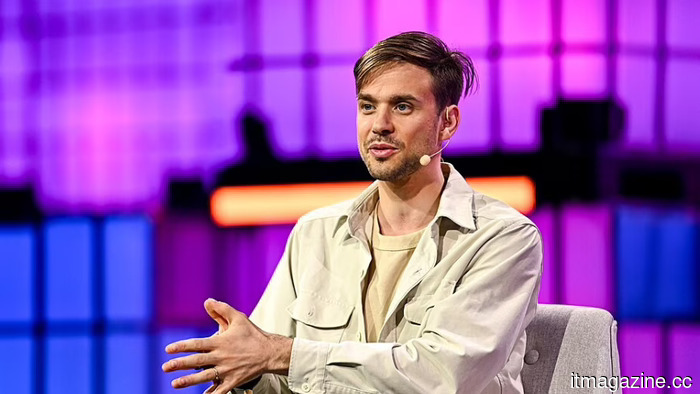
The CEO of Lovable states that the issue facing Europe's AI startups is a lack of confidence rather than a lack of talent.
TL;DR: Lovable's CEO Anton Osika suggests that the issue facing European AI startups is not a lack of talent, but rather a lack of confidence, as his Stockholm-based company reaches $500 million in annual recurring revenue. In a recent post on X, Osika contended that founders were often advised to relocate to San Francisco to establish a serious AI venture; however, he believes the true obstacle lies in the mindset. “The talent was never the problem,” he stated. “The belief that you could build from here was.”
Osika's perspective is significant, as Lovable serves as a compelling example to challenge the prevailing narrative. The vibe-coding platform from Stockholm has achieved over $500 million in annualized revenue this month, making it one of the fastest-growing software firms in history with just 146 employees. The startup has collected $653 million through four funding rounds, reaching a valuation exceeding six billion dollars following a $330 million Series B led by CapitalG and Menlo Ventures.
He noted that millions have utilized Lovable to convert ideas into products and businesses, with a considerable number of users based in Europe, though the U.S. remains its largest market. He mentioned that many engineers are opting to return to Europe for what they consider to be their most significant work.
Supporting Osika's claims, data from Revelio Labs, which examines migration through public immigration records, reveals that by the end of 2024, more tech professionals are anticipated to move from the U.S. to Europe than vice versa, marking a reversal of a long-standing trend. The percentage of U.S. workers transitioning to jobs abroad has risen from below three percent to almost six percent since 2021, especially in IT consulting roles.
This change has been influenced by stricter immigration laws and increased scrutiny on work visas in the U.S., making career opportunities in America more uncertain for foreign workers. Balderton Capital's initiative, “Built in Europe,” which has support from over 100 founders, including those from Revolut, Mistral, Wayve, and Lovable, launched across five European cities earlier this month with a clear message: the talent, capital, and ambition are already available in Europe.
However, not everyone is convinced that the problem is resolved. Y Combinator co-founder Paul Graham suggested during his visit to Stockholm in May that aspiring founders should still spend time in Silicon Valley for its concentration of investors and potential opportunities for unintended connections. He posited that Stockholm could eventually become “the Silicon Valley of Europe,” though he maintained that the original still provides something unmatched by any European hub.
Osika conceded that one component remains lacking. He expressed that Europe needs regional AI infrastructure in line with its existing demand and talent, highlighting the continent's reliance on U.S. cloud services and its limited local computing capacity.
The discussion has transitioned from theoretical to practical. Firms like Lovable, ElevenLabs in London, and Mistral in Paris have achieved billion-dollar valuations without moving to the Bay Area. Whether these instances signify a lasting change or merely a temporary cluster of exceptions is the question European tech is currently grappling with.
Other articles
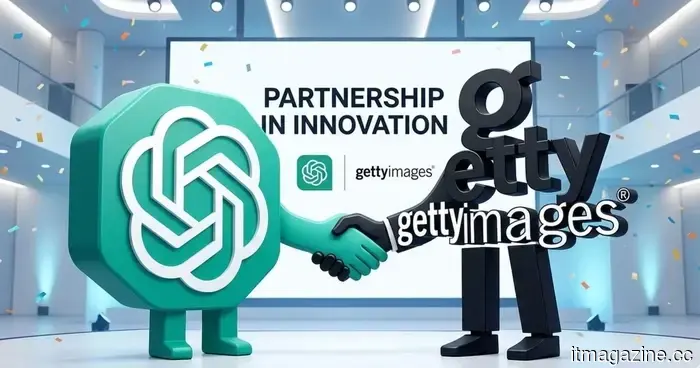 Getty Images has accused AI of complete theft. It has now become an official image partner of ChatGPT.
Getty Images has revealed a new agreement with OpenAI to incorporate its licensed visual content into ChatGPT. This partnership is significant, considering Getty's longstanding criticism of AI companies regarding the sourcing of training data, representing an unexpected development in the AI industry's relationship with content creators.
Getty Images has accused AI of complete theft. It has now become an official image partner of ChatGPT.
Getty Images has revealed a new agreement with OpenAI to incorporate its licensed visual content into ChatGPT. This partnership is significant, considering Getty's longstanding criticism of AI companies regarding the sourcing of training data, representing an unexpected development in the AI industry's relationship with content creators.
 AirPods Max 2 are currently available for $399 ahead of Prime Day, and I strongly suggest you take advantage of this deal.
The AirPods Max 2 are discounted by $150 ahead of Prime Day, bringing the price down to $399 for the first time since their launch in March.
AirPods Max 2 are currently available for $399 ahead of Prime Day, and I strongly suggest you take advantage of this deal.
The AirPods Max 2 are discounted by $150 ahead of Prime Day, bringing the price down to $399 for the first time since their launch in March.
 This modular robot lawn mower can manage up to 6 acres and is currently $1,000 discounted for Prime Day.
Amazon Prime Day This article is part of the Digital Trends Prime Day 2026 coverage Updated less than 4 hours ago This content is created in collaboration with YARBO. If you have been considering the cost of a robot mower for a truly expansive property, Prime Day has simplified your calculations. The YARBO Robot […]
Amazon is offering Indian users the opportunity to participate in beta testing a Hindi version of Alexa+.
Amazon is inviting Indian users to participate in a beta test of a Hindi version of Alexa+, its generative AI assistant, as it broadens its reach beyond English-speaking markets.
This modular robot lawn mower can manage up to 6 acres and is currently $1,000 discounted for Prime Day.
Amazon Prime Day This article is part of the Digital Trends Prime Day 2026 coverage Updated less than 4 hours ago This content is created in collaboration with YARBO. If you have been considering the cost of a robot mower for a truly expansive property, Prime Day has simplified your calculations. The YARBO Robot […]
Amazon is offering Indian users the opportunity to participate in beta testing a Hindi version of Alexa+.
Amazon is inviting Indian users to participate in a beta test of a Hindi version of Alexa+, its generative AI assistant, as it broadens its reach beyond English-speaking markets.
 I have a deep appreciation for Apple, but this choice regarding watchOS could be the tipping point for me.
My Apple Watch SE 2 is still functioning well. So why does it seem outdated already? Why, Apple, why?
I have a deep appreciation for Apple, but this choice regarding watchOS could be the tipping point for me.
My Apple Watch SE 2 is still functioning well. So why does it seem outdated already? Why, Apple, why?
 I really like Apple, but this decision regarding watchOS could be the tipping point for me.
My Apple Watch SE 2 is still functioning flawlessly. So why does it seem outdated already? Why, Apple, why?
I really like Apple, but this decision regarding watchOS could be the tipping point for me.
My Apple Watch SE 2 is still functioning flawlessly. So why does it seem outdated already? Why, Apple, why?
The CEO of Lovable states that the issue facing Europe's AI startups is a lack of confidence rather than a lack of talent.
Anton Osika from Lovable asserts that European entrepreneurs can establish global AI companies without relying on Silicon Valley, using his own startup with a $500 million ARR as evidence.