

Korea's policy head cautions that the chip industry windfall might drive up housing prices.
A semiconductor boom is a considerable issue for a country to face, until one begins to inquire where the profits are directed. This is essentially the question posed by South Korea's leading economic policymaker to the public this week.
Kim Yong-beom, who oversees policy planning in the presidential office, cautioned that the financial gains from the surge in AI-driven chip production might not translate into increased wages or productive investments, but rather flow back into the familiar realm of real estate.
His worry is substantiated by a striking statistic. Korea is poised for nominal growth in double digits for the first time in over twenty years, a growth primarily fueled by the soaring profits of its chip manufacturers rather than by any widespread recovery across the economy.
This situation creates a narrow boom, and such narrow booms tend to concentrate their benefits. Kim expressed concern that excess liquidity, as observed in previous cycles, might end up in the property sector and remain there.
He was straightforward regarding the implications. “If the national wealth generated by semiconductors is absorbed into unearned real estate income and the gains from growth are confined to a select few, this boom will not endure," he stated.
The terminology used is significant. Referring to real estate income as "unearned" distinguishes between wealth generated from productive activities and wealth accrued by owning desirable property at the right moment, implying that the government intends to approach the two differently.
The solution he proposed is what he termed a “normalisation of property taxation,” which involves restructuring property and capital-gains taxes that he argued should be modified in a reasonable way. While he did not provide specific proposals, the term allows for a broad interpretation of policy options.
Seoul has previously attempted to utilize property tax measures, often without significantly reducing prices for long periods, which contributes to the heightened attention surrounding the most recent indications. Officials have also mentioned that the government is monitoring liquidity influxes into the housing market, indicating that the concern is shared beyond just a single speech.
This context stems from the same chip windfall that is transforming the overall economy. Record profits from HBM have already led to considerable bonuses for memory workers at Samsung and SK Hynix, with some employees potentially receiving payouts amounting to hundreds of millions of won, and the Bank of Korea has indicated the broader inflationary impact of such cash influxes. Kim’s comments broaden the concern from general prices to a specific focus on housing.
What he is outlining is the distribution challenge underlying a positive headline figure. The chips are selling, the won is flowing, and the question Kim has highlighted is who ultimately benefits from this wealth. The tax adjustments he seeks to normalize are the initial tools he is aiming to employ.
Другие статьи
 Hackers have released facial recognition data associated with millions of visitors to Madison Square Garden.
A group of cybercriminals has released what it alleges to be millions of records obtained from Madison Square Garden Entertainment. The breach is garnering interest not only due to its magnitude but also because it contains facial recognition information, internal evaluations of threats, and comprehensive visitor profiles.
Hackers have released facial recognition data associated with millions of visitors to Madison Square Garden.
A group of cybercriminals has released what it alleges to be millions of records obtained from Madison Square Garden Entertainment. The breach is garnering interest not only due to its magnitude but also because it contains facial recognition information, internal evaluations of threats, and comprehensive visitor profiles.
 Intel Core 3 test indicates it might provide Windows laptops a competitive edge against MacBook Neo.
The upcoming Intel Core i3-304 processor has surfaced in new benchmarks, showing PassMark scores that are unexpectedly near those of Apple's MacBook Neo powered by the A18 Pro.
Intel Core 3 test indicates it might provide Windows laptops a competitive edge against MacBook Neo.
The upcoming Intel Core i3-304 processor has surfaced in new benchmarks, showing PassMark scores that are unexpectedly near those of Apple's MacBook Neo powered by the A18 Pro.
 The self-sustaining shaking capsule demonstrates the potential for safe drinking water right at our fingertips.
Scientists have created a self-sustaining floating capsule that harnesses kinetic energy to identify contaminated water and purify it, eliminating the need for batteries or chemicals.
The self-sustaining shaking capsule demonstrates the potential for safe drinking water right at our fingertips.
Scientists have created a self-sustaining floating capsule that harnesses kinetic energy to identify contaminated water and purify it, eliminating the need for batteries or chemicals.
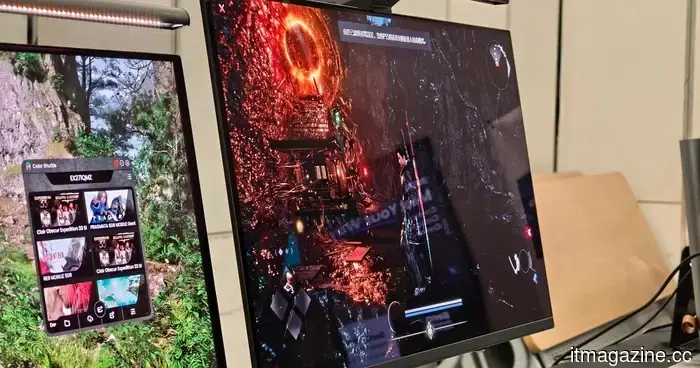 Forget about RTX filters. BenQ’s gaming monitor enhances visuals on its own.
BenQ's MOBIUZ gaming monitors leverage AI-driven Smart Color and Color Shuttle to automatically adjust game visuals on the display, featuring shareable presets without impacting GPU performance.
Forget about RTX filters. BenQ’s gaming monitor enhances visuals on its own.
BenQ's MOBIUZ gaming monitors leverage AI-driven Smart Color and Color Shuttle to automatically adjust game visuals on the display, featuring shareable presets without impacting GPU performance.
 Korea's top policy official cautions that a surge in chip profits may lead to increased housing prices.
Kim Yong-beom warns that the wealth generated from Korea's semiconductor boom could become concentrated in real estate and is advocating for reforms in housing taxation.
Korea's top policy official cautions that a surge in chip profits may lead to increased housing prices.
Kim Yong-beom warns that the wealth generated from Korea's semiconductor boom could become concentrated in real estate and is advocating for reforms in housing taxation.
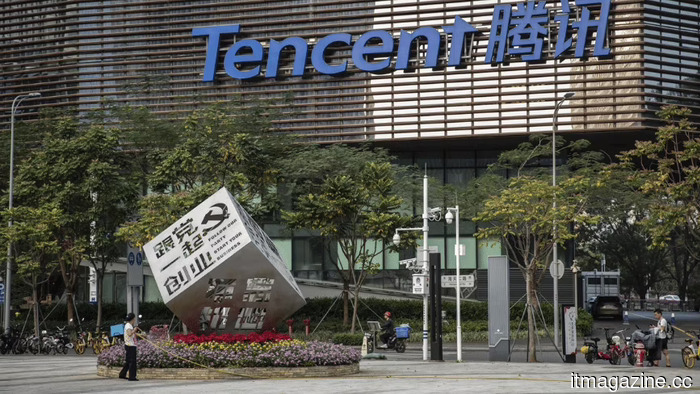 WeChat has initiated testing of Xiaowei as Tencent prepares for an AI launch in the third quarter.
Tencent has started testing Xiaowei, an AI assistant that functions through voice and text within WeChat, with plans for a complete public launch in the third quarter.
WeChat has initiated testing of Xiaowei as Tencent prepares for an AI launch in the third quarter.
Tencent has started testing Xiaowei, an AI assistant that functions through voice and text within WeChat, with plans for a complete public launch in the third quarter.
Korea's policy head cautions that the chip industry windfall might drive up housing prices.
Kim Yong-beom warns that the wealth generated by Korea’s semiconductor boom could become concentrated in real estate, and he is advocating for reforms in housing taxation.