

Pixi aims to transform your dull text messages by using AR characters that respond to you.
iMessage users can now send entertaining AI characters, such as a cat or robot, to their friends.
Forget about stickers and GIFs; a new app named Pixi Garden allows you to send interactive augmented reality characters via iMessage.
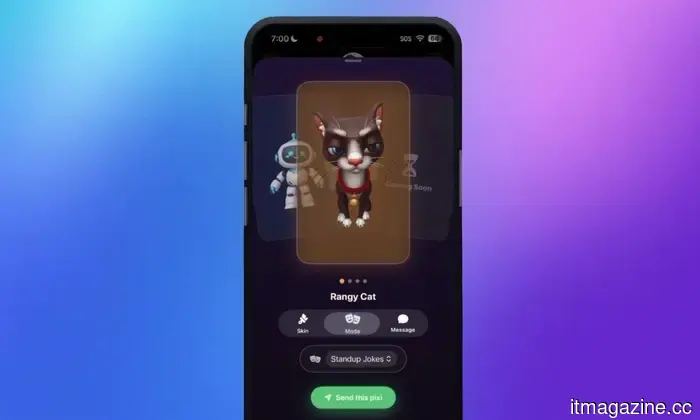
Pixi Platforms has launched this messaging app today, enabling users to create and dispatch a “pixi” – an intelligent AR character that springs to life through the recipient’s phone camera and reacts to its surroundings.
What distinguishes a Pixi from a sticker or filter?
A pixi is not a mere static sticker or filter. It operates using an integrated AI system that enables it to behave, respond, and stay aware of its context. Machine learning sensors monitor the environment and pick up on the happenings around the recipient.
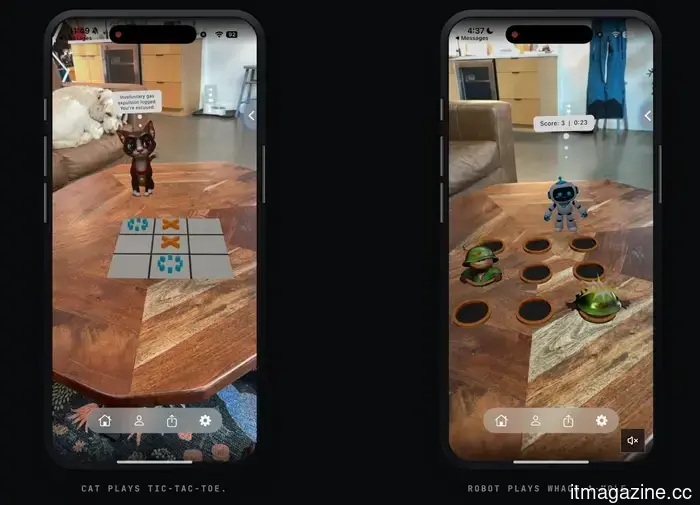
As reported by TechCrunch, a virtual cat sent through Pixi could react to a real dog passing by or respond to your facial expressions in real time. The publication highlighted that during a company demonstration, a stand-up comedy act concluded when the viewer smiled.
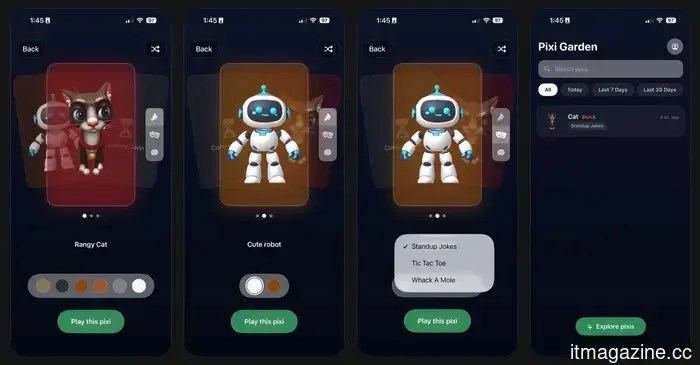
Upon launch, users can enjoy 3D characters including a robot, a cat, and an animated envelope that pursues you across the screen, in addition to simple games like tic-tac-toe and whack-a-mole. The most notable feature is that all processing occurs on your iPhone, ensuring your data remains secure.
CEO Mark Drummond, a co-founder of Siri, explained that the intention is to replace traditional e-cards and greeting cards with a solution designed for modern communication.
Pixi has grander aspirations for its engaging characters
The company aims to develop a marketplace where studios, brands, and independent creators can share their own characters, similar to how Roblox established a marketplace for games.
Drummond has even suggested including Alice in Wonderland, which is public domain, among the characters. The app is free and currently available for iPhone 11 and later through the App Store, with plans for an Android version and adaptation for other messaging platforms like WhatsApp in the future.
If this becomes popular, the simple text bubble might finally receive the modernization it has needed for years.
Manisha Priyadarshini is a tech and entertainment writer with over nine years of editorial experience.
Samsung's latest patent reveals a foldable phone that transforms into a box
Samsung has received a US design patent for what may be its most unique display concept yet. The patent describes a device that, when folded, resembles a long rectangular block, which can unfold to reveal a significantly larger screen. It was submitted in January 2023 and was granted this month.
KAIST researchers address AI vision's excessive demands with a new technique
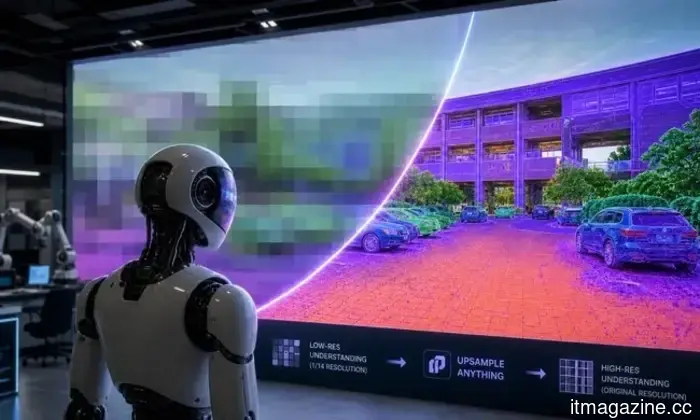
KAIST researchers have introduced an AI vision approach aimed at a challenge that phone manufacturers can't ignore perpetually. Their method, called Upsample Anything, reconstructs high-resolution visual features from compressed image data, aiming to enhance on-device AI sharpness while significantly reducing GPU memory requirements.
Phones currently rely on compression to facilitate rapid camera-based intelligence. However, this often results in the loss of small objects, fine edges, and subtle flaws before a vision system can extract sufficient detail.
Google Photos' AI image editing feature expands to additional regions, but only for Android users
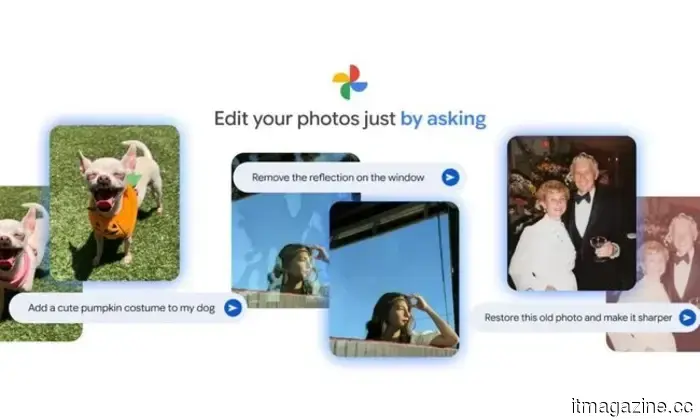
Google has rolled out an AI-driven editing feature in Google Photos called "Edit with Ask Photos," which lets users make adjustments using natural language descriptions. Originally available in a select few countries, Google is now broadening this capability to five more markets, increasing its reach from four to nine countries.

Other articles
 GTA 6 might still be a long time coming, so Rockstar has given GTA 5 a new look.
Rockstar has launched a complimentary upgrade for GTA 5 owners, offering improved graphics, quicker loading times, new vehicles, and next-gen features to PC users in anticipation of GTA 6.
GTA 6 might still be a long time coming, so Rockstar has given GTA 5 a new look.
Rockstar has launched a complimentary upgrade for GTA 5 owners, offering improved graphics, quicker loading times, new vehicles, and next-gen features to PC users in anticipation of GTA 6.
 A mutual bank that has been in operation for 201 years has recently established an AI Center of Excellence in collaboration with a startup partner.
Liberty Bank, the oldest mutual bank in the United States with assets totaling $9 billion, has established an AI Center of Excellence in collaboration with enterprise AI partner Flare AI.
A mutual bank that has been in operation for 201 years has recently established an AI Center of Excellence in collaboration with a startup partner.
Liberty Bank, the oldest mutual bank in the United States with assets totaling $9 billion, has established an AI Center of Excellence in collaboration with enterprise AI partner Flare AI.
 Pixi aims to enhance your dull text messages by introducing AR characters that respond to you.
Pixi Platforms has introduced an iMessage app that allows users to send interactive AR characters that can respond to their real-world environment and facial expressions.
Pixi aims to enhance your dull text messages by introducing AR characters that respond to you.
Pixi Platforms has introduced an iMessage app that allows users to send interactive AR characters that can respond to their real-world environment and facial expressions.
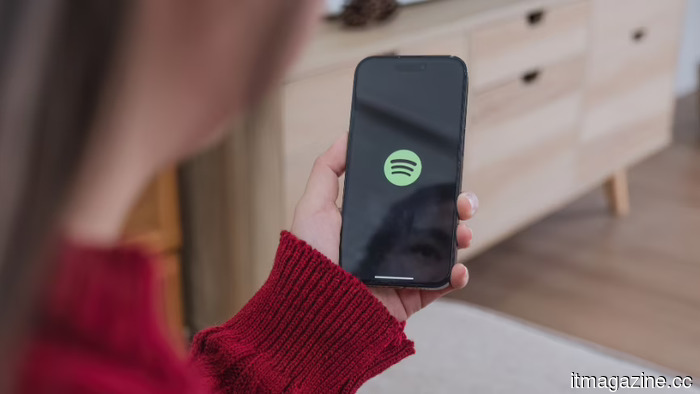 Spotify introduces Reserved ticketing for dedicated fans.
Spotify's Reserved feature retains concert tickets for Premium subscribers, utilizing listening data, and is debuting in the US via a multi-year exclusive agreement with Live Nation.
Spotify introduces Reserved ticketing for dedicated fans.
Spotify's Reserved feature retains concert tickets for Premium subscribers, utilizing listening data, and is debuting in the US via a multi-year exclusive agreement with Live Nation.
 GTA 6 might still be a while off, so Rockstar has given GTA 5 a new makeover.
Rockstar has launched a complimentary update for GTA 5 owners, which introduces improved graphics, quicker loading times, additional vehicles, and next-generation features for PC players in anticipation of GTA 6.
GTA 6 might still be a while off, so Rockstar has given GTA 5 a new makeover.
Rockstar has launched a complimentary update for GTA 5 owners, which introduces improved graphics, quicker loading times, additional vehicles, and next-generation features for PC players in anticipation of GTA 6.
 Spotify introduces Reserved ticketing for dedicated fans.
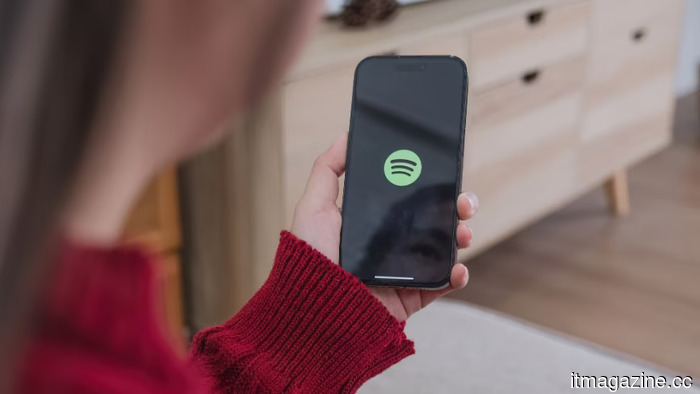
Spotify's Reserved feature will retain concert tickets for Premium members based on their listening habits, debuting in the US through a multi-year exclusive partnership with Live Nation.
Spotify introduces Reserved ticketing for dedicated fans.
Spotify's Reserved feature will retain concert tickets for Premium members based on their listening habits, debuting in the US through a multi-year exclusive partnership with Live Nation.
Pixi aims to transform your dull text messages by using AR characters that respond to you.
Pixi Platforms has introduced an iMessage app that enables users to send smart AR characters that can respond to real-world environments and facial expressions.