
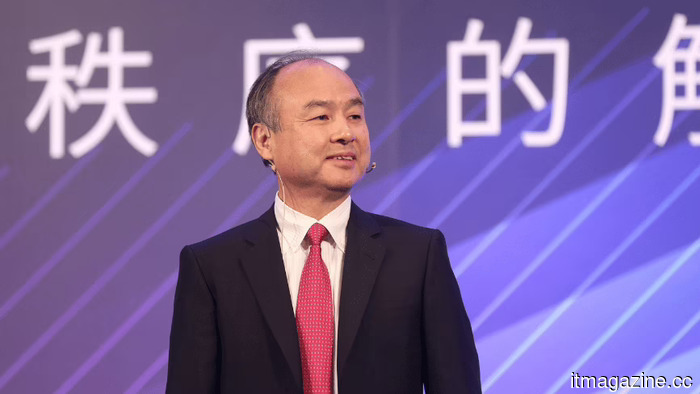
SoftBank and OpenAI introduce 'Patching as a Service' in Japan.
SoftBank and OpenAI are venturing into cyber defense. On Tuesday, they announced the launch of “Patching as a Service,” a security offering based on OpenAI's technology aimed at protecting the companies that manage Japan’s critical infrastructure from an increasing number of cyberattacks. SoftBank’s founder, Masayoshi Son, described the threat in severe terms, referring to Japan’s vulnerability as “a crisis” and comparing modern AI-driven attacks to machine guns replacing traditional rifle shots.
The actual functionality of the service is more specific than its name implies. It conducts an AI-enhanced vulnerability assessment, assists in planning remedial measures for identified weaknesses, and provides guidance on implementation. However, it does not apply the patches directly, and SoftBank emphasizes that skilled human teams are responsible for prioritizing and planning the responses.
The initial clients will be those who operate national infrastructure. During the launch, Son estimated that around 3,000 companies managing Japan’s airports, power systems, and transportation would be targeted, although the official announcement outlines a more cautious and selective approach to outreach for “eligible companies.”
The rationale behind SoftBank and OpenAI offering security solutions lies in a straightforward yet unsettling logic: since attackers are using AI to automate and enhance their assaults, defenses must also leverage AI technology. The same models capable of identifying system vulnerabilities can be repurposed to detect them proactively.
SoftBank claims to have tested this approach internally, conducting a comprehensive evaluation of its own systems using OpenAI’s cyber models, which yielded “promising results,” and these insights were incorporated into the new product.
This launch is facilitated through SB OAI Japan GK, the 50:50 joint venture formed last year by SoftBank and OpenAI to develop and market OpenAI-based services in Japan, utilizing SoftBank Corp.’s operational expertise. SoftBank is already one of OpenAI’s significant investors and a partner in its data center expansion, making this product a natural extension of their collaboration. OpenAI’s CEO, Sam Altman, remarked that “AI is transforming cybersecurity,” positioning the aim as developing tools that “accelerate defenders.”
While the launch generated attention, specifics like pricing were less prominent. SoftBank has not disclosed a price for the service or any contract values; attendees of the Tokyo event can request a complimentary assessment. Altman, expected to attend in person, participated instead via a brief video message due to an unexpected early arrival of his daughter, while OpenAI's chief researcher, Mark Chen, stepped in.
A notable caveat lies in the disparity between the service name and its actual offering. “Patching as a Service” implies automatic closure of vulnerabilities; what is being delivered resembles an AI-assisted audit accompanied by a remediation strategy, with human intervention still required for applying fixes. This aspect is critical in systems where a single overlooked flaw could disrupt a power grid or an airport.
SoftBank is counting on the idea that defenders can act more swiftly with AI than without. This assumption seems logical, but its success will hinge on whether the vulnerabilities are indeed addressed effectively.
Other articles
 France’s intelligence agency is replacing Palantir with a domestically developed competitor.
The DGSI will substitute Palantir’s data tools with ChapsVision’s ArgonOS, just six months after extending the American company’s contract.
France’s intelligence agency is replacing Palantir with a domestically developed competitor.
The DGSI will substitute Palantir’s data tools with ChapsVision’s ArgonOS, just six months after extending the American company’s contract.
 OpenAI invested $34 billion last year as it prepares for a public offering.
The Financial Times reports that OpenAI incurred expenses of $34 billion in 2025 while generating $13 billion in revenue, as it prepares for a confidential IPO aiming for a $1 trillion valuation.
OpenAI invested $34 billion last year as it prepares for a public offering.
The Financial Times reports that OpenAI incurred expenses of $34 billion in 2025 while generating $13 billion in revenue, as it prepares for a confidential IPO aiming for a $1 trillion valuation.
 France's intelligence agency is replacing Palantir with a domestic competitor.
The DGSI will substitute Palantir’s data tools with ChapsVision’s ArgonOS, just six months after extending the contract with the American company.
France's intelligence agency is replacing Palantir with a domestic competitor.
The DGSI will substitute Palantir’s data tools with ChapsVision’s ArgonOS, just six months after extending the contract with the American company.
 China has enlisted 26 financial institutions for cross-border payments using the digital yuan.
Beijing is broadening its digital yuan network for international transactions, marking the latest move to extend the e-CNY beyond domestic retail.
China has enlisted 26 financial institutions for cross-border payments using the digital yuan.
Beijing is broadening its digital yuan network for international transactions, marking the latest move to extend the e-CNY beyond domestic retail.
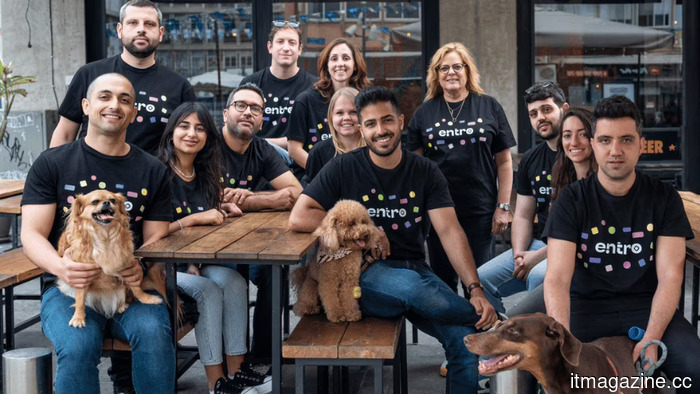 SailPoint is acquiring Entro to enhance its Agentic Fabric.
SailPoint intends to acquire Entro, based in Tel Aviv, for approximately $200 million, aiming to enhance its Agentic Fabric platform with non-human identity discovery capabilities.
SailPoint is acquiring Entro to enhance its Agentic Fabric.
SailPoint intends to acquire Entro, based in Tel Aviv, for approximately $200 million, aiming to enhance its Agentic Fabric platform with non-human identity discovery capabilities.
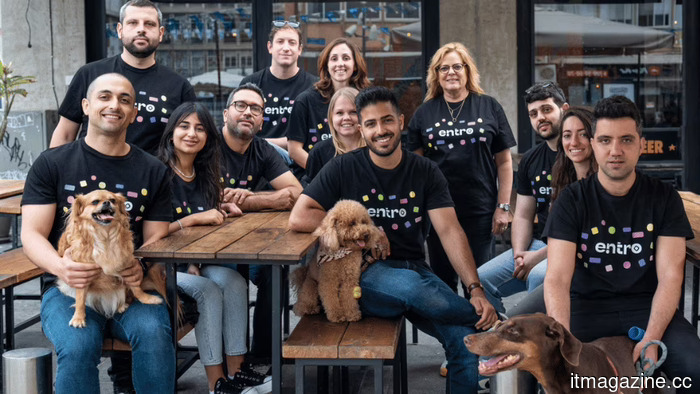 SailPoint is set to acquire Entro to enhance its Agentic Fabric.
SailPoint intends to acquire Entro, based in Tel Aviv, for approximately $200 million, with the aim of incorporating non-human identity discovery into its Agentic Fabric platform.
SailPoint is set to acquire Entro to enhance its Agentic Fabric.
SailPoint intends to acquire Entro, based in Tel Aviv, for approximately $200 million, with the aim of incorporating non-human identity discovery into its Agentic Fabric platform.
SoftBank and OpenAI introduce 'Patching as a Service' in Japan.
SoftBank and OpenAI have introduced 'Patching as a Service', a tool driven by OpenAI that identifies and addresses cyber vulnerabilities in Japan's critical infrastructure companies.