

France’s intelligence agency is replacing Palantir with a domestically developed competitor.
France's domestic intelligence agency is discontinuing its partnership with Palantir. The DGSI will transition from the American company's data-analysis tools to software from the French firm ChapsVision, as announced by Prime Minister Sebastien Lecornu on Tuesday. He framed this change as part of a broader initiative to prioritize sovereign technology within the French government.
The timing of this decision is noteworthy. Palantir had announced the renewal of its three-year contract with the DGSI in December 2025, extending a collaboration that lasted nearly a decade. Six months later, the very agency that agreed to that renewal is now preparing to terminate it. The French government did not clarify how these two decisions align, creating a confusing sequence of events.
The new software being adopted is ChapsVision's ArgonOS, an AI-driven data-processing platform developed by entrepreneur Olivier Dellenbach's company. ChapsVision had strategically positioned itself for this opportunity, having participated in a French procurement process that began in 2022 to provide a heterogeneous data-processing tool, competing against entities like the Thales-Eviden joint venture Athea and others.
As of late 2025, none of the domestic candidates had reached an operational level, which is one reason Palantir retained the contract initially. This ongoing gap between aspirations and practical readiness has been a consistent narrative regarding Palantir in France. While sovereignty was always the declared objective, the lack of a domestic tool capable of matching Palantir's capabilities continually pushed back the timeline for change.
This announcement signifies the government's belief that the alternative is now sufficiently viable to warrant commitment, regardless of the procurement history. This move also aligns with a broader European shift away from the company. Germany's domestic intelligence agency, the BfV, recently selected ChapsVision over Palantir for its own data analysis, while the Bundeswehr is advocating for a secure cloud solution without structural access from foreign firms.
Consequently, Palantir has faced rejection from the German military and investor concerns simultaneously. In the UK, the government is reassessing its £330 million NHS contract with the firm. This reflects a trend among European governments reconsidering the extent to which sensitive infrastructure should rely on American software.
In response to this shift, France has been intentionally developing alternatives. The ChapsVision decision coincided with Lecornu's confirmation that French civil servants would receive an AI assistant powered by Mistral, a company frequently promoted by the government as Europe’s sovereign solution to American research institutions. Mistral’s CEO, Arthur Mensch, has advocated for Europe to have its own AI infrastructure rather than depending on external sources, and the DGSI transition exemplifies this argument in a critical governmental area.
Details regarding the timeline for the handover, the value of the ChapsVision contract, and the future of the recently renewed Palantir agreement have not been disclosed. Transitioning an intelligence service from one analytical platform to another is complex and will likely take longer than the announcement suggests. Palantir has not yet commented on the French government's decision.
Other articles
 SoftBank and OpenAI introduce 'Patching as a Service' in Japan.
SoftBank and OpenAI have introduced 'Patching as a Service', a tool driven by OpenAI that identifies and addresses cyber vulnerabilities in Japan's critical infrastructure companies.
SoftBank and OpenAI introduce 'Patching as a Service' in Japan.
SoftBank and OpenAI have introduced 'Patching as a Service', a tool driven by OpenAI that identifies and addresses cyber vulnerabilities in Japan's critical infrastructure companies.
 France's intelligence agency is replacing Palantir with a domestic competitor.
The DGSI will substitute Palantir’s data tools with ChapsVision’s ArgonOS, just six months after extending the contract with the American company.
SpaceX surpasses Amazon as its post-IPO surge continues.
On Tuesday, SpaceX's value surged by over 10%, bringing it close to $2.8 trillion and surpassing Amazon, just days after the biggest IPO ever.
France's intelligence agency is replacing Palantir with a domestic competitor.
The DGSI will substitute Palantir’s data tools with ChapsVision’s ArgonOS, just six months after extending the contract with the American company.
SpaceX surpasses Amazon as its post-IPO surge continues.
On Tuesday, SpaceX's value surged by over 10%, bringing it close to $2.8 trillion and surpassing Amazon, just days after the biggest IPO ever.
 1Password acquires Apono to manage access for AI agents.
1Password has purchased the Israeli startup Apono for an estimated $250 million to $300 million, aiming to manage access for humans, machines, and AI agents within company systems.
1Password acquires Apono to manage access for AI agents.
1Password has purchased the Israeli startup Apono for an estimated $250 million to $300 million, aiming to manage access for humans, machines, and AI agents within company systems.
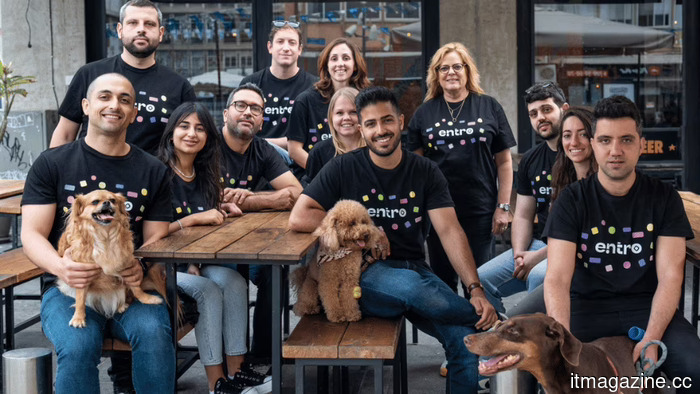 SailPoint is set to acquire Entro to enhance its Agentic Fabric.
SailPoint intends to acquire Entro, based in Tel Aviv, for approximately $200 million, with the aim of incorporating non-human identity discovery into its Agentic Fabric platform.
SailPoint is set to acquire Entro to enhance its Agentic Fabric.
SailPoint intends to acquire Entro, based in Tel Aviv, for approximately $200 million, with the aim of incorporating non-human identity discovery into its Agentic Fabric platform.
 OpenAI invested $34 billion last year as it prepares for a public offering.
The Financial Times reports that OpenAI incurred expenses of $34 billion in 2025 while generating $13 billion in revenue, as it prepares for a confidential IPO aiming for a $1 trillion valuation.
OpenAI invested $34 billion last year as it prepares for a public offering.
The Financial Times reports that OpenAI incurred expenses of $34 billion in 2025 while generating $13 billion in revenue, as it prepares for a confidential IPO aiming for a $1 trillion valuation.
France’s intelligence agency is replacing Palantir with a domestically developed competitor.
The DGSI will substitute Palantir’s data tools with ChapsVision’s ArgonOS, just six months after extending the American company’s contract.