

France's intelligence agency is replacing Palantir with a domestic competitor.
France's domestic intelligence agency is terminating its relationship with Palantir. Prime Minister Sebastien Lecornu announced on Tuesday that the DGSI will substitute the American company's data-analysis tools with software from ChapsVision, a French firm, positioning this change as part of a broader initiative to place sovereign technology at the forefront of the French state.
The timing of this decision is noteworthy. Palantir had announced a renewal of its three-year contract with the DGSI in December 2025, extending a collaboration that had lasted nearly a decade. Just six months later, the agency that signed the renewal is now preparing to depart from it. The French government did not clarify how these two decisions align, making the sequence of events rather puzzling.
The new tool will be ChapsVision’s ArgonOS, an AI-enabled data-processing platform developed by the company led by entrepreneur Olivier Dellenbach. ChapsVision strategically positioned itself for this opportunity, having participated in a French procurement process initiated in 2022 for a heterogeneous data-processing solution, competing against the Thales-Eviden joint venture Athea and others.
As of late 2025, none of the domestic candidates had reached an operational stage, which is part of why Palantir maintained its contract. The gap between ambition and actual readiness has been a recurring theme regarding France's dealings with Palantir. The goal of sovereignty was always articulated, but the lack of a homegrown tool that could rival Palantir’s capabilities kept delaying progress.
This announcement signals that the government believes the alternative is now sufficiently viable to proceed with, regardless of whether past procurement results fully support that conclusion.
This shift occurs amid a broader European trend away from Palantir. Germany’s domestic intelligence agency, the BfV, recently opted for ChapsVision over Palantir for its own data analysis needs, while the Bundeswehr has been advocating for a secure cloud environment free from foreign firm access.
Consequently, Palantir is experiencing both rejection from the German military and growing investor concerns simultaneously. In the UK, the government is currently evaluating its £330m NHS contract with the company. This reflects a common trend among European governments reassessing the extent to which their most critical infrastructure relies on American software.
This reconsideration has created a new class of beneficiaries, and France has been developing it deliberately. The announcement regarding ChapsVision coincided with Lecornu’s confirmation that French civil servants will receive an AI assistant powered by Mistral, the company frequently cited by the government as Europe’s sovereign response to American technology.
Mistral’s CEO, Arthur Mensch, has advocated for the past two years that Europe should possess and manage its own AI infrastructure rather than leasing it, and the DGSI's switch exemplifies this principle applied to the most sensitive areas of governance.
However, details regarding the timeline for the transition, the value of the ChapsVision contract, and the future of the recently renewed Palantir agreement have not been disclosed. Transferring an intelligence service from one analytical platform to another entails a complex process that will likely extend well beyond the announcement. Palantir has not provided immediate comments on the French decision.
Other articles
 With Europe increasing its military capabilities, the 'wingman' drone is prominently featured at the Berlin airshow.
At the Berlin airshow, AI-operated ‘loyal wingman’ drones took center stage as Airbus, Boeing, Helsing, and General Atomics showcased their offerings to European armed forces.
SpaceX surpasses Amazon as its post-IPO surge continues.
On Tuesday, SpaceX's value surged by over 10%, bringing it close to $2.8 trillion and surpassing Amazon, just days after the biggest IPO ever.
With Europe increasing its military capabilities, the 'wingman' drone is prominently featured at the Berlin airshow.
At the Berlin airshow, AI-operated ‘loyal wingman’ drones took center stage as Airbus, Boeing, Helsing, and General Atomics showcased their offerings to European armed forces.
SpaceX surpasses Amazon as its post-IPO surge continues.
On Tuesday, SpaceX's value surged by over 10%, bringing it close to $2.8 trillion and surpassing Amazon, just days after the biggest IPO ever.
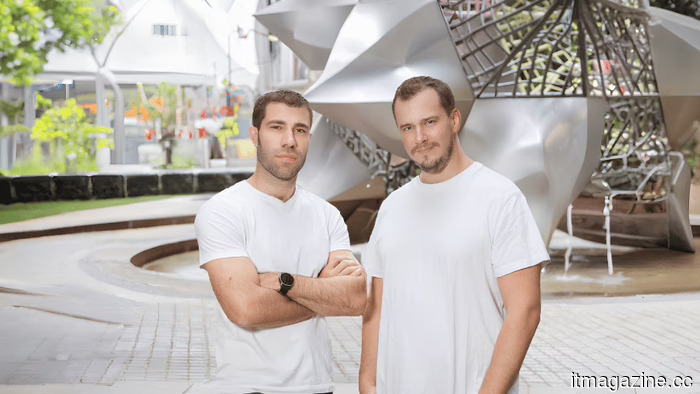 1Password acquires Apono to manage access for AI agents.
1Password has purchased the Israeli startup Apono for an estimated $250 million to $300 million, aiming to manage access for humans, machines, and AI agents within company systems.
1Password acquires Apono to manage access for AI agents.
1Password has purchased the Israeli startup Apono for an estimated $250 million to $300 million, aiming to manage access for humans, machines, and AI agents within company systems.
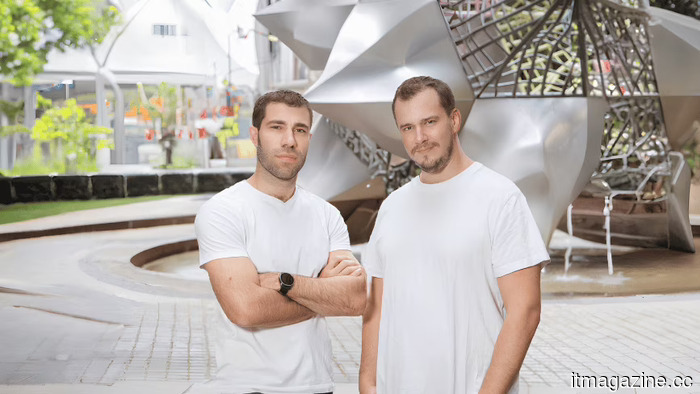 1Password acquires Apono to manage access for AI agents.
1Password has purchased the Israeli startup Apono, with reports estimating the deal to be worth between $250 million and $300 million, to manage access for humans, machines, and AI agents within company systems.
1Password acquires Apono to manage access for AI agents.
1Password has purchased the Israeli startup Apono, with reports estimating the deal to be worth between $250 million and $300 million, to manage access for humans, machines, and AI agents within company systems.
 SoftBank and OpenAI introduce 'Patching as a Service' in Japan.
SoftBank and OpenAI have introduced 'Patching as a Service', a tool powered by OpenAI designed to identify and address cybersecurity vulnerabilities in Japan's critical infrastructure companies.
SoftBank and OpenAI introduce 'Patching as a Service' in Japan.
SoftBank and OpenAI have introduced 'Patching as a Service', a tool powered by OpenAI designed to identify and address cybersecurity vulnerabilities in Japan's critical infrastructure companies.
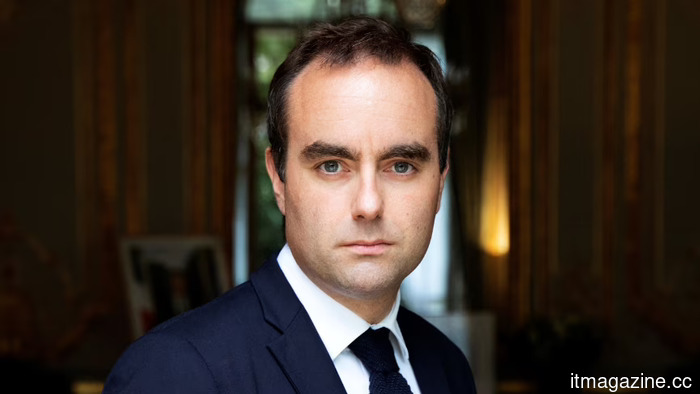 France will allocate €655 million towards artificial intelligence and establish a unified chatbot for the entire civil service.
Prime Minister Sebastien Lecornu has committed €655 million for artificial intelligence, which includes funding for a sovereign chatbot intended for approximately one million employees of the French state.
France will allocate €655 million towards artificial intelligence and establish a unified chatbot for the entire civil service.
Prime Minister Sebastien Lecornu has committed €655 million for artificial intelligence, which includes funding for a sovereign chatbot intended for approximately one million employees of the French state.
France's intelligence agency is replacing Palantir with a domestic competitor.
The DGSI will substitute Palantir’s data tools with ChapsVision’s ArgonOS, just six months after extending the contract with the American company.