
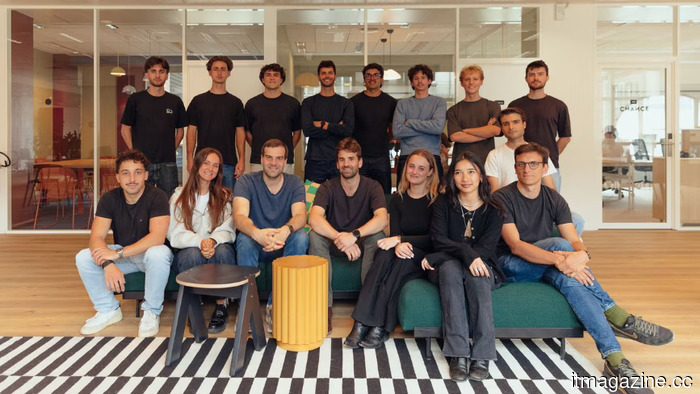
Rocapine secures $13 million to develop wellness applications that focus on support rather than addiction.
Rocapine, a Paris-based venture studio focused on developing wellness applications, has secured $13 million in a Series A funding round led by Educapital, as announced by the company. The concept represents a clever reversal: utilizing strategies that made mobile gaming addictive—such as rapid iteration, AI-driven development, and performance marketing—aimed instead at promoting beneficial outcomes. The goal is not to increase screen time but rather to encourage what the studio refers to as “time well spent.”
The approach begins with a statistic. The company highlights that the average individual, according to DataReportal, spends approximately five hours and 16 minutes daily on smartphones designed for engagement, accumulating nearly 15 years over a lifetime. Rocapine’s applications are designed to “hold instead of hook,” integrating into daily habits by offering value rather than creating dependence.
Founded in late 2024 by Stanislas Marchand, who previously worked at the mobile gaming unicorn Voodoo, along with Jean-Gabriel Boinot-Tramoni and Sammy Teillet, the studio operates as a high-speed publisher: testing hundreds of ideas annually, often collaborating with independent developers, and then refining and scaling the few that prove successful.
The company reports achieving $6 million in annual recurring revenue within just nine months of its launch, driven by over 2.5 million downloads, with 70% of its revenue originating from the United States. One of its apps reportedly reached $1 million in annual recurring revenue just 16 days post-launch.
Rocapine’s current app portfolio includes options in women’s health, habit formation, and overcoming compulsive behaviors, featuring applications like Harmony, That Girl, and Unchaind. The new funding will be directed toward transforming initial successes into leading products in their categories, expanding the testing capability to 400 apps this year, and enhancing the underlying AI, data, and marketing infrastructure.
“Technology was meant to enhance our intelligence, health, and connectivity,” stated Stanislas Marchand, co-founder and CEO. “However, much of it has become addictive, exploitative, and draining.” He referenced the cultural relevance of this issue, noting that Oxford named “brain rot” as its 2024 Word of the Year.
The market environment is favorable for the studio. In-app purchase revenues from non-gaming applications surpassed those from games for the first time in 2025, reaching approximately $85.6 billion, as per Sensor Tower, with wellness being one of the fastest-growing segments, particularly among younger demographics. Rocapine aims to positively impact the lives of at least 40 million people within the next five years.
The funding round attracted a distinguished group of stakeholders, led by Educapital, with contributions from Daphni, which led the 2024 seed round, as well as Ring Capital and Centre Court Capital, along with Jean-Charles Samuelian-Werve of Alan and founders from consumer apps like Opal and Yubo.
“The most successful consumer products gain trust by enhancing people’s lives,” commented Samuelian-Werve, an early investor, who praised the studio for leveraging AI to personalize and rapidly scale its applications. Educapital, which led this funding round, is a Paris-based impact fund concentrating on educational technology and the future of work, managing around $200 million, with a portfolio that includes Preply and 360Learning. Director Alexandre Glaser described Rocapine as “one of the most compelling narratives we have encountered in the European consumer tech space.”
Operating across Paris, Nantes, and Barcelona, the studio has a broad network of supporters rooted in French consumer and gaming sectors, including founders from Mojo, Photoroom, Knowunity, and The Sandbox, among others. The more challenging question that this funding does not answer is whether applications designed to decrease screen time can thrive using metrics that typically favor the opposite.
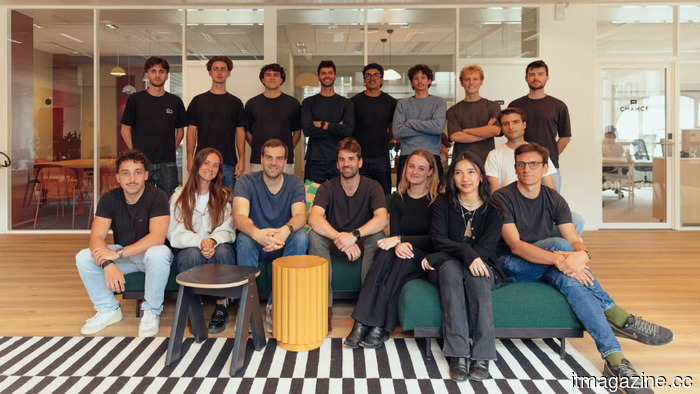
Rocapine secures $13 million to develop wellness applications that focus on support rather than addiction.
The Paris-based venture studio Rocapine has secured $13 million in a Series A funding round led by Educapital, after achieving an annual recurring revenue (ARR) of $6 million in just nine months with its wellness applications designed to reduce screen time.