
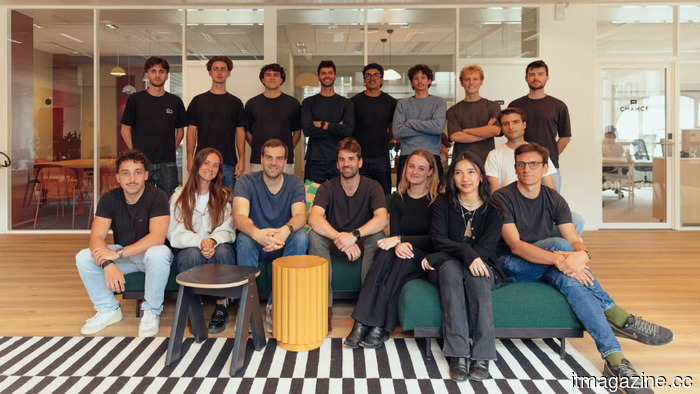
Rocapine secures $13 million to develop wellness applications that engage users without becoming addictive.
Rocapine, a venture studio in Paris focused on wellness applications, has announced the completion of a $13 million Series A funding round led by Educapital, according to the company's statement. The innovative approach flips the traditional model: instead of leveraging the strategies that make mobile gaming engaging—such as rapid iterations, AI-enhanced development, and performance marketing—Rocapine aims to promote a different goal. Rather than maximizing screen time, the studio emphasizes what it describes as "time well spent."
The foundation of their approach is rooted in statistics. As stated by the company, which references DataReportal, the average individual spends approximately five hours and 16 minutes daily on their smartphones, designed to capture their attention, which totals almost 15 years over a lifetime. The goal of Rocapine’s apps is to “hold instead of hook,” securing a spot in daily routines through usefulness rather than through creating a sense of compulsion.
Founded in late 2024 by Stanislas Marchand, who previously worked with the mobile-gaming unicorn Voodoo, along with Jean-Gabriel Boinot-Tramoni and Sammy Teillet, Rocapine employs a fast-paced publishing model. They test hundreds of app concepts yearly, often collaborating with independent developers, before refining and scaling those that resonate most with users.
The company reported reaching $6 million in annual recurring revenue within just nine months of launching, achieving over 2.5 million downloads, with 70% of its revenue coming from the United States. One of its applications reportedly reached $1 million in annual recurring revenue just 16 days after its release.
So far, Rocapine's portfolio includes apps focusing on women's health, habit formation, and breaking compulsive behaviors, featuring titles like Harmony, That Girl, and Unchaind. The newly acquired funding will help transform successful initial launches into leading products, expand the testing operation to 400 apps this year, and enhance the underlying AI, data, and marketing infrastructure.
“Technology was intended to make us smarter, healthier, and more connected,” commented Stanislas Marchand, co-founder and CEO. “However, much of it has turned out to be addictive, extractive, and draining.” He highlighted the cultural awareness surrounding this issue, noting that Oxford designated “brain rot” as its 2024 Word of the Year.
The market environment is advantageous for Rocapine. According to Sensor Tower, in-app purchase revenues from non-gaming applications surpassed those from games for the first time in 2025, reaching approximately $85.6 billion, with wellness being one of the fastest-growing sectors and attracting a younger demographic. Rocapine aims to enhance the lives of at least 40 million individuals over the next five years.
This funding round attracted a notable group of investors. In addition to being spearheaded by Educapital, it saw participation from Daphni, which led the seed funding in 2024, Ring Capital, and Centre Court Capital, as well as Jean-Charles Samuelian-Werve of Alan and founders of consumer apps like Opal and Yubo.
“The best consumer products build trust by positively impacting individuals' lives,” stated Samuelian-Werve, an early supporter, praising the studio’s use of AI to personalize and scale its applications rapidly. Educapital, which led the funding round, is a Paris-based impact fund concentrating on edtech and the future of work, managing approximately $200 million and including investments in companies like Preply and 360Learning. Alexandre Glaser, its investment director, described Rocapine as “one of the most compelling stories we have encountered in European consumer tech.”
The studio operates from Paris, Nantes, and Barcelona, and its broader base of investors includes prominent figures from the French consumer and gaming industries, encompassing founders from Mojo, Photoroom, Knowunity, and The Sandbox, among others. The more challenging question—which the funding does not answer—is whether applications designed to reduce screen time can succeed on metrics that typically favor the opposite.
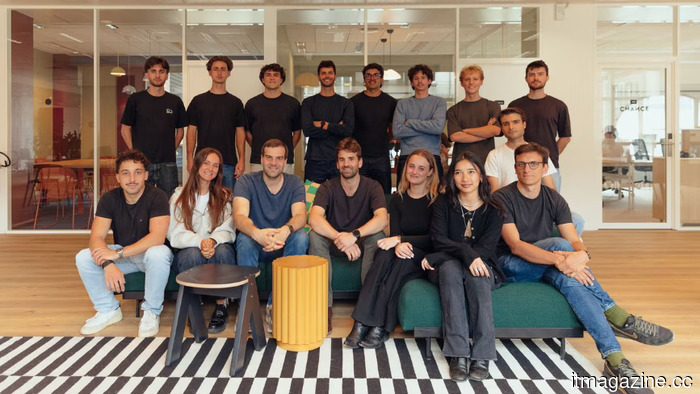
Rocapine secures $13 million to develop wellness applications that engage users without becoming addictive.
The Paris-based venture studio Rocapine has secured $13 million in a Series A funding round, spearheaded by Educapital, after achieving a $6 million annual recurring revenue (ARR) in just nine months with wellness applications designed to reduce screen time.