

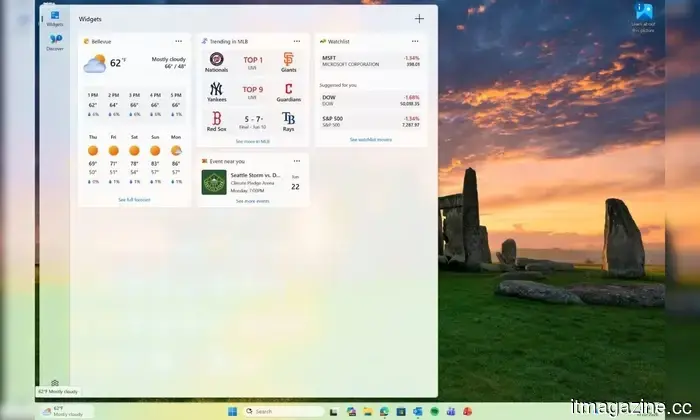
Microsoft has finally addressed the issues with Windows 11 Widgets, making them significantly less distracting.
Four years post-launch, Microsoft is finally making Widgets less bothersome by default.
If Windows Widgets have been causing you stress with an overload of information, featuring those red badges, unexpected pop-ups, and a panel that opens whenever your cursor nears the taskbar, Microsoft has finally taken note.
A new Beta build is introducing a comprehensive "quiet by default" overhaul for Widgets. Notably, the list of features being disabled is longer than that of those being retained.
So what exactly is Microsoft disabling?
Quite a bit. The company is turning off the Open on Hover feature and taskbar notifications. It is also limiting the frequency of daily alerts on the taskbar, which will only appear when you choose to access them, providing relief to Windows users.
By default, the lock screen will only display the weather widget, instead of a cluttered dashboard filled with competing information tiles that often go unnoticed.
For those who prefer badges, they will now match your Windows accent color instead of consistently being red (which created an unnecessary sense of urgency). This update is part of Windows 11 Beta Preview Build 26220.8680.
This represents Microsoft’s step back from previous designs.
Moreover, Microsoft has integrated engagement-based quieting, meaning that the less you use Widgets, the more the system will minimize notifications for you. To me, this feels more like an acknowledgment than an announcement. Regardless, the taskbar is set to become much cleaner and calmer.
Widgets were launched in Windows 11 in 2021 as a significant new feature, providing a panel with personalized content like news, weather, sports scores, stocks, and calendar details accessible from the taskbar.
However, the reality is that most users found them more frustrating due to the overwhelming amount of information to digest, with badges constantly alerting them and the panel interrupting at inopportune times.
For over five years, Shikhar has consistently simplified developments in consumer technology and has presented them...
Qualcomm is laying the groundwork for the next generation of XR technology with two announcements targeting future headset capabilities and the tools needed for their development. At the Augmented World Expo 2026, the company introduced Snapdragon Reality Elite, its new flagship XR platform designed for devices running Android XR and other mixed-reality applications. Qualcomm also announced Snapdragon START, a new initiative aimed at accelerating the market introduction of AI-driven smart glasses and wearable tech.
After months of speculation and two keynote presentations in May 2026, Google has officially launched Android 17, the stable version, rolling out today to eligible Pixel devices, including those in the Pixel 6 series up to the latest Pixel 10 models. The stable build includes many features highlighted during The Android Show and Google I/O, although Gemini Intelligence, a much-anticipated addition, will be available later this summer for select advanced devices.
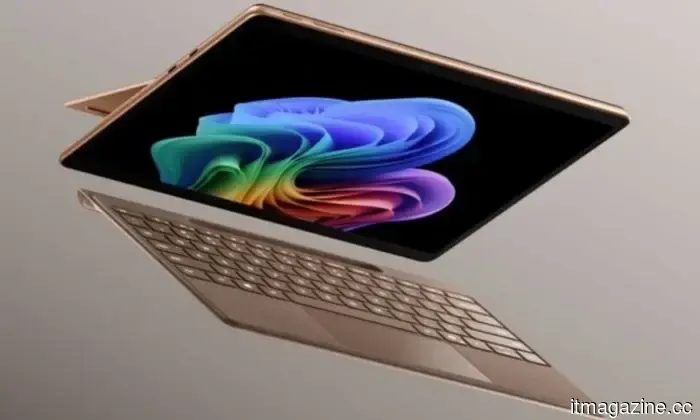
Microsoft has unveiled what it claims is its best Surface Pro yet, the 12th Edition of the 13-inch Surface Pro, which boasts significant improvements in both CPU and GPU performance, along with enhanced battery life. All these upgrades make it a highly recommended option for anyone seeking a powerful 2-in-1 laptop that can also function as a tablet while still allowing the use of a keyboard for increased productivity. However, the only hurdle is its price.




Other articles
 Intel's speculated Serpent Lake SoCs featuring Nvidia graphics could debut in 2028.
Serpent Lake has the potential to be one of Intel's most groundbreaking chips. The anticipated SoC is said to merge Intel's CPU technology with Nvidia's graphics, with a potential launch date in the first quarter of 2028.
Intel's speculated Serpent Lake SoCs featuring Nvidia graphics could debut in 2028.
Serpent Lake has the potential to be one of Intel's most groundbreaking chips. The anticipated SoC is said to merge Intel's CPU technology with Nvidia's graphics, with a potential launch date in the first quarter of 2028.
 Aiper IrriSense 2 review: An intelligent sprinkler for compact gardens
The world’s first 4-in-1 multi-zone smart irrigation system simplifies lawn care and makes it enjoyable for individuals who enjoy experimenting with data and technology.
Aiper IrriSense 2 review: An intelligent sprinkler for compact gardens
The world’s first 4-in-1 multi-zone smart irrigation system simplifies lawn care and makes it enjoyable for individuals who enjoy experimenting with data and technology.
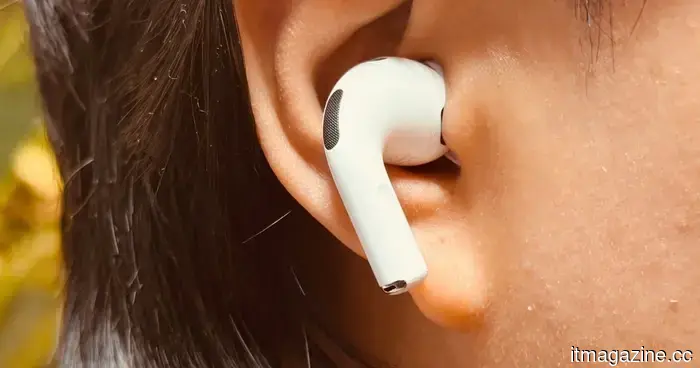 According to reports, Apple plans to include AirPods with an integrated camera in their 2027 roadmap.
Apple's long-speculated AirPods with cameras might debut in 2027, enabling Siri to comprehend a user's environment and respond to inquiries about their surroundings.
According to reports, Apple plans to include AirPods with an integrated camera in their 2027 roadmap.
Apple's long-speculated AirPods with cameras might debut in 2027, enabling Siri to comprehend a user's environment and respond to inquiries about their surroundings.
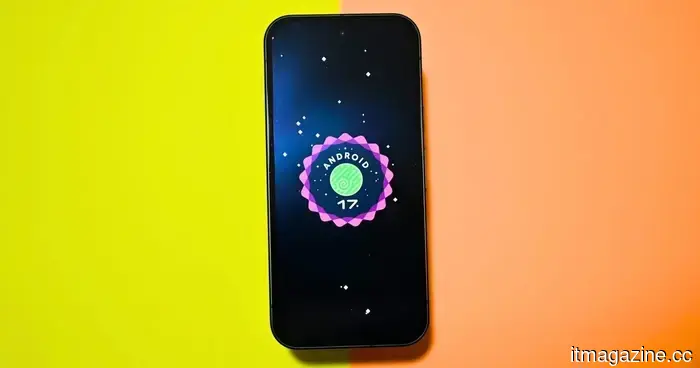 Google has launched Android 17 for Pixel smartphones.
Android 17 is being released on Pixel devices today, featuring Bubbles, creator tools, and enhancements in security, while Gemini Intelligence will arrive later this summer.
Google has launched Android 17 for Pixel smartphones.
Android 17 is being released on Pixel devices today, featuring Bubbles, creator tools, and enhancements in security, while Gemini Intelligence will arrive later this summer.
 Android 17 is set to significantly enhance the gaming experience on foldable devices.
Android 17 is committing further to mobile gaming by introducing a layout designed for foldable devices, customizable controller settings, and performance enhancements aimed at minimizing stutter.
Android 17 is set to significantly enhance the gaming experience on foldable devices.
Android 17 is committing further to mobile gaming by introducing a layout designed for foldable devices, customizable controller settings, and performance enhancements aimed at minimizing stutter.
 Are you utilizing ChatGPT or Claude for your writing tasks? Research indicates that you might be falling into a fluency trap.
A recent study reveals that AI writing tools create a fluency trap, where the polished and assured output makes writers place their trust in AI-generated text before they have thoroughly engaged in the necessary thought process.
Are you utilizing ChatGPT or Claude for your writing tasks? Research indicates that you might be falling into a fluency trap.
A recent study reveals that AI writing tools create a fluency trap, where the polished and assured output makes writers place their trust in AI-generated text before they have thoroughly engaged in the necessary thought process.
Microsoft has finally addressed the issues with Windows 11 Widgets, making them significantly less distracting.
Microsoft is rolling out a "quiet by default" refresh of Widgets, and the extensive number of features being disabled speaks volumes.