
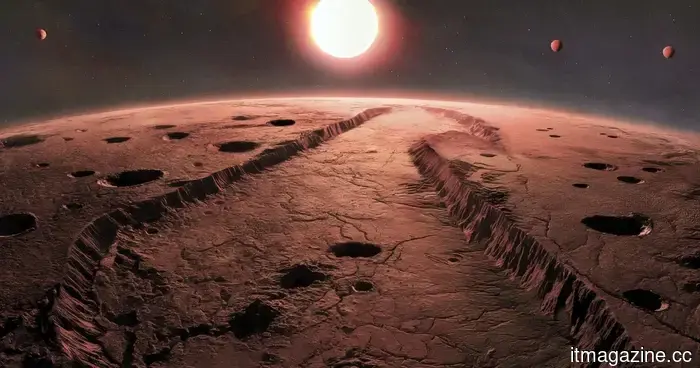
The galaxy holds a mystery regarding the size of exoplanets, and NASA's EVE mission aims to unravel it.
This planet-hunting mission aims to discover young planets before they mature.
Humanity's exploration of space has resulted in more unanswered questions than resolved issues, particularly concerning the sizing of planets. Astronomers have identified several rocky super-Earths and numerous puffier sub-Neptunes, yet there are significantly fewer planets with a radius around 1.8 times that of Earth.
This gap is termed the radius valley, and a proposed initiative named the Early eVolution Explorer, or EVE, seeks to understand the reasons behind its existence. NASA's straightforward strategy is to observe planets while they are still in their youth. The mission concept, outlined in a recent arXiv preprint and reported by Phys.org, intends to focus on nascent star clusters to examine what small planets resemble before undergoing billions of years of evolution.
NASA
The debate centers on gas dwarfs versus water worlds
There are two primary theories regarding this phenomenon. One suggests that many small planets begin with dense hydrogen and helium atmospheres. If these planets orbit too close to young, active stars, stellar radiation can strip these gases away, leaving behind rocky super-Earths. Conversely, planets positioned farther away retain their atmospheres and develop into sub-Neptunes.
The alternative theory posits that this division occurs from the onset. In this scenario, super-Earths originate as dry, rocky bodies closer to their stars, whereas sub-Neptunes emerge at greater distances as denser, potentially water-rich planets. Thus, this appears more as a natural sorting process rather than a significant stripping incident. EVE aims to resolve this debate by examining planets less than 50 million years old.
EVE will observe thousands of young stars
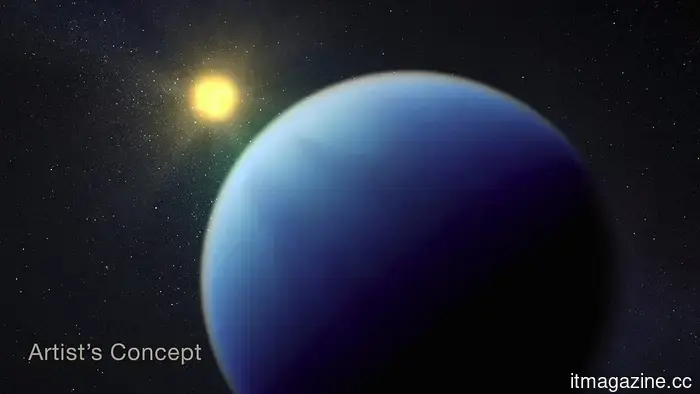
This artistic representation illustrates what the hot sub-Neptune exoplanet TOI-421 b may resemble. NASA, ESA, CSA, Dani Player (STScI)
The proposed mission would scrutinize 30 different regions of young star clusters for 30 days each, encompassing approximately 20,000 newly formed stars over a projected 2.5-year mission. To manage the chaos of young, flare-prone stars, EVE plans to utilize three sensors, including near-ultraviolet, optical, and near-infrared.
Since stellar flares can simulate planetary signals, the multi-band approach would enhance clarity. Researchers aspire that EVE could mitigate the noise and uncover actual transiting planets by tracking flare activities in ultraviolet light.
Vikhyaat Vivek is a technology journalist and reviewer with seven years of experience focusing on consumer hardware.
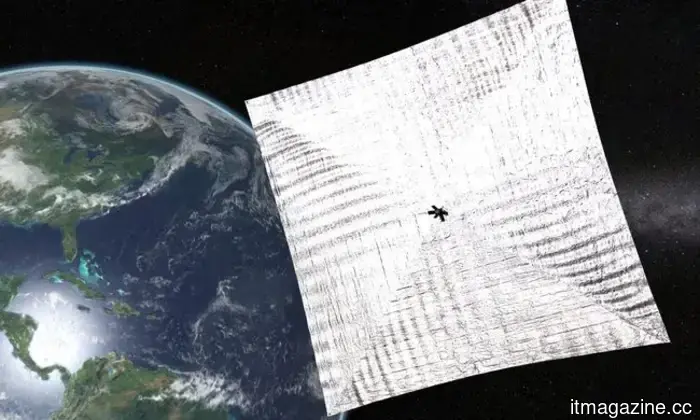
Lightsails face another challenge on the path to interstellar travel
The most intriguing idea for interstellar travel might be hindered by the very light that propels it.
Laser-powered lightsails represent an exciting solution for space travel. While it might not sound as futuristic as a warp drive, its feasibility has come into question. Using lightsails, a spacecraft could deploy a very thin reflective sail and allow a powerful laser to propel it toward another star without the need for fuel. The technology is simple and clever, yet it is also more complex than it seems. A new preprint from researchers Chao Shen and Jiaze Li of the Harbin Institute of Technology proposes that relativistic lightsails may encounter an unforeseen propulsion issue as they accelerate to extremely high speeds.
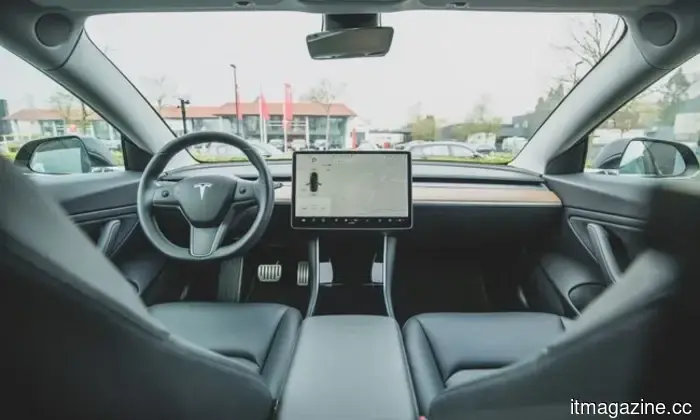
We just received an exciting signal that a Tesla and SpaceX merger could be on the horizon after all.
For years, the prospect of Tesla and SpaceX merging has fluctuated between ambitious speculation and Elon Musk-inspired fantasy. The two companies already share connections, leadership influences, engineering talent, and long-term objectives. However, whenever the topic arose, it seemed more like an intriguing thought experiment than a genuine possibility. Recently, one of the key figures at SpaceX has rekindled the discussion.
During a recent CNBC interview, SpaceX President and COO Gwynne Shotwell was questioned about the potential for deeper connections between Tesla and SpaceX. Her reply was not a definitive rejection. In fact, she implied that merging the two companies could simplify matters for Musk. While this might seem like a casual remark, it carries weight given Shotwell’s long tenure at SpaceX and her influential role in the company.
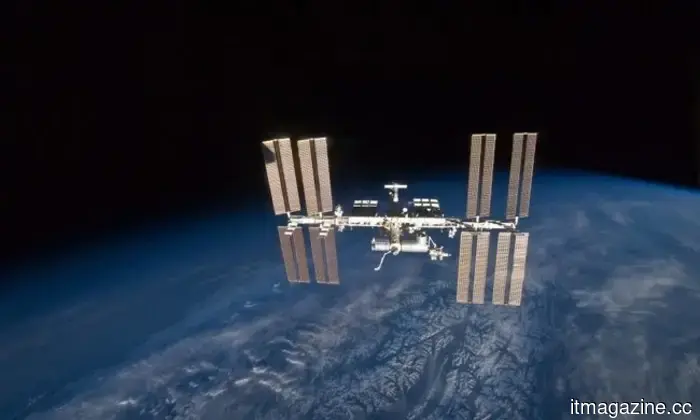
Astronauts reportedly sought shelter after work on Russia’s leaky ISS module raised safety concerns.
The ISS has chosen a particularly stressful time to experience leaks again.
Astronauts aboard the International Space Station reportedly took precautionary shelter after maintenance on a long-troubled Russian module heightened concerns over air leaks within the orbiting laboratory. Reports indicate that the incident involved Russia’s Zvezda service module, which has faced recurring air leak issues for several years. During repair work and pressure tests related to the leak investigation, astronauts were instructed to seclude themselves in safer compartments of the ISS as engineers monitored the station’s integrity and pressure stability.

Other articles
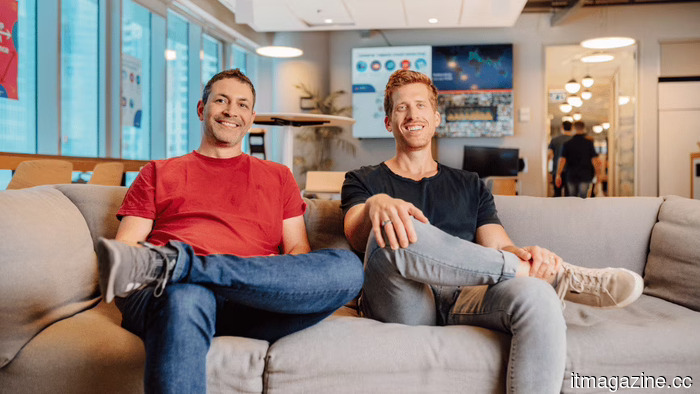 Monday.com introduces a $200 million Monday Ventures AI fund.
Monday.com has introduced Monday Ventures, a fund of up to $200 million dedicated to Israeli workplace-AI startups, initially deploying $50 million and having completed three deals so far.
Monday.com introduces a $200 million Monday Ventures AI fund.
Monday.com has introduced Monday Ventures, a fund of up to $200 million dedicated to Israeli workplace-AI startups, initially deploying $50 million and having completed three deals so far.
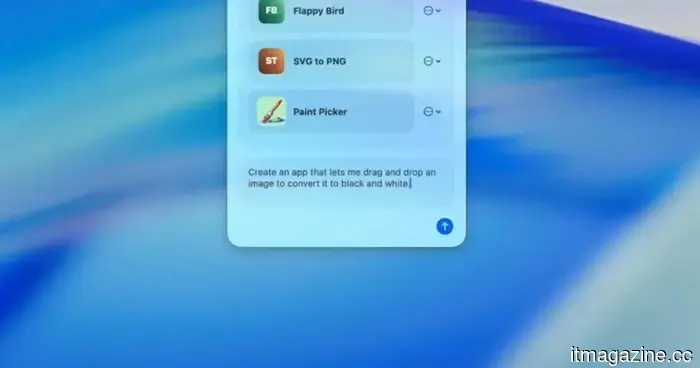 This free AI app builder for Mac transforms discarded prompts into actual desktop applications.
Ironsmith is a free AI application builder for Mac that transforms straightforward language requests into native macOS tools, offering both local and cloud model options for developing small personal utilities.
Adani and Jabil intend to produce AI data center equipment in India.
Adani and Jabil are looking to form a partnership to produce gigawatt-scale AI data-center racks in India, a strategy aligned with the "Make in India" initiative to establish themselves as exporters of AI hardware.
This free AI app builder for Mac transforms discarded prompts into actual desktop applications.
Ironsmith is a free AI application builder for Mac that transforms straightforward language requests into native macOS tools, offering both local and cloud model options for developing small personal utilities.
Adani and Jabil intend to produce AI data center equipment in India.
Adani and Jabil are looking to form a partnership to produce gigawatt-scale AI data-center racks in India, a strategy aligned with the "Make in India" initiative to establish themselves as exporters of AI hardware.
 UK intends to implement a social media ban for individuals under 16 as part of a significant initiative for online safety.
The UK government intends to prohibit access to social media for those under 16 and to implement tougher measures designed to lessen harmful online interactions and excessive use of screens.
UK intends to implement a social media ban for individuals under 16 as part of a significant initiative for online safety.
The UK government intends to prohibit access to social media for those under 16 and to implement tougher measures designed to lessen harmful online interactions and excessive use of screens.
 Sarvam has become India's latest AI unicorn following a $234 million funding round.
Sarvam secured $234 million in a funding round led by HCLTech, which contributed $150 million, achieving a valuation of $1.5 billion. This makes the Bengaluru-based sovereign-AI firm the latest AI unicorn in India.
Sarvam has become India's latest AI unicorn following a $234 million funding round.
Sarvam secured $234 million in a funding round led by HCLTech, which contributed $150 million, achieving a valuation of $1.5 billion. This makes the Bengaluru-based sovereign-AI firm the latest AI unicorn in India.
The galaxy holds a mystery regarding the size of exoplanets, and NASA's EVE mission aims to unravel it.
NASA's suggested EVE mission aims to investigate young exoplanets to shed light on why the galaxy contains so few planets that fall between super-Earths and sub-Neptunes.