
Anthropic lawsuit alleges that it exaggerated the sales of $200 Claude plans.
A lawsuit against Anthropic filed in California this week claims the AI company has exaggerated the benefits of its most expensive Claude subscription plans. The complaint, initiated by customer Karl Kahn from Washington, D.C., alleges that the “Max 5x” ($100 a month) and “Max 20x” ($200 a month) subscriptions provide significantly less usage than promised and requests that the court compel the company to refund subscribers.
These plans are advertised with a straightforward guarantee: five or twenty times the usage of the base Pro plan, which costs between $17 and $20 per month. The lawsuit asserts that the actual usage falls far short of these claims and is nearly impossible for customers to gauge.
“The actual usage provided by the Max 5x and Max 20x plans is far below the advertised amount,” the suit notes, seeking a court ruling that characterizes Anthropic's marketing as fraudulent. It aims to achieve class-action status for anyone who purchased these plans since April 2024.
Details of the Anthropic lawsuit
Kahn’s experience is that of a programmer.
He began using Claude for casual tasks, eventually transitioning to intensive programming and upgrading to the $200 Max 20x tier in April. According to the complaint, a single five-hour session consumed 15 percent of his weekly allowance, and soon after subscribing, the limits began to cut him off, forcing him to stop working, conserve his prompts, or purchase additional usage.
Central to the case are emails allegedly sent by Anthropic in July 2025, which outlined the expected weekly use for each subscription tier.
Anthropic chose not to provide a comment, and the claims remain unverified. This reflects the grievance of one customer, and no class has been established. It's also important to clarify that the weekly limits are authentic and not hidden; Anthropic implemented these in 2025 to manage its most frequent users, a decision that displeased existing subscribers.
The lawsuit's more challenging assertion is not about the existence of the limits but rather their allegedly dishonest marketing.
The significance of the subscription dispute
This lawsuit marks one of the first instances where dissatisfaction regarding unclear AI usage limits has manifested in a legal setting, which is the crux of the matter. AI subscriptions have become a common expense in household budgets, large enough to warrant similar scrutiny as what was once directed at increasing streaming bills. Consumer attorneys are closely observing how AI companies communicate the details of what each plan entails.
There is a notable inconsistency within Anthropic’s own offerings. Its enterprise plans feature detailed spending limits and usage analytics, providing transparency, whereas the consumer plans at the center of this lawsuit are less transparent.
The timing of this lawsuit is also significant. It comes as Anthropic and its competitors consider going public, just days after a US government directive restricted access to its top models for foreign users. While the subscription dispute may seem minor in the broader context, it raises a critical question that all AI firms will soon need to address clearly: what exactly does your subscription plan provide?
Other articles
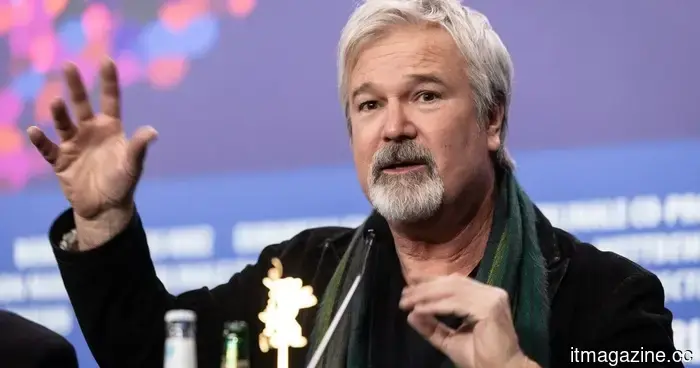 Gore Verbinski claims that scripts written by AI should receive a failing grade.
Gore Verbinski believes that Hollywood should establish a rating system to evaluate the use of AI in films, asserting that scripts generated by AI should receive the most severe ratings.
Gore Verbinski claims that scripts written by AI should receive a failing grade.
Gore Verbinski believes that Hollywood should establish a rating system to evaluate the use of AI in films, asserting that scripts generated by AI should receive the most severe ratings.
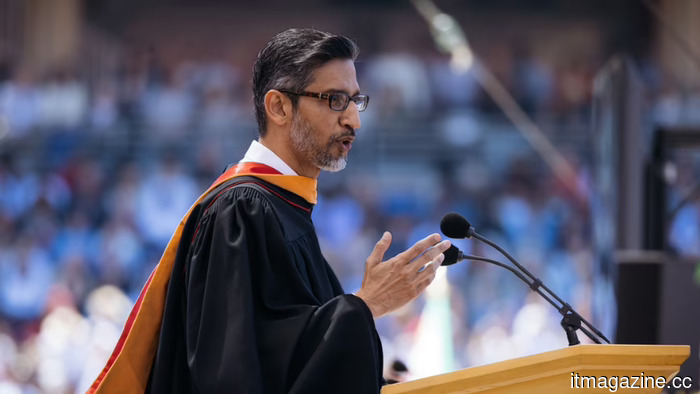 Sundar Pichai of Google opted for a message of optimism regarding AI at Stanford, yet many graduates walked out regardless.
Sundar Pichai from Google delivered the commencement speech for Stanford's Class of 2026, avoiding the topic of AI while students exited in protest of the Project Nimbus contract.
Enflame IPO: the final one among China's four AI chip giants.
Enflame, supported by Tencent, has received approval to raise approximately 6 billion yuan (around $888 million) on Shanghai's STAR board, becoming the final one of China's four major AI chip manufacturers to go public.
Fox purchases Roku in a $22 billion streaming gamble.
Fox purchases Roku for $160 per share, giving it a valuation of approximately $22 billion, in order to combine its live sports and news offerings with the platform that reaches 100 million streaming households.
Sundar Pichai of Google opted for a message of optimism regarding AI at Stanford, yet many graduates walked out regardless.
Sundar Pichai from Google delivered the commencement speech for Stanford's Class of 2026, avoiding the topic of AI while students exited in protest of the Project Nimbus contract.
Enflame IPO: the final one among China's four AI chip giants.
Enflame, supported by Tencent, has received approval to raise approximately 6 billion yuan (around $888 million) on Shanghai's STAR board, becoming the final one of China's four major AI chip manufacturers to go public.
Fox purchases Roku in a $22 billion streaming gamble.
Fox purchases Roku for $160 per share, giving it a valuation of approximately $22 billion, in order to combine its live sports and news offerings with the platform that reaches 100 million streaming households.
 Another study reveals that an excessive number of children are being exposed to harmful content on social media.
A study by the Molly Rose Foundation discovered that 34% of teenagers in the UK came across content related to suicide, self-harm, or eating disorders on social media within just one week, showing little change since the implementation of the Online Safety Act.
Another study reveals that an excessive number of children are being exposed to harmful content on social media.
A study by the Molly Rose Foundation discovered that 34% of teenagers in the UK came across content related to suicide, self-harm, or eating disorders on social media within just one week, showing little change since the implementation of the Online Safety Act.
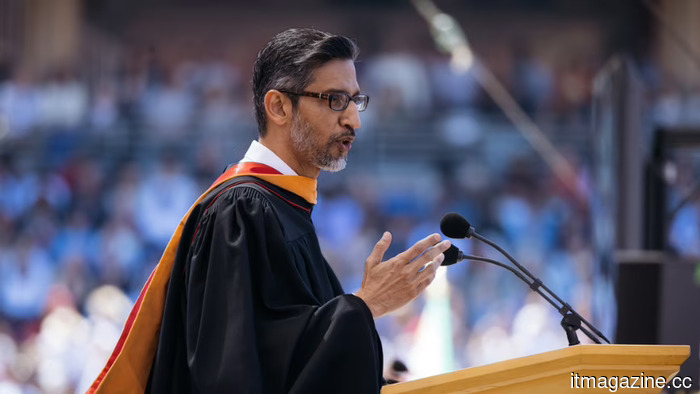 Sundar Pichai from Google opted for a positive outlook on AI at Stanford. Nonetheless, graduates still walked out.
Sundar Pichai from Google delivered the commencement address for Stanford's Class of 2026, avoiding the topic of AI while students left in protest over the Project Nimbus contract.
Sundar Pichai from Google opted for a positive outlook on AI at Stanford. Nonetheless, graduates still walked out.
Sundar Pichai from Google delivered the commencement address for Stanford's Class of 2026, avoiding the topic of AI while students left in protest over the Project Nimbus contract.
Anthropic lawsuit alleges that it exaggerated the sales of $200 Claude plans.
A customer’s legal action alleges that Anthropic exaggerated the usage for its $100 and $200 Claude Max plans, and is requesting refunds along with class-action status for buyers in the US.