

Fraudsters utilized Gemini AI to fuel a large-scale phishing scheme, and Google has filed a lawsuit against them.
Google has filed a lawsuit against a network involved in AI scams that have sent millions of fraudulent text messages and established thousands of fake websites.
A suspicious message regarding an unpaid toll, a delayed package delivery, or expiring rewards points may not be the work of just one scammer anymore. Such scam texts have inundated American phones for several years, but a shift has occurred.
According to Google, artificial intelligence has enabled scammers to orchestrate larger and more sophisticated operations than ever. The company has initiated legal action against a cybercrime network that utilized Gemini AI to create phishing websites and launch an extensive scam operation affecting millions of users.
AI scams are becoming increasingly difficult to detect.
Google
The lawsuit targets a Chinese cybercrime group known as the Outsider Enterprise. This group operated via Telegram and provided phishing kits to criminals worldwide.
Employing Google’s Gemini AI, they generated counterfeit websites that impersonated reputable brands like Google, YouTube, and the US Postal Service. They leveraged AI to produce hundreds of deceptive sites at a scale that was previously unattainable.
The group developed over 9,000 fake websites and more than one million fraudulent URLs. In just a two-week period ending June 1, Android users reported 55,000 suspicious texts, while the Outsider Enterprise sent 2.5 million messages containing links to fraudulent sites.
The FBI estimates that this operation has compromised 3.87 million credit card numbers from victims across multiple countries, with total losses amounting to $1.9 billion since July 2023 (according to WSJ).
What steps is Google taking?
Google
Google is requesting a federal court in New York to completely dismantle the operation. The company is collaborating with the FBI and telecom providers AT&T, T-Mobile, and Verizon to block these texts before they reach consumers' devices.
Google’s built-in messaging protections already intercept over 10 billion malicious messages each month, and Android's scam detection tool identifies suspicious calls and contacts in real-time.
Additionally, Google is advocating for seven bipartisan bills in Congress to ensure these protections become permanent, arguing that legal measures alone won't suffice in halting a threat exacerbated by AI.
Manisha Priyadarshini is a technology and entertainment writer with over nine years of editorial experience.
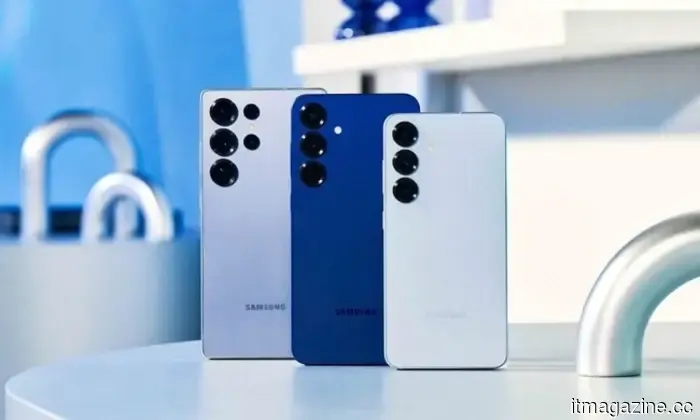
Galaxy S25 users are finally seeing some of the missing One UI 8.5 AI features.
Prioritize Notifications, Summarize Notifications, and File Summaries are making their way to the Galaxy S25, but the Now Nudge feature is still absent.
Last month, Samsung released the One UI 8.5 update for the Galaxy S25 series, but users soon realized that several AI capabilities available on the Galaxy S26 series were not included. These omissions led to confusion and dissatisfaction among Galaxy S25 owners, who have questioned the extent of Samsung's long-term software support.
Now, Samsung appears to be addressing part of this issue with the June 2026 update, which reportedly brings three of the missing Galaxy AI features to the Galaxy S25 series. The update has started to roll out in South Korea and includes the June 2026 Android security patch. The firmware carries the build number S938NKSUACZF1.
Samsung is a few weeks into testing One UI 9 with Galaxy S26 beta users, and a new feature noted in the latest build seems long overdue. The network speed indicator, a basic status bar tool common on other Android devices, is finally appearing in One UI 9.
This feature is available even on budget Android phones from brands like OnePlus, Oppo, and Xiaomi. It displays real-time upload and download activity in the status bar while connected to Wi-Fi or mobile data, allowing users to quickly verify whether their connection is functioning properly.
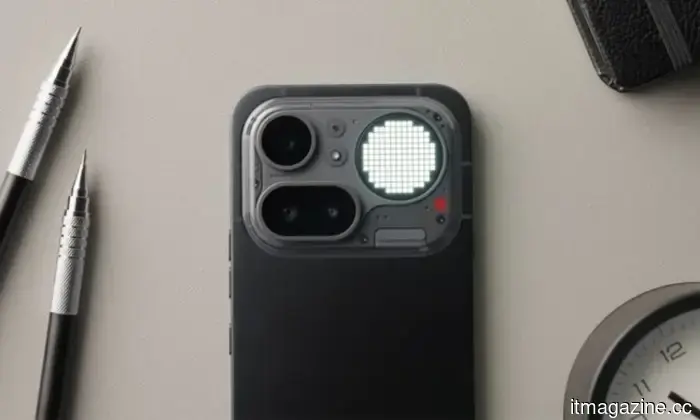
If you're waiting for smartphone prices to decrease, Nothing’s CEO has some disappointing news.
Carl Pei, who has a vested interest in this matter, highlighted a significant RAM shortage that he claims is influencing price increases already evident in current smartphone models.
If you've been delaying the purchase of a new phone in hopes of a better deal, especially for models released in the first quarter of the year, Nothing’s co-founder Carl Pei has a straightforward message: stop waiting.
In a post on X, Pei discussed how 2026 is fundamentally altering smartphone pricing in unprecedented ways, with a major contributing factor being a component that now constitutes over 50% of the total hardware cost.





Other articles
 Hoping for a decrease in smartphone prices? The CEO of Nothing has some discouraging news for you.
According to Carl Pei, the RAM in your phone, which often goes unnoticed, is now its most costly component.
Hoping for a decrease in smartphone prices? The CEO of Nothing has some discouraging news for you.
According to Carl Pei, the RAM in your phone, which often goes unnoticed, is now its most costly component.
 I attempted to blur a face on iOS 27, but my iPhone ended up providing a new one instead.
Apple enhanced the Clean Up tool in iOS 27, but in doing so, it caused the hide faces feature to malfunction, resulting in behavior that is both amusing and somewhat concerning.
I attempted to blur a face on iOS 27, but my iPhone ended up providing a new one instead.
Apple enhanced the Clean Up tool in iOS 27, but in doing so, it caused the hide faces feature to malfunction, resulting in behavior that is both amusing and somewhat concerning.
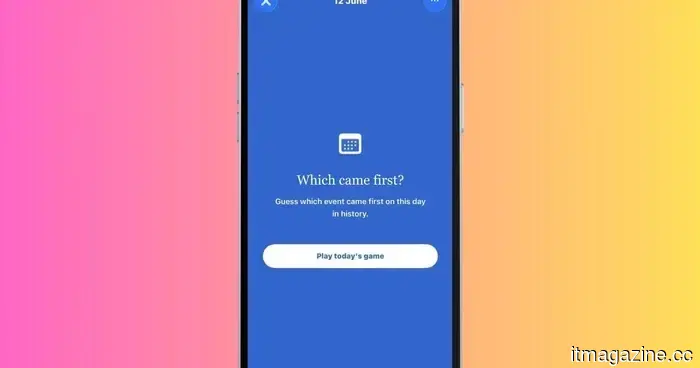 Wikipedia has transformed "On This Day" into an entertainingly geeky daily game.
The latest addition to Wikipedia's iPhone app transforms history into a quick daily challenge. It's straightforward, unexpectedly engaging, and could teach you something before your morning coffee takes effect.
Wikipedia has transformed "On This Day" into an entertainingly geeky daily game.
The latest addition to Wikipedia's iPhone app transforms history into a quick daily challenge. It's straightforward, unexpectedly engaging, and could teach you something before your morning coffee takes effect.
 Meta's unsettling smart glasses have just discovered their most effective application to date.
The device that has frequently faced criticism for being overly observant is set to assist thousands of blind veterans in perceiving the world in a new way.
Meta's unsettling smart glasses have just discovered their most effective application to date.
The device that has frequently faced criticism for being overly observant is set to assist thousands of blind veterans in perceiving the world in a new way.
 Holding out for a drop in smartphone prices? The CEO of Nothing has some disappointing news for you.
According to Carl Pei, the aspect of your phone that often goes unnoticed—RAM—has now become its most costly component.
Holding out for a drop in smartphone prices? The CEO of Nothing has some disappointing news for you.
According to Carl Pei, the aspect of your phone that often goes unnoticed—RAM—has now become its most costly component.
 I attempted to blur a face in iOS 27, but my iPhone provided a different result instead.
Apple enhanced the Clean Up tool in iOS 27; however, this update caused the hide faces feature to malfunction, resulting in behavior that is both amusing and somewhat concerning.
I attempted to blur a face in iOS 27, but my iPhone provided a different result instead.
Apple enhanced the Clean Up tool in iOS 27; however, this update caused the hide faces feature to malfunction, resulting in behavior that is both amusing and somewhat concerning.
Fraudsters utilized Gemini AI to fuel a large-scale phishing scheme, and Google has filed a lawsuit against them.
A Chinese scam operation exploited Google's Gemini AI to inundate millions of mobile devices with fraudulent messages and create more than 9,000 phishing sites, leading to a significant lawsuit from Google.