

OpenAI collaborates with Visa to facilitate secure transactions via AI agents.
ChatGPT may soon be able to make purchases on your behalf due to a new partnership between OpenAI and Visa.
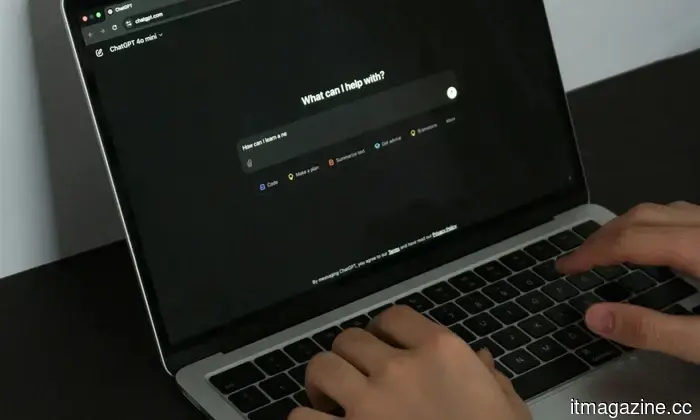
Imagine instructing ChatGPT to buy some paper towels or to search for the best wireless headphones within your budget, and it completes the purchase on its own. This is the goal that OpenAI and Visa are working towards.
Both companies revealed their strategic collaboration at the Visa Payments Forum, intending to integrate Visa’s global payment infrastructure into OpenAI’s AI experiences, including ChatGPT and the Atlas browser.
How will the payment system in ChatGPT function?
This collaboration falls under Visa’s broader Intelligent Commerce initiative, aimed at expanding secure payment options into new digital environments. When an AI agent makes a purchase on your behalf, Visa manages the transaction using tokenized card details, real-time authorization, and fraud detection.
Tokenization ensures that your actual card information is never exposed during a transaction, similar to how Apple Pay protects your card data. You also have the ability to set specific rules, such as spending limits, the types of merchants the agent can shop at, and whether certain purchases require your prior approval. This way, you remain in control without needing to monitor every transaction closely.
OpenAI’s renewed effort in commerce
This is not OpenAI's first endeavor to transform ChatGPT into a purchasing tool. A previous feature called Instant Checkout, which included a 4% merchant fee, did not resonate with retailers and was discontinued in March.
This time, OpenAI is delegating the challenging aspects like fraud prevention and dispute resolution to Visa, a network that processes over 300 billion transactions annually.
Jack Forestell, Visa’s Chief Product and Strategy Officer, notes that moving from merely recommending a product to facilitating a purchase requires a significantly higher level of trust. Currently, however, there is no information available regarding the launch date, pricing, or a user interface.
Your Windows 11 PC can now run AI workloads natively, even without the Copilot+ designation
For nearly a year, Microsoft has been communicating that the future of AI on Windows is centered on Copilot+ PCs, where users needed a machine equipped with a dedicated Neural Processing Unit (NPU) to access the most advanced local AI features. Now, Microsoft seems to be changing the game.
According to updated guidelines, the local Language Model APIs of Windows 11 can now operate on non-Copilot+ PCs, as long as they have an Nvidia GeForce RTX 30-series GPU (or newer) with a minimum of 6GB of VRAM. At first glance, this appears to be an update catered to developers. However, it could signify one of the most important shifts in Microsoft’s AI strategy for PCs since the introduction of Copilot+ machines last year. More notably, it raises a lingering question: Was there really a need for NPUs from the start?
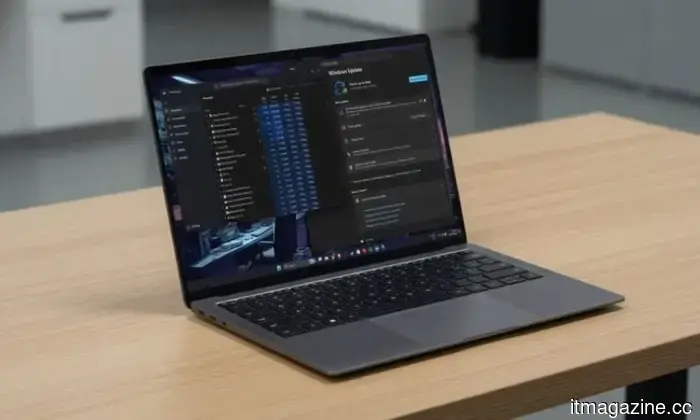
The Windows 11 June update enhances the speed of your Start menu and Search
The Low Latency Profile is the initial focused fix that Microsoft has released to improve shell responsiveness, and the June update makes it available to all appropriate PCs, not just Insider preview testers.
If you’ve ever clicked on the Start button and waited for a second or two for the menu to appear, you understand the issue Microsoft aims to resolve with its June 2026 update for Windows 11.
The update (KB5094126), which was deployed on June 9, 2026, for Windows 11 24H2 and 25H2, addresses shell responsiveness concerns that have quietly troubled users since the launch in 2021. The main feature is the widespread implementation of the Low Latency Profile.
Intel reveals Project Firefly and its plans to enhance affordable laptops to compete with the MacBook Neo
Affordable laptops are finally receiving the upgrade they have long needed!
The stagnation of the budget segment in the Windows market is well-known. While high-end machines have continually become slimmer, lighter, and faster, the budget category had been using outdated technology for five to seven years with only minor improvements.
Intel appears to want to change this trend. In a recent interview for Talking Tech, the company outlined how Project Firefly intends to significantly revamp the budget laptop market by establishing an entirely new ecosystem of laptops.





Other articles
 Meta introduces a desktop version and an AI assistant to its Edits, a competitor to CapCut.
Meta's Edits app will introduce an AI assistant that utilizes Instagram data to propose video ideas, along with a desktop version. Over fifty percent of Reels viewers engage with Edits content on a daily basis.
Meta introduces a desktop version and an AI assistant to its Edits, a competitor to CapCut.
Meta's Edits app will introduce an AI assistant that utilizes Instagram data to propose video ideas, along with a desktop version. Over fifty percent of Reels viewers engage with Edits content on a daily basis.
 Waymo introduces a $29.99/month subscription plan for its most regular robotaxi users.
Waymo Premier offers priority matching for frequent users, free cancellations, and 10% loyalty credits. Initially, it is available by invitation only in San Francisco, Los Angeles, and Phoenix.
Waymo introduces a $29.99/month subscription plan for its most regular robotaxi users.
Waymo Premier offers priority matching for frequent users, free cancellations, and 10% loyalty credits. Initially, it is available by invitation only in San Francisco, Los Angeles, and Phoenix.
 Bluesky introduces group chats and shifts focus to communities as user growth levels off at 44.8 million.
Bluesky has introduced group chats for up to 50 participants and is developing communities similar to those on Reddit. This shift occurs as user growth slows down and X discontinues its own community features.
Bluesky introduces group chats and shifts focus to communities as user growth levels off at 44.8 million.
Bluesky has introduced group chats for up to 50 participants and is developing communities similar to those on Reddit. This shift occurs as user growth slows down and X discontinues its own community features.
 Google developed an AI capable of predicting football plays before they occur.
Google DeepMind has introduced TacticAI, an artificial intelligence system created in collaboration with Liverpool FC that can anticipate football player movements up to eight seconds ahead and also provide tactical suggestions for set pieces.
Google developed an AI capable of predicting football plays before they occur.
Google DeepMind has introduced TacticAI, an artificial intelligence system created in collaboration with Liverpool FC that can anticipate football player movements up to eight seconds ahead and also provide tactical suggestions for set pieces.
 AI requires discernment rather than merely a job description: Michael Ronis discusses the future of hiring.
AI is capable of sifting through a thousand resumes in a matter of hours, yet it lacks the ability to assess rapport, cultural alignment, or career aspirations. According to recruiter Michael Ronis, the key issue isn't if AI will take over human roles, but rather in which areas humans need to intervene.
AI requires discernment rather than merely a job description: Michael Ronis discusses the future of hiring.
AI is capable of sifting through a thousand resumes in a matter of hours, yet it lacks the ability to assess rapport, cultural alignment, or career aspirations. According to recruiter Michael Ronis, the key issue isn't if AI will take over human roles, but rather in which areas humans need to intervene.
 Jabra Evolve3 75 review: After wearing this work headset for several weeks, I found it to be quite impressive.
The Jabra Evolve3 75 is a high-end product that, despite its elevated price, provides an excellent microphone, an elegant design, impressive battery life, wireless charging capability, and a powerful experience for music listening.
Jabra Evolve3 75 review: After wearing this work headset for several weeks, I found it to be quite impressive.
The Jabra Evolve3 75 is a high-end product that, despite its elevated price, provides an excellent microphone, an elegant design, impressive battery life, wireless charging capability, and a powerful experience for music listening.
OpenAI collaborates with Visa to facilitate secure transactions via AI agents.
Thanks to a new partnership between OpenAI and Visa, ChatGPT may soon be able to shop and make payments on your behalf, introducing secure agentic payments to AI interactions.