

OpenAI has reported that accounts connected to China used ChatGPT to support opposition against US data centers.
TL;DR: OpenAI discovered ChatGPT accounts linked to China creating anti-data centre content, but the effort was unsuccessful. However, the genuine discussion regarding power costs remains significant.
OpenAI reported that a group of ChatGPT accounts associated with China attempted to incite local opposition to US data centres by pretending to be American and sharing AI-generated content about increasing electricity prices. The company referred to this initiative as the “Data Center Bandwagon” and suggested that the accounts were likely connected to a private Chinese tech firm serving provincial government clients. The posts had limited visibility.
These accounts utilized ChatGPT to generate social media content in English, featuring cartoon images of executives and robots carrying money bags while portraying “ordinary people” bearing the financial burdens of the AI sector. OpenAI also uncovered another initiative, dubbed “Tech and Tariffs,” which produced content criticizing Trump’s tariffs and the US's quest for global tech dominance.
Ben Nimmo, OpenAI’s principal investigator on intelligence and investigations, emphasized, “I want to be really clear here: This was not a case of an influence operation creating a debate. The debate existed already. This was an influence operation from China trying to interfere in it.”
The debate is indeed genuine. In 2025, local opposition delayed or blocked numerous US data centre projects worth over $150 billion in potential investment, based on findings from Data Center Watch. Senator Bernie Sanders has advocated for moratoriums on new facilities. Communities are resisting due to overwhelmed power grids, skyrocketing electricity costs, and pressure on water supplies.
OpenAI indicated that this campaign is similar to prior China-related operations noted by the Australian Strategic Policy Institute and Google's Mandiant, targeting companies attempting to decrease reliance on China in the rare earths sector. The company cautioned that these themes are likely to remain appealing for Chinese influence operations, as they can be integrated into legitimate public discussions while steering audiences toward distrust of US institutions.
This month, several Republican members of Congress sent a letter to the Trump administration expressing concerns about purported “foreign influence campaigns working to hinder American AI progress.” Some tech industry representatives have also promoted this narrative. However, independent researchers are more reserved. Darren Linvill, co-lead of Clemson University’s Media Forensics Hub, stated to NPR that his team has uncovered little evidence of coordinated Chinese initiatives. “We haven’t found much,” he noted.
The timing is advantageous for OpenAI. The company is actively advocating for data centre construction to meet the rising demand for its products and contends that AI infrastructure is crucial for national competitiveness against China. Framing domestic resistance as partially influenced by foreign entities aligns with this agenda, despite the small and ineffective influence campaign that OpenAI identified.
The underlying issue remains significant, regardless of who highlights it. The energy demands of AI are increasing faster than power grids can accommodate. Communities hosting data centres are shouldering costs that primarily benefit tech companies located elsewhere. The fact that a few Chinese social media accounts may have attempted to capitalize on this concern does not alter the validity of the grievance itself.
Other articles
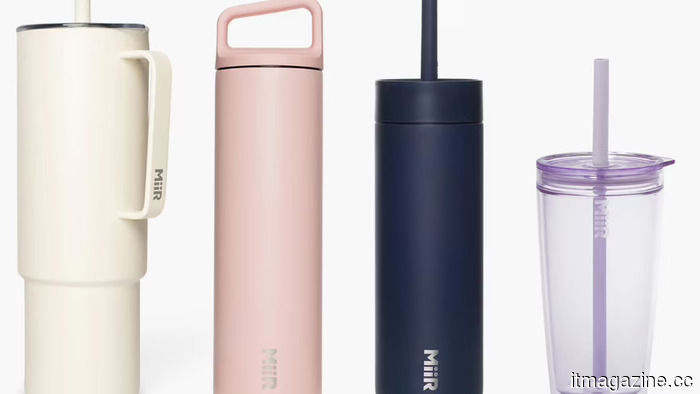 Seattle-based drinkware manufacturer MiiR has filed a lawsuit against Tesla, alleging that the company has copied the design of its tumbler lid.
MiiR claims that Tesla's On The Road Tumbler infringes on its patented lid design and the positioning of its vertical logo. The company is pursuing a permanent injunction along with Tesla's profits.
Seattle-based drinkware manufacturer MiiR has filed a lawsuit against Tesla, alleging that the company has copied the design of its tumbler lid.
MiiR claims that Tesla's On The Road Tumbler infringes on its patented lid design and the positioning of its vertical logo. The company is pursuing a permanent injunction along with Tesla's profits.
 Nomad's orange wallet tracker gives the AirTag a bulky and unimpressive appearance.
Nomad's Stellar Orange accessories incorporate Apple Find My tracking and Qi2 charging features into a small, limited-edition release that primarily focuses on aesthetics.
Nomad's orange wallet tracker gives the AirTag a bulky and unimpressive appearance.
Nomad's Stellar Orange accessories incorporate Apple Find My tracking and Qi2 charging features into a small, limited-edition release that primarily focuses on aesthetics.
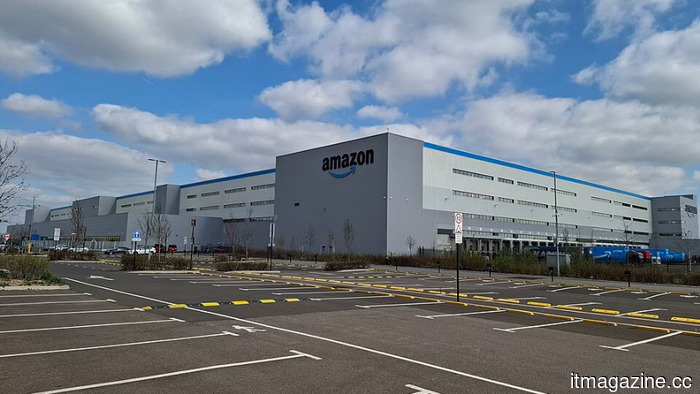 Amazon acquires $17.5 billion in new debt, bringing its total borrowing to over $225 billion due to increased investment in AI.
Amazon consented to a $17.5 billion term loan arranged by Citigroup, just days following a record-setting C$14 billion bond sale in Canada. The company's total debt has surged by 50% in a year, exceeding $225 billion.
Amazon acquires $17.5 billion in new debt, bringing its total borrowing to over $225 billion due to increased investment in AI.
Amazon consented to a $17.5 billion term loan arranged by Citigroup, just days following a record-setting C$14 billion bond sale in Canada. The company's total debt has surged by 50% in a year, exceeding $225 billion.
 A jazz label produced a rendition of an AI-generated song to highlight a crucial issue that the music industry has been neglecting.
A jazz record label transformed a nameless AI-generated song into a commentary on human creativity and developed a tool to support it.
A jazz label produced a rendition of an AI-generated song to highlight a crucial issue that the music industry has been neglecting.
A jazz record label transformed a nameless AI-generated song into a commentary on human creativity and developed a tool to support it.
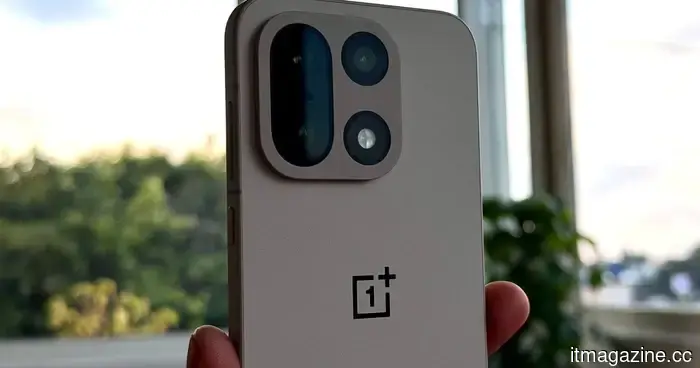 OnePlus 15 becomes part of the limited Android group that can AirDrop to iPhones.
Users of the OnePlus 15 can now transfer files to nearby iPhones, iPads, and Macs using Quick Share, eliminating the need for previous methods such as cloud links and third-party applications.
OnePlus 15 becomes part of the limited Android group that can AirDrop to iPhones.
Users of the OnePlus 15 can now transfer files to nearby iPhones, iPads, and Macs using Quick Share, eliminating the need for previous methods such as cloud links and third-party applications.
 iOS 27 may simplify the process of saving battery life, reducing the need to search through settings.
Apple is experimenting with Dormancy in the code for iOS 27 and watchOS, indicating potential battery notifications that may highlight inactive features and suggest disabling them to conserve power.
iOS 27 may simplify the process of saving battery life, reducing the need to search through settings.
Apple is experimenting with Dormancy in the code for iOS 27 and watchOS, indicating potential battery notifications that may highlight inactive features and suggest disabling them to conserve power.
OpenAI has reported that accounts connected to China used ChatGPT to support opposition against US data centers.
OpenAI discovered accounts connected to China generating AI-produced posts regarding the electricity expenses of data centers. The campaign had minimal impact. Nevertheless, the discussion is genuine.