
Both Apple and Google are interested in tracking your online activities.
Two major players in the tech industry now aim to monitor the web for you. Within a month, both Google and Apple unveiled features designed to track web pages and notify you of any updates. Both companies assert they will employ AI to inform you when certain conditions are met and minimize false alerts.
During its Worldwide Developers Conference on June 8, Apple presented Notify Me, a Safari function that observes a chosen page and alerts you when it changes. In May, at Google I/O, Google revealed information agents that serve a similar purpose across the open web. "We’re entering the era of search agents now," stated Elizabeth Reid, Google’s VP of Search, during the I/O keynote.
Neither feature has been widely released yet. Google’s information agents are set to roll out this summer for AI Pro and Ultra subscribers in the U.S., while Apple’s Notify Me will launch this fall with iOS 27 and macOS 27.
The convergence of these features signals a significant shift. The concept of software that monitors the web on your behalf has been around for over twenty years. What’s new is that two influential companies in how people search online are pursuing this idea simultaneously.
Page monitoring won't replace traditional search; instead, it transforms search into a continuous loop rather than a one-off query. The practice of web monitoring isn’t novel; Google Alerts, along with price and stock trackers, have been operational for two decades. What has changed is that Google and Apple are integrating these tools into the platforms where users already search and browse, offering straightforward setups.
Google integrates ongoing instructions within Search, while Apple introduces a more limited version in Safari. The goal is for users to specify what they want to track once, eliminating the need for repetitive checking on listings, prices, or policy updates.
Understanding the Function of These Agents
A conventional search consists of one interaction: posing a question, receiving results, and concluding the exchange. Conversely, Apple’s Notify Me and Google’s information agents operate differently. You specify what you wish to monitor, and the software continuously observes, notifying you only when a change occurs.
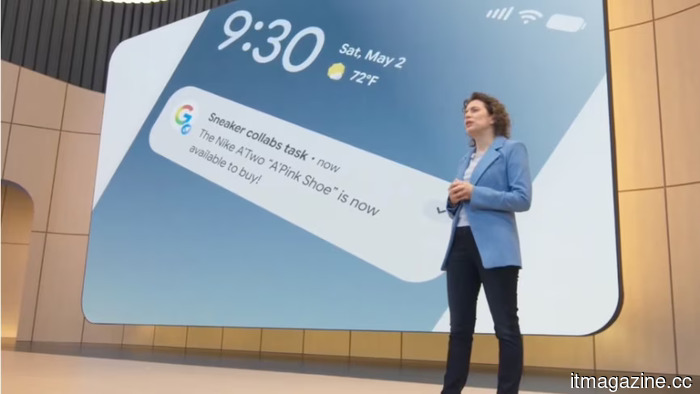
The key difference lies between actively checking and passively receiving notifications. Apple’s demonstration involved monitoring a summer camp registration page, sparing a parent from constant refreshing. Google exhibited the same concept at I/O, showcasing an agent that alerted users precisely when a new basketball sneaker became available. The simple takeaway is: stop refreshing and await a notification.
Before the Terms Existed
The concept of software tracking the web for changes dates back over two decades. Google Alerts, which launched in 2003, was an early iteration: input a keyword and receive an email when new, relevant content is published. This tool has been utilized by journalists, PR teams, researchers, and the general public for years.
The technology has since evolved. Page-monitoring services like Visualping, which has been operating in this domain since 2017, provide cloud-based monitoring of selected pages and notify users of exact changes with detailed screenshots, AI summaries, and various tool integrations.
OpenAI’s ChatGPT Pulse, introduced in late 2025, conducts research overnight and delivers personalized updates each morning. Similarly, Anthropic launched Claude Code Routines in April, providing developers with a scheduling function for tasks that respond to specific events.
Interest in these tools has surged. Search queries related to “search agents,” “information agents,” and “page monitoring” have seen significant increases in 2026, as observed by Google Trends. Usage reflects this trend: in the first five months of 2026, over 1.06 million pages were set up for monitoring using Visualping alone.
Two Types of Agents, Different Roles
These tools are distinguished by their focus area: open-web agents sift through various sources to answer a standing inquiry. Google’s information agents, ChatGPT Pulse, and Perplexity operate this way, collecting information from blogs, news, social media, and data feeds.
They function well when the user is unsure of where to find the answer. However, the broader scanning typically operates on a daily or hourly basis, and frequently updated pages or those that restrict automated access may produce alerts that arrive too late or are irrelevant.
In contrast, page monitoring agents function by observing a specific webpage and identifying changes made to it. This is ideal for situations where you know the exact page you need to monitor, such as product listings or daycare schedules. The limitation here is that they require the specific page upfront, making them less ideal for open-ended exploration.
This distinction aligns with the recent announcements. Google’s information agents cater to the open-web model, while Apple’s Notify Me is a page-monitoring feature integrated into Safari using local resources, such as the user’s computer and internet connection. Both represent different aspects of the same orchestration layer: the search agent.
The open-web approach seeks to answer "what's happening regarding this topic?" while page monitoring addresses "has this specific page changed yet?" Increasingly, these two
Other articles
 Rivian starts R2 deliveries, viewing the contracting US EV market as a chance for growth.
On Tuesday, Rivian began delivering R2 SUVs to customers, aiming for 20,000 to 25,000 deliveries by the end of the year amidst a challenging US market with fewer new EV competitors.
Rivian starts R2 deliveries, viewing the contracting US EV market as a chance for growth.
On Tuesday, Rivian began delivering R2 SUVs to customers, aiming for 20,000 to 25,000 deliveries by the end of the year amidst a challenging US market with fewer new EV competitors.
 Sony's 135-inch Crystal LED UNIFY is a boardroom screen that can be set up in just one hour.
Sony introduced the Crystal LED UNIFY, a 135-inch dvLED display designed for boardrooms that can be set up by two individuals in one hour. It is scheduled for release in early 2027.
FCC filings indicate that Valve's Steam Machine may be released prior to June 29.
FCC regulatory documents indicate that Valve's Steam Machine might be released before June 29, following a pattern identified in the filing for the Steam Controller.
Sony's 135-inch Crystal LED UNIFY is a boardroom screen that can be set up in just one hour.
Sony introduced the Crystal LED UNIFY, a 135-inch dvLED display designed for boardrooms that can be set up by two individuals in one hour. It is scheduled for release in early 2027.
FCC filings indicate that Valve's Steam Machine may be released prior to June 29.
FCC regulatory documents indicate that Valve's Steam Machine might be released before June 29, following a pattern identified in the filing for the Steam Controller.
 The CEO of Vinted states that the US is a
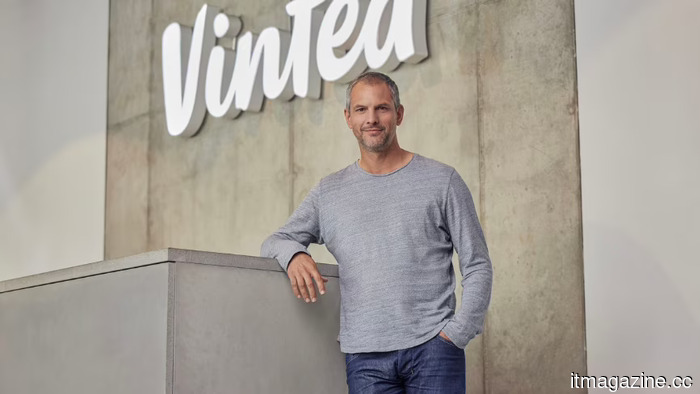
Vinted's CEO Adam Jay states that secondhand shopping is "here to stay," as the €8 billion Lithuanian marketplace expands into the US following a reported revenue of €1.1 billion in 2025.
The CEO of Vinted states that the US is a
Vinted's CEO Adam Jay states that secondhand shopping is "here to stay," as the €8 billion Lithuanian marketplace expands into the US following a reported revenue of €1.1 billion in 2025.
 Forget about RGB lighting; Aston Martin’s gaming PC is styled for Monaco.
Chillblast and Aston Martin’s exclusive gaming PCs add a touch of British Racing Green, feature RTX 5090 performance, include leather details, and come at collector-level prices for your workspace.
Forget about RGB lighting; Aston Martin’s gaming PC is styled for Monaco.
Chillblast and Aston Martin’s exclusive gaming PCs add a touch of British Racing Green, feature RTX 5090 performance, include leather details, and come at collector-level prices for your workspace.
 From automobiles to data centers, GM expands into energy storage through three new battery agreements.
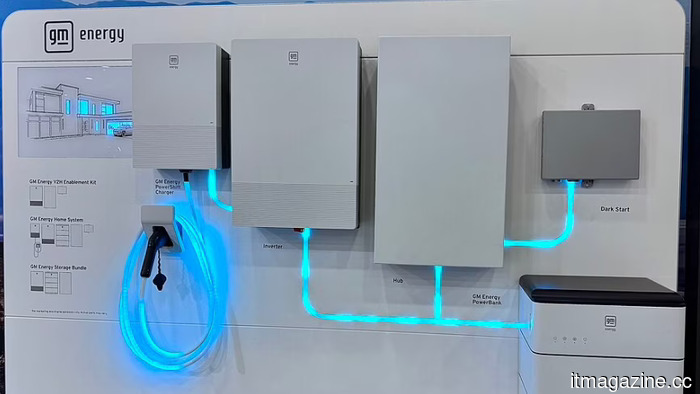
GM collaborated with Peak Energy on sodium-ion batteries and extended its agreement with Redwood Materials to provide energy storage solutions for data centers and the grid.
From automobiles to data centers, GM expands into energy storage through three new battery agreements.
GM collaborated with Peak Energy on sodium-ion batteries and extended its agreement with Redwood Materials to provide energy storage solutions for data centers and the grid.
Both Apple and Google are interested in tracking your online activities.
In close succession, Google and Apple unveiled features that monitor web pages and notify users when there are changes. Search is evolving into an ongoing process rather than a single query.