
Lovable: $500 million in annual recurring revenue, 146 employees, with 80% being non-technical builders.
**Summary**: Lovable has released its inaugural "build economy" report, revealing that 80% of builders are non-technical, projects receive 720 million monthly visits, and 80% of users aim to monetize their creations. The company claims an annual recurring revenue (ARR) of $500 million with 146 employees, though this data is self-reported and unaudited.
Lovable, a Swedish platform that enables users to create apps using natural language, has issued its first report on what it refers to as the "build economy." This report is based on product usage data from January 2025 to May 2026 and a user survey conducted in May 2026, highlighting changes in the demographics of software builders, the types of projects being developed, and their motivations.
The company states it has exceeded a $500 million annualized revenue run rate, an increase from $400 million in February, having gained $100 million in just one month with 146 employees. This equates to approximately $2.77 million in ARR for each employee, surpassing Gartner’s 2030 forecast for unicorns by four years.
**Who is building**
According to the data, 80% of those using Lovable identify as non-technical, with founders, designers, and salespeople being the fastest-growing user segments. While technology is the largest industry represented, nearly two-thirds of users come from other sectors such as education, retail, media, finance, healthcare, and real estate. The largest groups of paid subscribers are located in the US, Brazil, Europe, and India, with the most rapid growth occurring in Colombia, Mexico, and Africa.
**What they are building**
Overall, users are not creating trivial projects. The platform supports the development of websites, CRM systems, internal tools, inventory management systems, HR platforms, and e-commerce stores, collectively attracting an average of 720 million visits per month. More than 50 million projects have been initiated on Lovable, with about one million new projects starting weekly. According to CEO Anton Osika, over half of the Fortune 500 companies are leveraging Lovable, including names like Klarna and HubSpot.
**Why they are building**
A significant 80% of those surveyed indicated a goal to monetize their creations, with more than half stating they are building a business. Additionally, a quarter of users are working on side projects they wish to turn into income. Lovable launched its payments feature in February 2026, and some users have already achieved five- and six-figure revenues, although the company did not specify the number of such users or their outcomes.
**Caveats**
It is important to note that Lovable's data is self-reported and originates from its own platform. The claims regarding the 80% non-technical statistic, the 720 million visits, and the monetization intentions have not been independently verified. Survey results reflect the views of active users, which may favor enthusiastic users. The reported $500 million ARR is based on an estimation of current monthly revenue and has not been validated through financial statements. Revenue run rates can fluctuate considerably, especially in subscription-based consumer and prosumer markets. Additionally, the 146-employee count raises questions about the company’s ability to maintain high-quality enterprise support, reliability, and security as usage grows.
Lastly, the report does not address the underlying question of sustainability. While creating an app using natural language is quick, the processes of maintaining, debugging, and scaling it over time has traditionally required engineers. Whether software built this way can endure production demand at an enterprise level remains untested within the "build economy."
Other articles
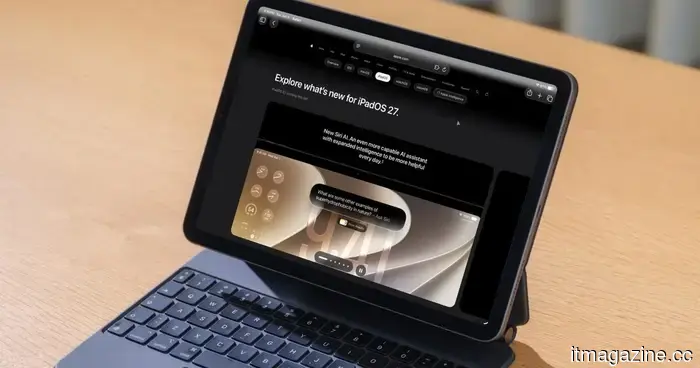 iPadOS 27: All the details about the new features coming to your iPad.
iPadOS 27 will be released this fall, featuring a brand-new Siri AI, enhanced photo tools, simplified Shortcuts, and a more organized Safari. Here’s all the information we have so far regarding the upcoming updates for your iPad.
iPadOS 27: All the details about the new features coming to your iPad.
iPadOS 27 will be released this fall, featuring a brand-new Siri AI, enhanced photo tools, simplified Shortcuts, and a more organized Safari. Here’s all the information we have so far regarding the upcoming updates for your iPad.
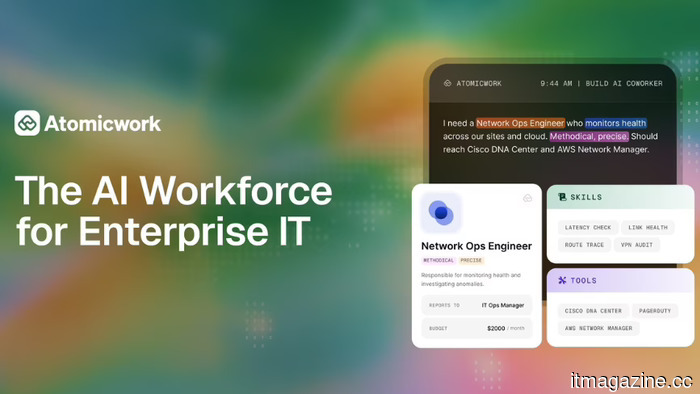 Atomicwork introduces a regulated AI workforce for enterprise IT.
Atomicwork has introduced AI agents for enterprise IT, featuring specific roles, spending limits, and audit trails. The company was established by former employees of Freshworks. Customer data remains confidential. They have raised $40.3 million.
Atomicwork introduces a regulated AI workforce for enterprise IT.
Atomicwork has introduced AI agents for enterprise IT, featuring specific roles, spending limits, and audit trails. The company was established by former employees of Freshworks. Customer data remains confidential. They have raised $40.3 million.
 Netherlands broadens investment scrutiny to include AI and biotechnology.
Starting in January 2027, the Netherlands will incorporate AI, biotechnology, nanotechnology, and three additional sectors into its investment screening process, impacting hundreds of companies following the Nexperia incident.
Netherlands broadens investment scrutiny to include AI and biotechnology.
Starting in January 2027, the Netherlands will incorporate AI, biotechnology, nanotechnology, and three additional sectors into its investment screening process, impacting hundreds of companies following the Nexperia incident.
 L’Atitude 52°N Smart Glasses That Subtly Integrate Technology
What occurs when technology doesn’t appear mechanical but instead integrates with your preferred eyewear style? The L’Atitude 52°N smart glasses address that with subtle AI that effortlessly records moments without interrupting the rhythm of your experiences.
L’Atitude 52°N Smart Glasses That Subtly Integrate Technology
What occurs when technology doesn’t appear mechanical but instead integrates with your preferred eyewear style? The L’Atitude 52°N smart glasses address that with subtle AI that effortlessly records moments without interrupting the rhythm of your experiences.
 UK allocates £1.3 billion for AI hardware, skills development, and reform of the justice system.
The UK revealed a £1.1 billion AI Hardware Plan, along with a £200 million adoption package, AI legal assistants, and a Homelessness Data Lab during London Tech Week. The supercomputer is set to arrive in 2030.
SpaceX's IPO receives orders several times greater than the available shares.
SpaceX's $75 billion IPO has seen overwhelming demand, with individual orders exceeding $10 billion. Shares are priced at $135 each on Wednesday, leading to a valuation of $1.8 trillion. In contrast, Morningstar estimates its value to be half that amount.
UK allocates £1.3 billion for AI hardware, skills development, and reform of the justice system.
The UK revealed a £1.1 billion AI Hardware Plan, along with a £200 million adoption package, AI legal assistants, and a Homelessness Data Lab during London Tech Week. The supercomputer is set to arrive in 2030.
SpaceX's IPO receives orders several times greater than the available shares.
SpaceX's $75 billion IPO has seen overwhelming demand, with individual orders exceeding $10 billion. Shares are priced at $135 each on Wednesday, leading to a valuation of $1.8 trillion. In contrast, Morningstar estimates its value to be half that amount.
Lovable: $500 million in annual recurring revenue, 146 employees, with 80% being non-technical builders.
Lovable's construction economy report indicates that 80% of builders lack technical skills, with 720 million monthly visits, and 8 out of 10 intend to generate revenue. The $500 million annual recurring revenue and usage statistics are based on self-reported figures.