

The top new feature of ChatGPT is one that the majority of users are unlikely to utilize.
For years, the main topic of discussion regarding AI has revolved around the capabilities of these tools. They can access the internet, analyze documents, integrate with your applications, conduct research, and increasingly perform tasks on your behalf. However, as AI systems grow more advanced, a pressing question has arisen: what occurs when an AI assistant is deceived into revealing restricted information?
OpenAI’s newest Lockdown Mode provides a response to this concern. Available for all types of ChatGPT accounts, Lockdown Mode is an optional security feature aimed at individuals and organizations managing sensitive data. The compromise is that you gain enhanced protection against certain types of data breaches, but some of ChatGPT’s most powerful features become inaccessible.
This updated security mechanism makes ChatGPT more restricted
Lockdown Mode is primarily aimed at minimizing the threat of data leaks resulting from prompt injection attacks. Prompt injection has become one of the most challenging security issues in the AI landscape. Rather than directly targeting software, malicious commands are concealed within documents, websites, spreadsheets, emails, or other materials that an AI might process. If the model executes these concealed commands, an attacker could manipulate its behavior.
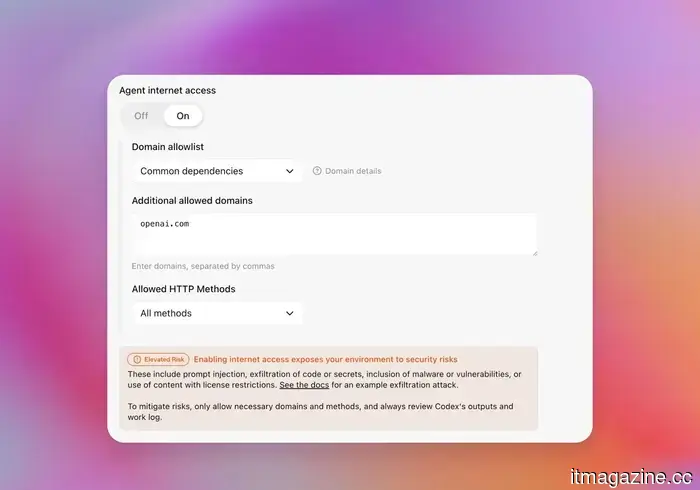
OpenAI emphasizes that Lockdown Mode does not prevent prompt injections from appearing in content. A harmful command may still be embedded in an uploaded file or a cached webpage. What Lockdown Mode seeks to avert is the final, potentially most harmful step: the extraction of sensitive information. To achieve this, OpenAI significantly limits ChatGPT’s ability to communicate outside of its environment.
Once activated, live web browsing is effectively disabled. ChatGPT can only access cached information, which may result in limited, outdated, or entirely inaccessible search results — Deep Research is no longer available, Agent Mode is turned off, and access via Canvas-generated code is blocked. Additionally, ChatGPT loses the option to download files for examination.
While users can still upload images and create AI-generated visuals where applicable, ChatGPT will not be able to retrieve images from the internet or include them in standard responses. Thus, Lockdown Mode transforms ChatGPT from a highly connected AI assistant into a far more isolated entity.
A feature most users might never require
This isn't a critique. In fact, one of the most intriguing aspects of Lockdown Mode is OpenAI's candid acknowledgment that it's not intended for everyone. Security experts have long understood that enhanced protection typically involves sacrificing some convenience. A close analogy would be Apple’s “Lockdown Mode," introduced years ago for individuals facing sophisticated cyber threats, rather than the average iPhone user. OpenAI seems to adopt a similar philosophy here.
For users managing extremely sensitive data, curbing network interactions can be worthwhile. When an AI system cannot freely engage with external services, there are simply fewer chances for private information to escape its environment. This decision also mirrors a broader trend in the AI sector. Earlier discussions focused on whether AI could gain access to more data and services. Now, companies are questioning how much access these systems should initially possess.
This inquiry is particularly significant as AI assistants acquire the ability to browse the internet, link with business applications, read internal documents, and execute actions across various services. OpenAI’s solution isn’t to remove these capabilities but to provide users with options.
The emergence of AI security measures
Lockdown Mode is particularly noteworthy for its implications regarding the future of AI products. For many years, software security has primarily centered on safeguarding users from malicious applications. AI presents a distinct challenge: protecting AI systems from harmful information.
This is a more complex issue. A prompt injection could be concealed within a webpage, embedded in a document, or masquerading as ordinary text. Detecting every possible attack is challenging, which is why OpenAI refers to prompt injection as an ongoing research challenge rather than a resolved issue.
Lockdown Mode acknowledges this reality. Instead of claiming to offer complete protection, it minimizes potential damage if a threat bypasses current defenses. For enterprise clients, the feature becomes even more detailed. Workspace administrators can create tailored Lockdown Mode roles, limit applications and connectors, and meticulously decide which actions employees are permitted to undertake. OpenAI also recommends restricting write-enabled integrations, as they facilitate the possibility of information breaching secured environments.
In many respects, Lockdown Mode signifies the direction AI security is heading. As AI assistants gain more capabilities, users will increasingly require tools to limit their functionalities when necessary. This may not generate as much excitement as a new reasoning model or an AI agent capable of booking flights. However, for organizations managing sensitive data, it could be significantly more crucial. Sometimes, the most intelligent AI is the one that knows when to hold back.
Other articles
 The most excellent new feature of ChatGPT is likely one that many users will never take advantage of.
In the realm of AI security, convenience and protection seldom coexist. OpenAI's recent Lockdown Mode serves as evidence of this.
The most excellent new feature of ChatGPT is likely one that many users will never take advantage of.
In the realm of AI security, convenience and protection seldom coexist. OpenAI's recent Lockdown Mode serves as evidence of this.
 Gemini may soon provide a troubleshooting mode, potentially saving you a trip to the help manuals.
A newly observed Gemini Troubleshooting mode provides users with step-by-step instructions and interactive tools to resolve common issues more effectively.
Gemini may soon provide a troubleshooting mode, potentially saving you a trip to the help manuals.
A newly observed Gemini Troubleshooting mode provides users with step-by-step instructions and interactive tools to resolve common issues more effectively.
 The right to repair is not just a passion for hobbyists. It’s a struggle concerning ownership rights.
The right to repair is often viewed as a concern related to e-waste, but the more pressing issue is ownership. A failing battery shouldn't revert a device that you purchased back into the property of the company.
The right to repair is not just a passion for hobbyists. It’s a struggle concerning ownership rights.
The right to repair is often viewed as a concern related to e-waste, but the more pressing issue is ownership. A failing battery shouldn't revert a device that you purchased back into the property of the company.
 The high-budget Avatar: The Last Airbender RPG is said to have been cancelled.
An allegedly ambitious AAA RPG based on Avatar: The Last Airbender has been canceled, putting an end to the prospects of a significant open-world experience within the cherished animated universe.
The high-budget Avatar: The Last Airbender RPG is said to have been cancelled.
An allegedly ambitious AAA RPG based on Avatar: The Last Airbender has been canceled, putting an end to the prospects of a significant open-world experience within the cherished animated universe.
 The concealed work associated with contemporary tech support is transforming everyone into unpaid workers.
Contemporary tech support promotes self-service as a convenience; however, each interaction with a chatbot and every repetitive explanation contributes to unpaid work.
The concealed work associated with contemporary tech support is transforming everyone into unpaid workers.
Contemporary tech support promotes self-service as a convenience; however, each interaction with a chatbot and every repetitive explanation contributes to unpaid work.
 Sriram Krishnan, Trump’s leading AI adviser, is resigning from his position at the White House.
Sriram Krishnan, who played a key role in developing Trump's AI action plan, will be departing at the end of June to establish an external organization centered on AI policy.
Sriram Krishnan, Trump’s leading AI adviser, is resigning from his position at the White House.
Sriram Krishnan, who played a key role in developing Trump's AI action plan, will be departing at the end of June to establish an external organization centered on AI policy.
The top new feature of ChatGPT is one that the majority of users are unlikely to utilize.
In the realm of AI security, convenience and safety often do not align. OpenAI's recent Lockdown Mode exemplifies this reality.