

Mira Murati reemerges with a caution about AI governance and introduces a new product.
**TL;DR** Former OpenAI CTO Mira Murati made her first significant public appearance in 18 months, showcasing Thinking Machines Lab’s “interaction models” and asserting that the AI industry lacks proper governance mechanisms. She also discussed the departures of researchers and reflected on the firing of Altman in 2023.
For someone instrumental in launching ChatGPT, DALL-E, and Codex, Mira Murati has been notably silent. On Thursday, she broke that silence. In a conversation with Bloomberg’s Emily Chang in San Francisco, the CEO of Thinking Machines Lab made her first notable media appearance in about 18 months, re-entering a rapidly evolving discussion without her.
This timing was strategic. Over the past year and a half, Thinking Machines has raised $2 billion, secured significant Nvidia Vera Rubin compute power, launched one product, and faced considerable departures of researchers hired to develop the next one. The AI landscape that Murati left when she left OpenAI in September 2024 looked entirely different from the one she returned to.
**The product: interaction models**
Murati used this opportunity to introduce what Thinking Machines refers to as “interaction models,” a unique type of AI interface. Instead of the typical prompt-and-response format found in most AI products, the company's models are engineered to handle continuous streams of audio, text, and video in intervals of 200 milliseconds.
These models aim to capture the nuances of human communication—such as interruptions, corrections in mid-thought, and pauses. The technical term for this is “full duplex,” and the company claims its TML-Interaction-Small model responds in 0.40 seconds, which aligns closely with the pace of natural conversation. This aligns with Thinking Machines’ foundational belief that effective AI requires more, not less, human collaboration.
Murati was cautious to describe this as just an initial step. She refrained from specifying a release date for any products and mentioned this work alongside Tinker, the company’s API for fine-tuning open-source models, which was launched in October 2025 and remains its only released product.
**The departures**
Chang pressed Murati on what has become a noticeable issue for the company: a series of prominent departures. Co-founder and CTO Barret Zoph, co-founder Luke Metz, and founding member Sam Schoenholz all returned to OpenAI in January. Additionally, five founding members have joined Meta, reportedly attracted by compensation packages in the nine-figure range.
Murati played down these departures, noting that building a pioneering AI lab from the ground up condenses typical organizational changes into a shorter time frame. She recognized that the high compensation now typical in the AI talent market is eye-catching but suggested that salary is not always the entire story.
“When I wake up in the morning, I am not thinking about how to eliminate the competition,” she quipped, eliciting laughter from the audience. While this comment was light-hearted, the competitive reality is evident. OpenAI's presence is pervasive. Anthropic has raised $30 billion and reportedly received investment offers valuing it at $800 billion. Elon Musk’s xAI has been integrated into SpaceX in preparation for a record IPO. In such an environment, remaining silent has its costs.
**The Altman firing, revisited**
Chang inquired about the incident that first thrust Murati into the public eye: the chaotic five days in November 2023 when OpenAI's board dismissed Sam Altman, and Murati stepped in as interim CEO. Internally, this episode became known as “the blip.”
Murati expressed that she felt confident about her decisions during that time, emphasizing that protecting the mission and the team was what guided her, even as the situation appeared to be collapsing from an outside perspective. She stated that the company would have “imploded” without her involvement during that period. However, she admitted that clarity of intent does not equate to clarity regarding the consequences, and she would have insisted on more information, a better transition plan, and increased transparency.
When asked if she still trusts Altman, she deflected. Instead, she presented a compelling viewpoint regarding the concentration of significant decisions in too few hands—not only at OpenAI but throughout the industry. Her focus, she noted, is more on the lack of structural checks than the character of any single leader. Good individuals can still make poor decisions, and well-meaning organizations can veer off course.
**The harder question**
Regarding the future of AI, Murati pushed back against both dystopian and utopian narratives. She contended that neither outcome is inevitable and that the current period will shape the direction of developments.
However, she returned repeatedly to a theme linking her governance concerns to her product philosophy: if humans relinquish control prematurely, the future will likely be unfavorable and markedly different. This aligns with her company’s belief in the necessity of human-AI collaboration. Whether this approach can withstand a market that prioritizes speed, scale, and massive
Other articles
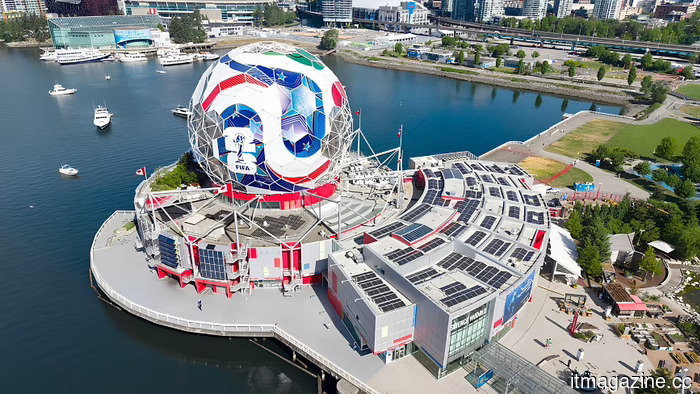 Scams related to the FIFA World Cup 2026 are active: fraudulent websites and malware.
More than 4,300 counterfeit FIFA websites, banking malware in streaming applications, and compromised login credentials are currently aimed at World Cup 2026 supporters, with the FBI and analysts cautioning about potential losses in the billions.
Scams related to the FIFA World Cup 2026 are active: fraudulent websites and malware.
More than 4,300 counterfeit FIFA websites, banking malware in streaming applications, and compromised login credentials are currently aimed at World Cup 2026 supporters, with the FBI and analysts cautioning about potential losses in the billions.
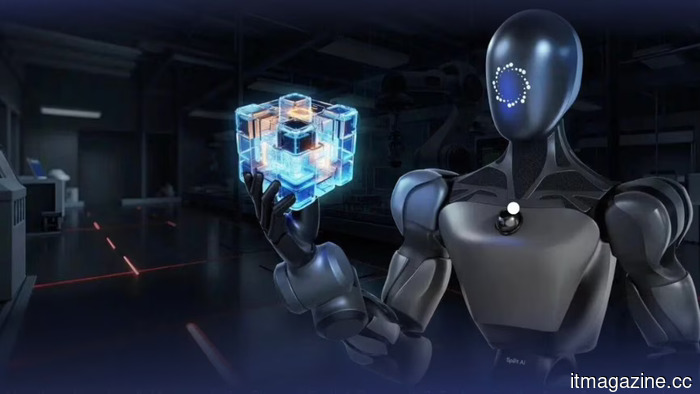 Spirit AI surpasses Nvidia in the RoboArena robotics benchmark.
Chinese startup Spirit AI has taken the lead on the RoboArena leaderboard co-developed by Nvidia, achieving a score of 1,924 compared to Nvidia's 1,881, marking the rise of physical AI as the new frontier in technology.
Spirit AI surpasses Nvidia in the RoboArena robotics benchmark.
Chinese startup Spirit AI has taken the lead on the RoboArena leaderboard co-developed by Nvidia, achieving a score of 1,924 compared to Nvidia's 1,881, marking the rise of physical AI as the new frontier in technology.
 AI token prices dropped by 98%, while expenses for enterprises tripled.
Uber, Microsoft, and Priceline are reacting swiftly as AI token legislation has surged. The Linux Foundation is establishing a Tokenomics Foundation aimed at instilling financial discipline in AI expenditures.
AI token prices dropped by 98%, while expenses for enterprises tripled.
Uber, Microsoft, and Priceline are reacting swiftly as AI token legislation has surged. The Linux Foundation is establishing a Tokenomics Foundation aimed at instilling financial discipline in AI expenditures.
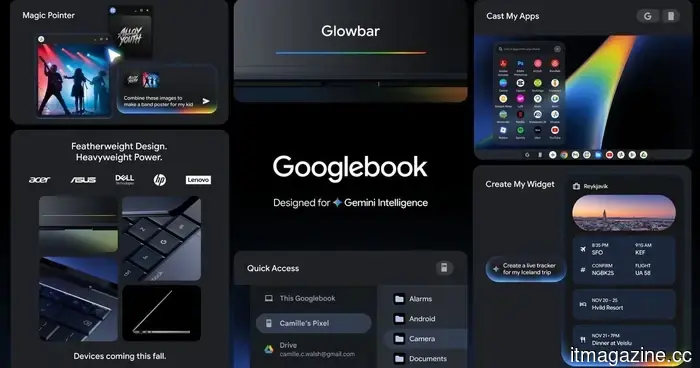 You might not be looking for it, but a flood of Google Books is on its way from leading brands.
Googlebook may launch with as many as eight devices this fall, offering customers a variety of options that include Intel, Snapdragon, and MediaTek hardware. However, important information regarding pricing, specifications, and availability is still unverified.
You might not be looking for it, but a flood of Google Books is on its way from leading brands.
Googlebook may launch with as many as eight devices this fall, offering customers a variety of options that include Intel, Snapdragon, and MediaTek hardware. However, important information regarding pricing, specifications, and availability is still unverified.
 Claude generates 80% of its code and advocates for an AI pause.
Claude currently generates 80% of Anthropic's production code. The organization's recent paper outlines a strategy for recursive self-improvement and advocates for the implementation of a global pause mechanism.
Claude generates 80% of its code and advocates for an AI pause.
Claude currently generates 80% of Anthropic's production code. The organization's recent paper outlines a strategy for recursive self-improvement and advocates for the implementation of a global pause mechanism.
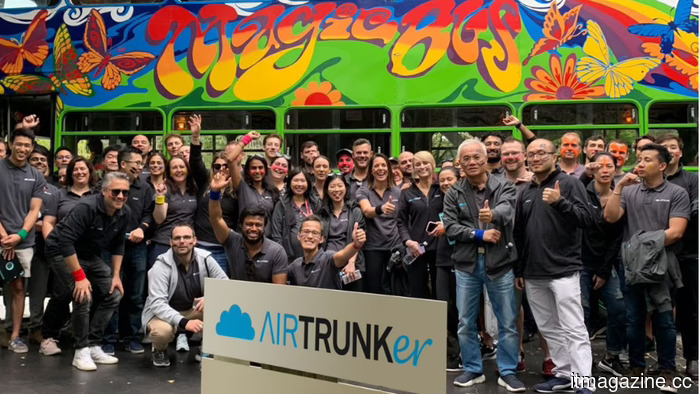 AirTrunk aims to invest $30 billion in a 5GW data center initiative in India by 2030.
AirTrunk, supported by Blackstone, intends to invest $30 billion in India by 2030 to establish 5GW of data center capacity, shortly after its entry into the market via the acquisition of Lumina CloudInfra.
AirTrunk aims to invest $30 billion in a 5GW data center initiative in India by 2030.
AirTrunk, supported by Blackstone, intends to invest $30 billion in India by 2030 to establish 5GW of data center capacity, shortly after its entry into the market via the acquisition of Lumina CloudInfra.
Mira Murati reemerges with a caution about AI governance and introduces a new product.
The former CTO of OpenAI discusses the interaction models of Thinking Machines, shares her thoughts on the firing of Altman, and contends that AI lacks sufficient structural safeguards during her first public appearance in a year and a half.