
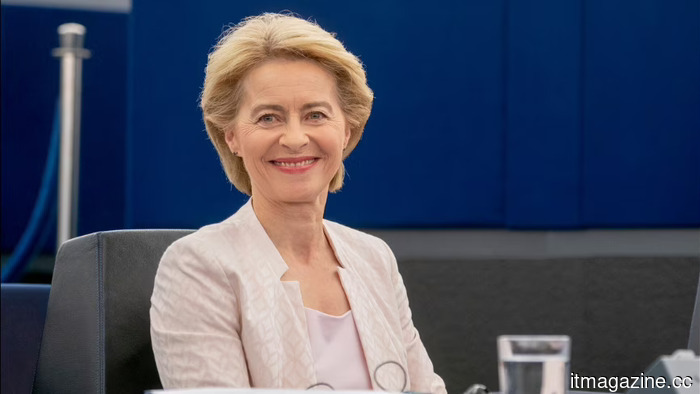
Die Ernennung von von der Leyen zum KI-Beauftragten stößt auf Kritik wegen Interessenkonflikten.
The European Commission has designated Jim Hagemann Snabe, the chairman of Siemens' supervisory board, as its special envoy for industrial artificial intelligence. He will provide counsel to Commission President Ursula von der Leyen and tech sovereignty chief Henna Virkkunen regarding the acceleration of AI integration in European industries.
The reaction was swift. Snabe’s appointment comes shortly after Siemens was one of the companies that heavily advocated for the weakening of the EU’s AI Act, which is regarded as the most comprehensive AI regulatory framework globally. Detractors argue that this appointment effectively grants advisory authority over AI policy to the very industry that successfully diluted the regulations.
About Jim Hagemann Snabe
At 60, Snabe is a Danish business executive who co-led SAP as co-CEO from 2010 to 2014 before transitioning to the supervisory board. He became the chairman of Siemens' supervisory board in 2018. In addition to these positions, he has been part of the advisory board for Google Cloud, served on the board of the US enterprise AI company C3.ai, and has been a trustee at the World Economic Forum.
The Commission asserts it conducted a comprehensive conflict-of-interest assessment prior to the appointment. During his term, which lasts until 31 March 2027, Snabe will suspend his memberships at Google Cloud and C3.ai. This role is unpaid.
The rollback of the AI Act
The timing of the appointment has heightened political tensions. On 7 May, the Council of the EU and the European Parliament reached an agreement to streamline the AI Act through the so-called Digital Omnibus. A key amendment was a 16-month extension to high-risk AI obligations, moving the deadline from August 2026 to December 2027.
More critically for Siemens, this deal introduced an exemption for industrial AI. AI systems utilized on factory floors and integrated into machinery will now fall under separate machinery regulations instead of the AI Act, unless a failure poses an immediate health or safety risk. Germany, home to Siemens, spearheaded the push for this exemption. Chancellor Friedrich Merz advocated for releasing industrial AI from the EU’s “regulatory straightjacket” during the Hannover Messe trade fair in April, supported by Siemens executives.
Virkkunen, who championed the simplification through the College of Commissioners, portrayed the deal as evidence that Europe can uphold a rules-based framework while ensuring workable regulations for industries. Snabe's appointment is seen as a further step in that direction, sending a clear message that prioritizes industrial competitiveness over regulatory caution.
The criticism
“My initial reaction was simply: Wow,” expressed Kim van Sparrentak, the Dutch Green lawmaker responsible for leading the Parliament's work on the AI Act. “They lobbied vigorously against AI regulations for themselves, campaigned against technological sovereignty, and now they are in a position to determine how we implement AI.”
Concerns extend beyond Siemens. Snabe’s positions on the boards of Google Cloud and C3.ai place him at the convergence of three groups most directly impacted by EU AI policy: European industry, US Big Tech, and the enterprise AI software sector. Suspending board memberships does not equate to severing connections, and critics contend that an unpaid advisory role without formal accountability exemplifies the revolving-door governance that is challenging to monitor.
The Commission has not provided specific information regarding the nature of Snabe's conflict-of-interest assessment. Although it claims that an assessment was conducted, the methodology and findings have not been released, making independent evaluation difficult.
What the role entails
Snabe's mandate is to provide guidance on how Europe can enhance industrial AI adoption, a goal that the Commission has prioritized since the passage of the AI Act exposed a fundamental tension in European tech policy: the need to regulate AI while avoiding lagging behind the US and China in its deployment.
The announcement of the appointment coincided with the Commission’s broader technology sovereignty strategy, which encompasses the Cloud and AI Development Act, Chips Act 2.0, and new limitations on US cloud providers managing sensitive European government data. Snabe’s role is intended to act as a bridge between Brussels’ regulatory aspirations and the realities of implementing AI in European factories.
Whether a Siemens chairman is the ideal person to bridge this gap or merely a clear indicator of the gap itself remains a question that Brussels will consider throughout his tenure.
Other articles
 AI token prices dropped by 98%, while expenses for enterprises tripled.
Uber, Microsoft, and Priceline are reacting swiftly as AI token legislation has surged. The Linux Foundation is establishing a Tokenomics Foundation aimed at instilling financial discipline in AI expenditures.
AI token prices dropped by 98%, while expenses for enterprises tripled.
Uber, Microsoft, and Priceline are reacting swiftly as AI token legislation has surged. The Linux Foundation is establishing a Tokenomics Foundation aimed at instilling financial discipline in AI expenditures.
 Japan faces the danger of becoming an "AI colony," cautions its digital minister.
Digital Minister Hisashi Matsumoto cautioned that Japan might become an 'AI colony' if it lags behind, advocating for a bill aimed at simplifying data-use consent regulations.
Japan faces the danger of becoming an "AI colony," cautions its digital minister.
Digital Minister Hisashi Matsumoto cautioned that Japan might become an 'AI colony' if it lags behind, advocating for a bill aimed at simplifying data-use consent regulations.
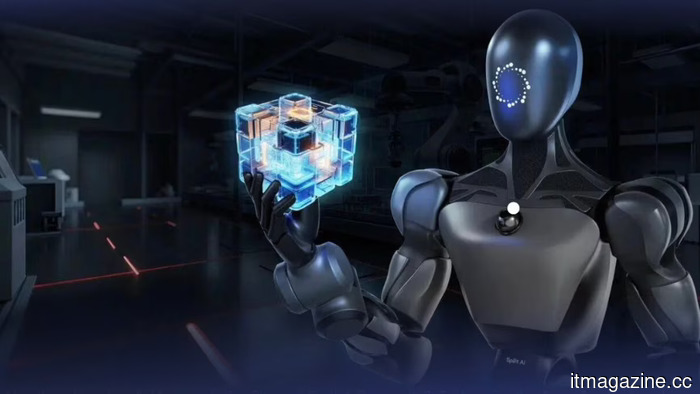 Spirit AI surpasses Nvidia on the RoboArena robotics benchmark.
Chinese startup Spirit AI has taken the lead on the RoboArena leaderboard co-developed by Nvidia, achieving a score of 1,924, compared to Nvidia's 1,881, as physical AI emerges as the next frontier in technology.
Spirit AI surpasses Nvidia on the RoboArena robotics benchmark.
Chinese startup Spirit AI has taken the lead on the RoboArena leaderboard co-developed by Nvidia, achieving a score of 1,924, compared to Nvidia's 1,881, as physical AI emerges as the next frontier in technology.
 Mira Murati reappears with a caution regarding AI governance and introduces a new product.
The former CTO of OpenAI shares insights on Thinking Machines' interaction models, discusses the firing of Altman, and contends that artificial intelligence lacks sufficient structural safeguards in her first public appearance in a year and a half.
Mira Murati reappears with a caution regarding AI governance and introduces a new product.
The former CTO of OpenAI shares insights on Thinking Machines' interaction models, discusses the firing of Altman, and contends that artificial intelligence lacks sufficient structural safeguards in her first public appearance in a year and a half.
 Claude generates 80% of its code and advocates for an AI pause.
Claude currently generates 80% of Anthropic's production code. The organization's recent paper outlines a strategy for recursive self-improvement and advocates for the implementation of a global pause mechanism.
Claude generates 80% of its code and advocates for an AI pause.
Claude currently generates 80% of Anthropic's production code. The organization's recent paper outlines a strategy for recursive self-improvement and advocates for the implementation of a global pause mechanism.
 Claude completes 80% of its coding and requests a pause on AI development.
Claude currently writes 80% of the production code for Anthropic. The company's latest paper outlines a strategy for recursive self-improvement and advocates for a global pause mechanism.
Claude completes 80% of its coding and requests a pause on AI development.
Claude currently writes 80% of the production code for Anthropic. The company's latest paper outlines a strategy for recursive self-improvement and advocates for a global pause mechanism.
Die Ernennung von von der Leyen zum KI-Beauftragten stößt auf Kritik wegen Interessenkonflikten.
The EU designated Siemens chairman Jim Hagemann Snabe as an AI envoy just weeks after the company assisted in rolling back the AI Act. Detractors argue that this gives policy power to industry lobbyists.