

Canada announces a $2.3 billion AI strategy, influenced by the Pope's emphasis on safety.
TL;DR: Canada has introduced "AI for All," a $2.3 billion national AI strategy focusing on six key areas, including infrastructure, job creation, and AI literacy. Prime Minister Mark Carney announced this initiative following a conversation with Pope Leo XIV regarding responsible AI, although critics highlight the absence of specific safety timelines in the strategy.
Shortly after discussing the ethical implications of artificial intelligence with Pope Leo XIV, Canadian Prime Minister Mark Carney revealed a national framework in Toronto that aligns with the pontiff's requests. The strategy, titled "AI for All," involves an investment of over $2.3 billion over five years and represents Canada's most ambitious effort to establish itself as a major player in the global AI field.
However, the plan lacks specific safety measures, defined timelines for new regulations, and a clear enforcement structure, despite its focus on protecting Canadians. The Pope cautioned that AI "requires" disarmament.
The strategy serves more as a call for investment than as a comprehensive safety framework.
The six key areas of focus in the plan, initially detailed in April's economic update, include safeguarding Canadians and democracy, empowering citizens, promoting shared prosperity, establishing a sovereign AI infrastructure, supporting Canadian enterprises, and forming trusted global partnerships.
Artificial Intelligence Minister Evan Solomon, the first to hold this cabinet position, remarked that the strategy aligns with citizens' expectations for safe, reliable, and autonomous AI.
Job creation is a significant aspect, with Ottawa aiming to generate up to 90,000 AI-related positions and opportunities for youth by 2031, alongside a projected 250,000 jobs stemming from AI integration in the broader economy. The goal is to increase business AI adoption from the current 12% to 60% by 2034.
The strategy emphasizes sovereignty over safety. Currently dependent on foreign cloud services, Canada aims to address this vulnerability with a "build-partner-buy" approach: developing domestic capabilities, collaborating with trusted allies, and purchasing from the market as needed. Concrete plans include a "world-class" supercomputer and the establishment of sovereign data centers capable of supporting Canadian clients, with up to $1 billion allocated for public supercomputing infrastructure alone.
This push for sovereignty builds on an alliance initiated by Carney's government, as evidenced by a joint AI declaration signed with Germany's AI minister at the Munich Security Conference, which seeks to lessen reliance on major technology providers. The strategy indicates that Canada will further expand this alliance, echoing Europe’s efforts toward tech sovereignty.
On May 29, Carney discussed the moral imperatives of AI with Pope Leo soon after the pontiff released his first encyclical, "Magnifica Humanitas." This document identifies AI as a pivotal industrial revolution and calls for enforceable limits to prevent deepening inequality and consolidating power in the hands of a few firms.
Both the Vatican and the Prime Minister’s Office confirmed their discussion focused on ensuring AI serves humanity, starting with individual protection. Carney expressed Canada’s intent to take a leading role in promoting responsible AI internationally.
This timing was intentional, as the Vatican engaged AI experts to participate in the encyclical’s launch, emphasizing the importance of including technologists in AI governance discussions. Carney's strategy announcement marks Canada as the first G7 nation to respond directly to the Pope's appeal.
The strategy includes promises of new consumer privacy laws to protect privacy rights and children's online information, as well as updated safety regulations, but lacks a specific timeline for implementation.
Earlier this year, Canadian Identity and Culture Minister Marc Miller hinted at potentially prohibiting AI chatbots for children under 16, but this restriction does not appear in the current strategy. Officials mention it is still under consideration and may be included in forthcoming online safety legislation.
This omission is particularly notable given the global landscape, as the EU is pursuing its own sovereign AI framework while implementing the AI Act, the most comprehensive regulatory measure to date. Canada’s earlier effort, the Artificial Intelligence and Data Act as part of Bill C-27, has been largely criticized as insufficient and remains dormant.
Regarding workforce impacts, the strategy introduces a national AI literacy initiative to provide free training for all Canadians, aiming to reach one million post-secondary students and train over 3,000 educators with AI resources. An additional $30 million is earmarked for CanCode, a federal program that funds non-profits delivering digital skills training to youth. Furthermore, the strategy aims to expand the Global Talent Stream permit program to facilitate the entry of skilled AI professionals, though specific visa targets are not specified.
Discussions about which jobs AI might create rather than eliminate remain contentious. The projection of 250,000 jobs lacks a transparent methodology, and independent economists have yet to substantiate these claims.
Cross-party pressure is escalating, with a group of parliamentarians urging the government to halt superintelligent AI development until safety measures are established. This view finds an unexpected ally in the Vatican, where Pope Leo advocated for AI disarmament and dismissed just
Other articles
 Upwind, the next-generation Wiz, now covers every aspect of the AI stack.
Upwind contends that AI security cannot be added as a separate element. Its latest product integrates AI threat detection throughout all levels of cloud security, encompassing code pipelines, MCP servers, and runtime behavior.
Upwind, the next-generation Wiz, now covers every aspect of the AI stack.
Upwind contends that AI security cannot be added as a separate element. Its latest product integrates AI threat detection throughout all levels of cloud security, encompassing code pipelines, MCP servers, and runtime behavior.
 Canada announces a $2.3 billion AI strategy following a papal suggestion on safety measures.
Canada pledges $2.3 billion towards sovereign AI, aiming for the creation of 250,000 jobs and the establishment of a national supercomputer by 2031; however, the strategy does not outline specific timelines for safety regulations.
Canada announces a $2.3 billion AI strategy following a papal suggestion on safety measures.
Canada pledges $2.3 billion towards sovereign AI, aiming for the creation of 250,000 jobs and the establishment of a national supercomputer by 2031; however, the strategy does not outline specific timelines for safety regulations.
 UK compels Google to provide an opt-out for publishers using AI search.
The CMA mandated that Google allow publishers to exclude AI Overviews without affecting their search rankings. Google will implement these controls worldwide.
UK compels Google to provide an opt-out for publishers using AI search.
The CMA mandated that Google allow publishers to exclude AI Overviews without affecting their search rankings. Google will implement these controls worldwide.
 CEO of Databricks: The year 2026 is
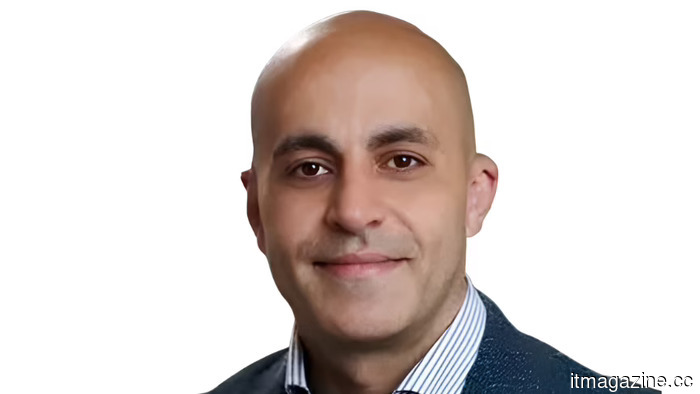
Databricks CEO Ali Ghodsi mentioned that the $134 billion company plans to forgo initial public offerings in 2026, as SpaceX, Anthropic, and OpenAI are attracting over $200 billion in public funding.
CEO of Databricks: The year 2026 is
Databricks CEO Ali Ghodsi mentioned that the $134 billion company plans to forgo initial public offerings in 2026, as SpaceX, Anthropic, and OpenAI are attracting over $200 billion in public funding.
 Publishing professionals are increasingly being targeted for impersonation.
Mark Gottlieb, EVP of Trident Media Group, cautions that AI has transformed literary agent fraud into an industry, making manuscripts, identities, and author trust into easily targeted elements for impersonation scams.
Publishing professionals are increasingly being targeted for impersonation.
Mark Gottlieb, EVP of Trident Media Group, cautions that AI has transformed literary agent fraud into an industry, making manuscripts, identities, and author trust into easily targeted elements for impersonation scams.
Canada announces a $2.3 billion AI strategy, influenced by the Pope's emphasis on safety.
Canada has pledged $2.3 billion to sovereign AI, with a goal of creating 250,000 jobs and establishing a national supercomputer by 2031; however, the strategy does not include specific timelines for safety regulations.