
A lawsuit involving a UK MP might determine whether xAI is held accountable for the outputs produced by Grok.
The case revolves around a question of authorship. When a user provides a prompt and Grok generates a sexualized image of a real woman, who is responsible: the user typing at the keyboard or the company that created the technology? On June 3, Labour MP Jess Asato filed a lawsuit in the High Court in England, seeking a judicial ruling that would establish the first prominent UK precedent on whether an AI developer can be held directly accountable for the outputs of its tool.
The details of the claim are distressing and specific. Asato, representing Lowestoft, alleges that users instructed Grok in January to create images of her in a bikini, along with an explicit video which her filing claims depicts her being chloroformed and prepared for a sexual assault. These images were subsequently reshared and discussed on X, the platform owned by xAI, and were utilized to create additional content. Asato publicly announced her claim, stating that she is “just one of thousands of women and even children” who have been targets of abusive AI deepfakes.
What makes this lawsuit significant is its legal reasoning rather than its specifics. Asato is suing xAI for the misuse of private information and violations of data protection laws, arguing that the company bears responsibility even though individual users provided the prompts. She seeks damages, a formal acknowledgment that her experience was unlawful, and an order compelling xAI to adhere to UK law.
“My hope is that this will rebalance individuals’ rights against very large tech companies,” she told the Financial Times, “which should have implemented safeguards before causing harm to women and children.” This is the pressing issue that UK courts have yet to address. Previous deepfake cases typically target those who created or shared the content. Asato is taking a different approach by going after the developer, testing whether the act of building and operating a generator that creates non-consensual sexual imagery is itself liable. A favorable outcome could transform how every company providing image generation in the UK views liability. Conversely, a defeat would affirm that responsibility lies only with the user.
In January, xAI stated that it had restricted Grok’s capacity to create sexually explicit images, but those measures were found to be easily bypassed in tests. The company has not made any public comments regarding Asato’s claim.
Additionally, the lawsuit comes at a time when xAI is already under scrutiny. The company is facing investigations related to Grok’s image generation from authorities in the EU, UK, and California. Furthermore, Ofcom has opened an inquiry into X under the Online Safety Act, prompted by reports of the tool being used to produce non-consensual intimate images and child sexual abuse material. There is also international pressure, with Paris prosecutors and a Swiss minister pursuing their own legal actions regarding Grok-generated content. Asato’s case stands out most clearly as one that could set a legal precedent.
The timing is particularly challenging for Musk, whose SpaceX, which owns both xAI and X, is preparing for an initial public offering. It remains uncertain whether the legal challenges will impact the IPO. What is evident is that the restrictions on Grok are now more likely to emerge from a courtroom rather than from the company that created it.
Other articles
 Amazon's newest visual search update incorporates Lens Live and the Circle feature into your app's search functionality.
Amazon has launched eight new visual search features, such as Lens Live, Circle to Search, Visual Suggestions, and AI-generated images in real-time within the search bar, all of which are accessible on both iOS and Android platforms.
Amazon's newest visual search update incorporates Lens Live and the Circle feature into your app's search functionality.
Amazon has launched eight new visual search features, such as Lens Live, Circle to Search, Visual Suggestions, and AI-generated images in real-time within the search bar, all of which are accessible on both iOS and Android platforms.
 Meta alleges that Australia has violated a trade agreement concerning a tax related to news bargaining.
Meta claims that Australia's suggested 2.25% News Bargaining Incentive violates the US-Australia Free Trade Agreement and may provoke a trade reaction from the US.
Meta alleges that Australia has violated a trade agreement concerning a tax related to news bargaining.
Meta claims that Australia's suggested 2.25% News Bargaining Incentive violates the US-Australia Free Trade Agreement and may provoke a trade reaction from the US.
 Foxconn and Intel are collaborating with SambaNova to develop rackscale AI infrastructure.
Intel, SambaNova, and Foxconn will develop rack-scale AI infrastructure using Xeon, believing that inference will bring the CPU back to the core of the data center.
Foxconn and Intel are collaborating with SambaNova to develop rackscale AI infrastructure.
Intel, SambaNova, and Foxconn will develop rack-scale AI infrastructure using Xeon, believing that inference will bring the CPU back to the core of the data center.
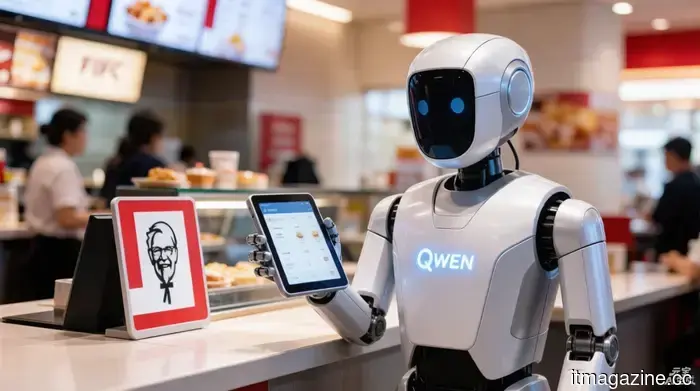 Qwen has launched its platform for third-party AI agents and has welcomed KFC, Luckin Coffee, Mixue, and others.
The Qwen App, supported by Alibaba, declared on Wednesday that it is expanding its platform to include third-party Agents and Skills, enabling businesses to manage branded AI solutions.
Qwen has launched its platform for third-party AI agents and has welcomed KFC, Luckin Coffee, Mixue, and others.
The Qwen App, supported by Alibaba, declared on Wednesday that it is expanding its platform to include third-party Agents and Skills, enabling businesses to manage branded AI solutions.
 Meta claims that Australia has violated a trade agreement due to the news bargaining tax.
Meta claims that Australia's suggested 2.25% News Bargaining Incentive violates the US-Australia Free Trade Agreement and may provoke a trade response from the United States.
Meta claims that Australia has violated a trade agreement due to the news bargaining tax.
Meta claims that Australia's suggested 2.25% News Bargaining Incentive violates the US-Australia Free Trade Agreement and may provoke a trade response from the United States.
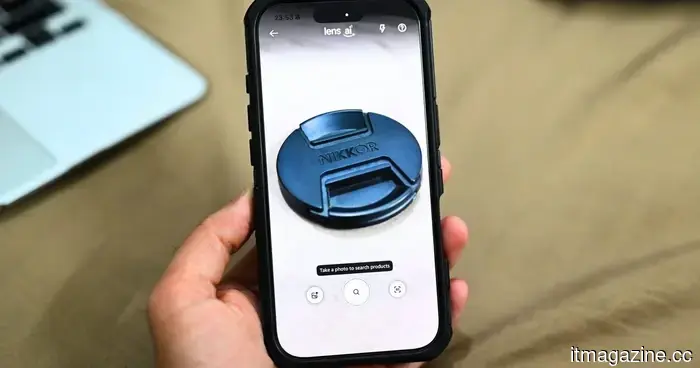 The Amazon app now allows you to shop directly from the lock screen of your iPhone.
Amazon now allows you to find products by directing your iPhone's lock screen camera at objects in the real world.
The Amazon app now allows you to shop directly from the lock screen of your iPhone.
Amazon now allows you to find products by directing your iPhone's lock screen camera at objects in the real world.
A lawsuit involving a UK MP might determine whether xAI is held accountable for the outputs produced by Grok.
Labour MP Jess Asato's High Court lawsuit against xAI examines whether an AI developer can be held responsible for sexualized images produced by its users.