
Asus unveils the first-ever OLED esports monitor along with a Color ePaper secondary display.
Asus
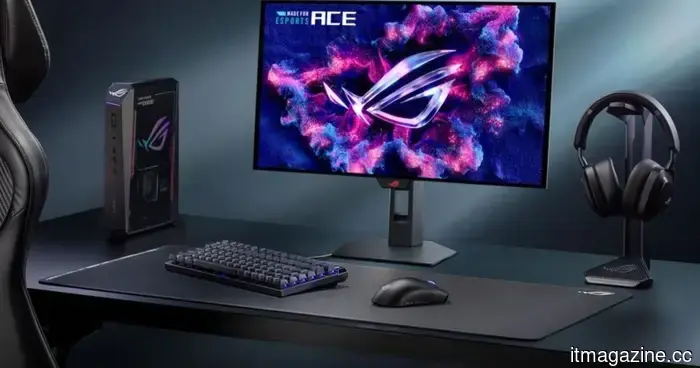
Gaming monitors have been striving for years to achieve one primary objective: increasing refresh rates. Asus has now advanced this competition with what it brands as the world’s first OLED monitor designed specifically for esports players.
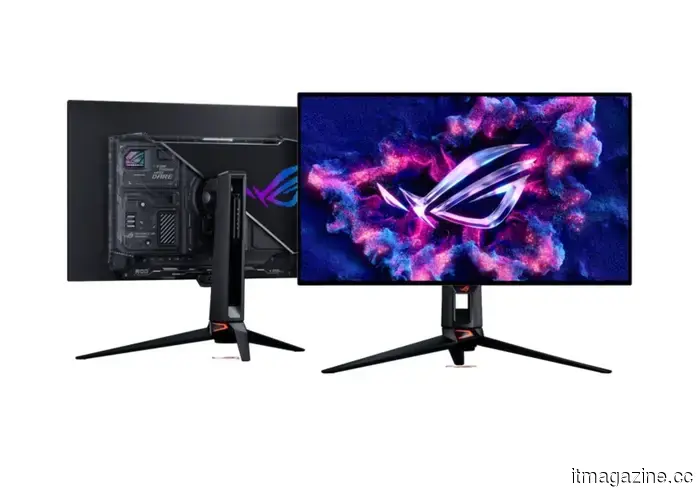
Revealed under the ROG umbrella, the new Strix OLED XG259QWPG Ace features a compact 24.5-inch display with an impressive 540Hz refresh rate, bringing the vivid visuals of OLED technology to a segment that has typically prioritized speed over image quality. However, this isn't the only unique display Asus has introduced. The company has also rolled out a color ePaper monitor intended for productivity, reading, and minimizing eye strain. While these two products might seem like an unusual combination, they both demonstrate a shift in display technology beyond the limitations of conventional LCD screens.
OLED finally steps into the esports scene
For many years, competitive gamers have depended on TN panels due to their superior response times. The drawback, however, has consistently been their image quality. The new XG259QWPG Ace seems to challenge that trade-off. Its 1080p OLED display provides a 540Hz refresh rate and an exceptionally quick response time while maintaining the deep blacks and vibrant colors that OLED technology is renowned for. Asus claims this latest-generation panel also enhances brightness, color volume, and longevity when compared to previous OLED iterations.
Asus
Notably, much of the monitor's design is reported to have been influenced by insights from professional gamers. Features such as measurement indicators on the stand and quick-access display settings might seem minor, but they are essential details that esports athletes focus on when fine-tuning their tournament setups. The result is a monitor that appears tailor-made for games like Counter-Strike 2, Valorant, and Overwatch 2, where every frame counts.
Asus aims to replace your secondary display
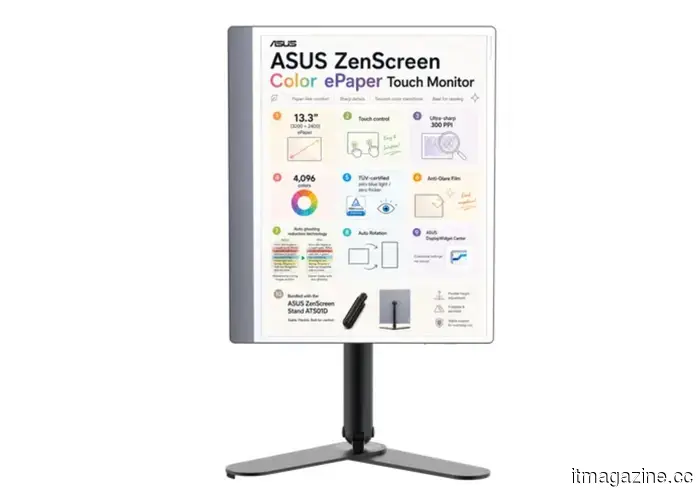
The more surprising innovation may be the ZenScreen Color ePaper MP13UC. Unlike a typical portable monitor, this 13.3-inch display utilizes color ePaper technology, akin to that found in high-end e-readers. The distinction is that Asus markets it as a secondary productivity monitor, rather than solely for reading books. Featuring a high-resolution screen, touchscreen functionality, and a smoother refresh rate than conventional ePaper displays, it could serve as an appealing tool for reviewing documents, engaging with research material, or keeping reference notes accessible throughout the day.
Asus
The lack of blue light and screen flicker is another significant benefit, particularly for users who spend prolonged hours in front of screens. In a time when many individuals routinely work across two or three monitors, a low-fatigue secondary display starts to become a logical choice.
One product is crafted for rapid reactions, while the other seeks to alleviate screen fatigue. This illustrates Asus's exploration of two distinct visions for the future of displays—both of which are far more compelling than yet another standard LCD monitor.
Shimul is a contributor at Digital Trends, with over five years of experience in the technology sector.
Samsung One UI 9 will disable your fingerprint every time you open the power menu
The lockdown feature has been removed, replaced by medical information, and your Galaxy phone will lock down each time you open and close the menu.
Samsung Galaxy phones have included a lockdown mode for many years. This manual option, found within the power menu, disables fingerprint and face recognition and mandates a PIN entry. It's a valuable last-resort measure for scenarios where someone may compel you to unlock your phone using your face or finger. The issue was that many users either were unaware of its existence or didn’t utilize it. One UI 9 addresses this by eliminating the option altogether.
Read more
Dell’s new XPS 16 Creator Edition aims to be your MacBook Pro alternative
The laptop boasts an Nvidia RTX Spark superchip, Tandem OLED display, and 128GB of unified memory.
Apple’s MacBook Pro has long been the go-to laptop for creative professionals. Video editors, photographers, 3D artists, and developers have gravitated toward this device, drawn by its performance and seamless integration with iPhones. Dell believes it has finally created a product that alters that equation. Announced at Computex 2026, the XPS 16 Creator Edition is Dell’s inaugural laptop designed around Nvidia's new RTX Spark superchip.
Read more
Nvidia’s RTX Spark chip targets the Mac Studio, with Asus and MSI being the first adopters
Nvidia has just developed a compact AI box that aims to compete with the Mac Studio.
The competition among compact high-performance desktops is intensifying, and Nvidia seems poised to enter a market long dominated by Apple’s Mac Studio. At Computex 2026, MSI launched a new AI-centric mini PC called the MSI EdgeMesa N AI, powered by Nvidia’s recently introduced RTX Spark platform. This launch marks Nvidia’s increasing ambition to expand AI computing beyond traditional gaming desktops and into small creator and workstation machines. More importantly,




Other articles
 Apple prepares receipt-scanning bill splitter for iOS 27.
Apple is introducing a bill-splitting feature in iOS 27 that takes photos of receipts, allocates items to friends, and creates Apple Cash requests, posing a challenge to Splitwise and Venmo.
Apple prepares receipt-scanning bill splitter for iOS 27.
Apple is introducing a bill-splitting feature in iOS 27 that takes photos of receipts, allocates items to friends, and creates Apple Cash requests, posing a challenge to Splitwise and Venmo.
 GoPro cautioned that it might not endure. The AI memory crisis is threatening the survival of companies that produce tangible products.
Memory prices increased by 80-115%. Revenue decreased by 26%. GoPro expressed "substantial doubt" regarding its ability to persist. The company is considering a sale or a shift towards the defense sector.
GoPro cautioned that it might not endure. The AI memory crisis is threatening the survival of companies that produce tangible products.
Memory prices increased by 80-115%. Revenue decreased by 26%. GoPro expressed "substantial doubt" regarding its ability to persist. The company is considering a sale or a shift towards the defense sector.
 Basic ebook readers are set to become much smarter with the addition of helpful AI and Android support.
E Ink and MediaTek are transforming e-readers into intelligent devices by incorporating on-device AI, real-time translation, quicker color displays, and support for Android.
Apple prepares receipt-scanning bill-splitting feature for iOS 27.
Apple is introducing a bill-splitting feature in iOS 27 that captures receipts, assigns items to friends, and creates Apple Cash requests, competing with Splitwise and Venmo.
Basic ebook readers are set to become much smarter with the addition of helpful AI and Android support.
E Ink and MediaTek are transforming e-readers into intelligent devices by incorporating on-device AI, real-time translation, quicker color displays, and support for Android.
Apple prepares receipt-scanning bill-splitting feature for iOS 27.
Apple is introducing a bill-splitting feature in iOS 27 that captures receipts, assigns items to friends, and creates Apple Cash requests, competing with Splitwise and Venmo.
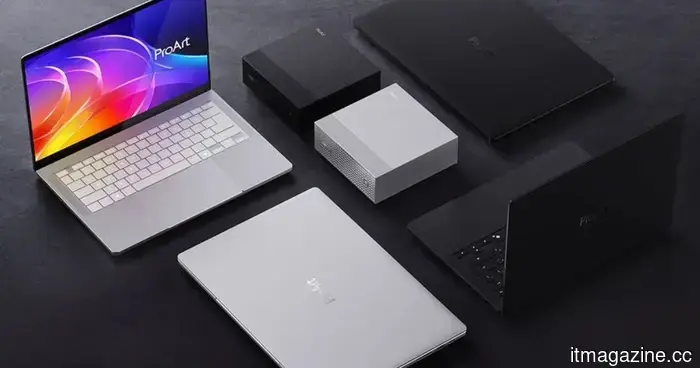 Asus equips its latest ProArt P16 and P14 laptops with Nvidia's powerful RTX Spark processor.
The latest ProArt P16 and P14 feature sleek designs and are equipped with Nvidia's robust RTX Spark platform, delivering workstation-level AI capabilities to creator laptops.
Asus equips its latest ProArt P16 and P14 laptops with Nvidia's powerful RTX Spark processor.
The latest ProArt P16 and P14 feature sleek designs and are equipped with Nvidia's robust RTX Spark platform, delivering workstation-level AI capabilities to creator laptops.
 Asus ROG has released the Edition 20 gaming peripherals, and you must admire these stunning pieces.
The 20th anniversary desktop from ROG is not only equipped with high-end components, but it could also be one of the most visually striking gaming PCs ever created.
Asus ROG has released the Edition 20 gaming peripherals, and you must admire these stunning pieces.
The 20th anniversary desktop from ROG is not only equipped with high-end components, but it could also be one of the most visually striking gaming PCs ever created.
Asus unveils the first-ever OLED esports monitor along with a Color ePaper secondary display.
I never expected to see a 540Hz OLED esports monitor and a color ePaper display in 2026, but Asus has just introduced both.