
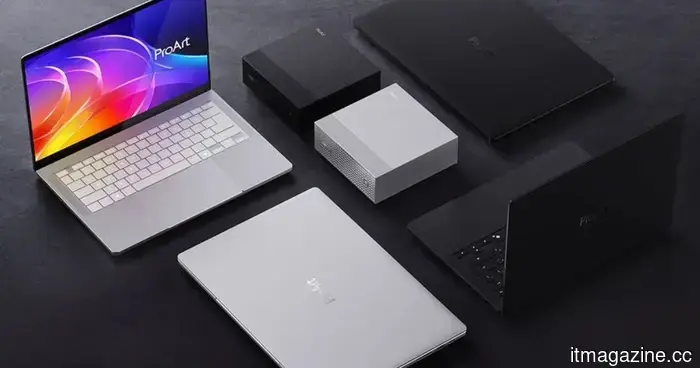
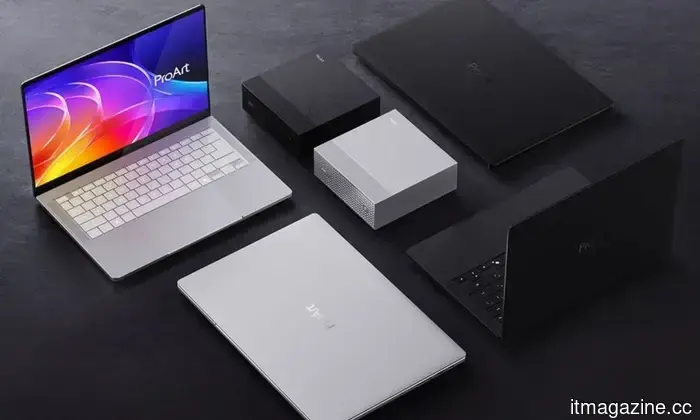
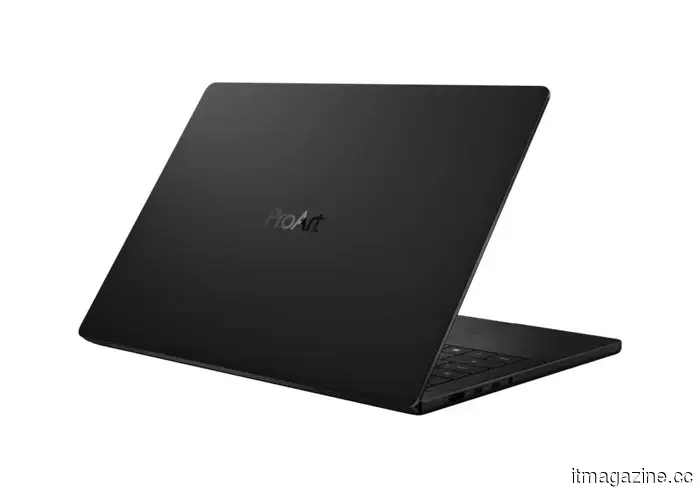
Asus equips its latest ProArt P16 and P14 laptops with Nvidia's powerful RTX Spark processor.
Asus
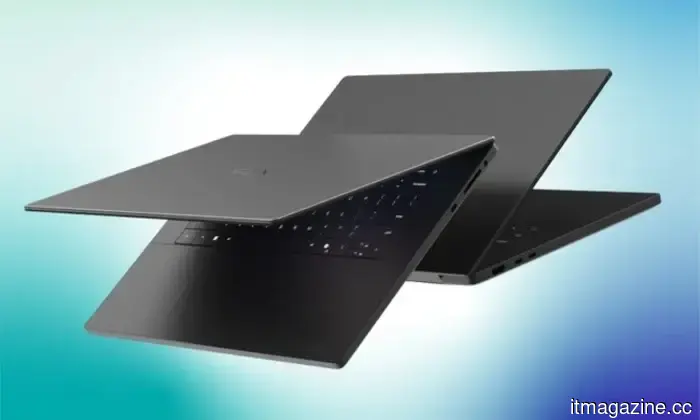
The competition in AI PC development has primarily centered on incorporating greater neural processing capacity into sleeker laptops. However, Asus is adopting a different approach. Its latest ProArt P16 and ProArt P14 creator laptops are designed around Nvidia’s new RTX Spark platform, a chipset that seems more suited for workstations—and that's precisely the intention.
These new ProArt laptops are aimed at creators, developers, and power users who desire desktop-like AI capabilities while being untethered from a stationary setup.
A creator laptop that operates like a workstation
The noteworthy aspect here isn’t necessarily the laptops themselves, but rather their internal hardware. NVIDIA’s RTX Spark platform merges an RTX GPU built on the Blackwell architecture with a 20-core Grace CPU, creating a solution capable of managing AI tasks that would usually necessitate much larger machines. Asus asserts that users can handle large 3D projects, edit ultra-high-resolution videos, locally generate AI content, and even utilize extensive language models without relying on cloud infrastructure.
Asus
This is significant because AI processes are quickly becoming integrated into regular creative tasks. Whether it’s generating concept art, refining video footage, creating visual effects, or testing local AI tools, performance is increasingly on par with battery longevity. The promise here is straightforward: reduced trade-offs between portability and raw computational power.
Slim, lightweight, and impressively ambitious
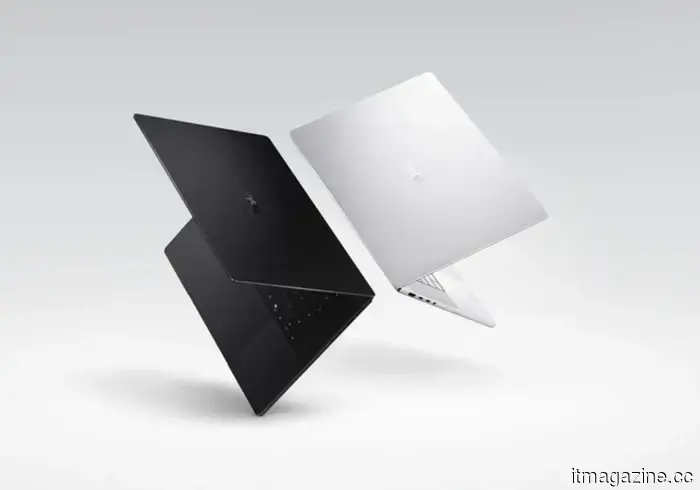
Despite its workstation-like goals, Asus claims that both laptops are thinner and lighter than their predecessors in the ProArt series. This accomplishment is impressive given the amount of technology included. The displays are also striking on paper. The larger ProArt P16 boasts an OLED panel with a high refresh rate and variable refresh rate capabilities, while the P14 prioritizes crisp visuals within a more compact design. Both models are specifically tailored for photographers, video editors, designers, and anyone who spends their day engaging with color palettes and timelines.
Asus
Additionally, Asus is heavily integrating its broader creative ecosystem. Tools like Creator Hub, MuseTree, and StoryCube are crafted to streamline AI-assisted workflows, while collaborations with well-known creative software developers are intended to ensure these devices are functional from the start rather than acting merely as costly tech demonstrations. The challenge remains convincing creatives of the necessity for such AI capabilities in a laptop. However, as generative AI tools increasingly feature in mainstream creative software, that argument becomes more compelling each month. Currently, the new ProArt P16 and P14 appear to be Asus’ most ambitious creator laptops to date—light enough for easy transport, yet powerful enough to make many desktop PCs feel somewhat apprehensive.
Shimul is a contributor at Digital Trends, with more than five years of experience in the technology field.
Samsung One UI 9 will deactivate your fingerprint every time you access the power menu
The lockdown option has been removed, medical information now occupies its place, and your Galaxy phone locks down each time you open and close the menu.
Samsung Galaxy phones have included a lockdown mode for years. It's a manual feature within the power menu that disables fingerprint and face recognition, requiring a PIN to unlock. This serves as a useful last resort for scenarios where someone may attempt to force you to unlock your phone using your face or finger. The drawback was that many users either weren't aware of its existence or seldom utilized it. One UI 9 addresses this by eliminating the option altogether.
Read more
Dell’s new XPS 16 Creator Edition aims to replace your MacBook Pro
The laptop boasts the Nvidia RTX Spark superchip, Tandem OLED display, and 128GB unified memory.
Apple’s MacBook Pro has long been the go-to laptop for creative professionals. Video editors, photographers, 3D artists, and developers have flocked to it due to the device’s performance and excellent connectivity and integration with iPhones. Dell believes it has finally created a product that can alter this dynamic. Announced at Computex 2026, the XPS 16 Creator Edition is Dell’s first laptop featuring Nvidia's new RTX Spark superchip.
Read more
Nvidia’s RTX Spark chip targets the Mac Studio, with Asus and MSI getting the first chance
Nvidia has launched a compact AI box that aims to compete with the Mac Studio.
The competition for high-performance compact desktops is intensifying, and Nvidia seems poised to challenge Apple's dominance in this sector with its Mac Studio. At Computex 2026, MSI introduced a new AI-centric mini PC called the MSI EdgeMesa N AI, powered by Nvidia’s fresh RTX Spark platform. This launch indicates Nvidia’s increasing ambition to advance AI computing beyond standard gaming desktops and into compact creator and workstation systems. More importantly, it highlights how PC manufacturers are aggressively adopting Apple’s successful strategy of offering powerful desktop performance in sleek, minimalist packages.
Read more



Other articles
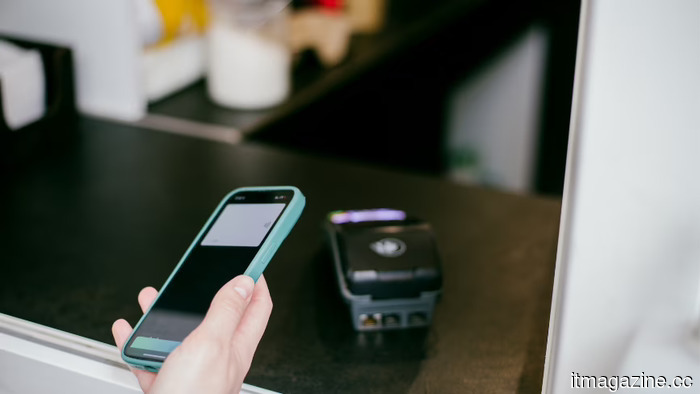 Apple prepares a receipt-scanning bill splitter for iOS 27.
Apple is set to introduce a bill-splitting feature in iOS 27 that takes photos of receipts, allocates items to friends, and creates requests for Apple Cash, marking a challenge to Splitwise and Venmo.
Apple prepares a receipt-scanning bill splitter for iOS 27.
Apple is set to introduce a bill-splitting feature in iOS 27 that takes photos of receipts, allocates items to friends, and creates requests for Apple Cash, marking a challenge to Splitwise and Venmo.
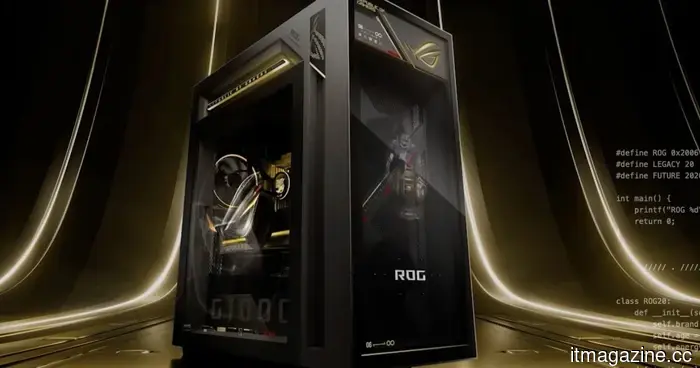 Asus ROG has released the Edition 20 gaming peripherals, and you must admire these stunning pieces.
The 20th anniversary desktop from ROG is not only equipped with high-end components, but it could also be one of the most visually striking gaming PCs ever created.
Asus ROG has released the Edition 20 gaming peripherals, and you must admire these stunning pieces.
The 20th anniversary desktop from ROG is not only equipped with high-end components, but it could also be one of the most visually striking gaming PCs ever created.
 Apple prepares receipt-scanning bill splitter for iOS 27.
Apple is introducing a bill-splitting feature in iOS 27 that takes photos of receipts, allocates items to friends, and creates Apple Cash requests, posing a challenge to Splitwise and Venmo.
Apple prepares receipt-scanning bill splitter for iOS 27.
Apple is introducing a bill-splitting feature in iOS 27 that takes photos of receipts, allocates items to friends, and creates Apple Cash requests, posing a challenge to Splitwise and Venmo.
 Basic ebook readers are set to become much smarter with the addition of helpful AI and Android support.
E Ink and MediaTek are transforming e-readers into intelligent devices by incorporating on-device AI, real-time translation, quicker color displays, and support for Android.
GoPro cautioned that it might not endure. The AI memory crisis is harming companies that produce tangible items.
Memory prices increased by 80-115%. Revenue decreased by 26%. GoPro indicated "substantial doubt" regarding its continued viability. The company is considering a sale or a shift to the defense sector.
Basic ebook readers are set to become much smarter with the addition of helpful AI and Android support.
E Ink and MediaTek are transforming e-readers into intelligent devices by incorporating on-device AI, real-time translation, quicker color displays, and support for Android.
GoPro cautioned that it might not endure. The AI memory crisis is harming companies that produce tangible items.
Memory prices increased by 80-115%. Revenue decreased by 26%. GoPro indicated "substantial doubt" regarding its continued viability. The company is considering a sale or a shift to the defense sector.
 GoPro cautioned that it might not endure. The AI memory crisis is threatening the survival of companies that produce tangible products.
Memory prices increased by 80-115%. Revenue decreased by 26%. GoPro expressed "substantial doubt" regarding its ability to persist. The company is considering a sale or a shift towards the defense sector.
GoPro cautioned that it might not endure. The AI memory crisis is threatening the survival of companies that produce tangible products.
Memory prices increased by 80-115%. Revenue decreased by 26%. GoPro expressed "substantial doubt" regarding its ability to persist. The company is considering a sale or a shift towards the defense sector.
Asus equips its latest ProArt P16 and P14 laptops with Nvidia's powerful RTX Spark processor.
The latest ProArt P16 and P14 feature sleek designs and are equipped with Nvidia's robust RTX Spark platform, delivering workstation-level AI capabilities to creator laptops.