
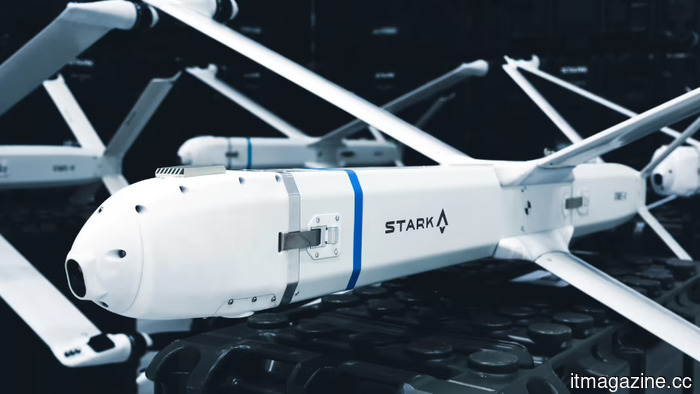
Berlin's Stark is securing €300M at a valuation of €2.5B. The kamikaze drone manufacturer was established 18 months ago.
Stark, a Berlin-based drone manufacturer founded in 2024, is reportedly seeking to raise at least €300 million at a valuation of around €2.5 billion, as stated by the Financial Times. If finalized, this funding could more than double the company’s valuation, which surpassed €1 billion earlier this year. At just 18 months old, Stark specializes in autonomous strike systems, particularly kamikaze drones that linger over target areas to identify and neutralize threats by detonating on impact.
Co-founded by Florian Seibel, who previously established rival Quantum Systems, and Johannes Schaback, Stark's primary product, Virtus, independently identifies and strikes targets before exploding. This category of drones is often referred to as kamikaze drones, representing a significant shift in military operations toward affordable autonomous weapons that can be mass-produced and deployed.
The rapid increase in Stark's valuation is remarkable, even within the defense technology sector, as it reportedly achieved unicorn status earlier in 2026. A valuation of €2.5 billion just months later positions Stark among the fastest-growing defense startups in Europe. Despite facing technical difficulties during military trials in Germany and the UK last year, the company has continued to secure major contracts and expand its offerings.
The European defense technology industry is currently attracting significant capital, with Munich-based Helsing raising $1.2 billion at an $18 billion valuation and Quantum Systems, Seibel’s first enterprise, securing €340 million in 2025 with a valuation exceeding €3 billion. Peter Thiel is known to invest in both Quantum Systems and Stark’s impending funding round, according to the FT.
On a global scale, the US-based company Anduril has raised $5 billion at a $61 billion valuation, achieving a valuation increase in less than a year, while Netherlands-based Destinus is pursuing €200 million ahead of an IPO in Amsterdam with a €5 billion valuation. The defense tech venture capital sector reached $49.1 billion globally in 2025, nearly doubling that of the previous year.
The competition among European defense drone manufacturers is intensifying. Stark, Helsing, and Quantum Systems, all operating from Germany, are vying for the same military contracts, engineering talent, and investor funding, with Stark's founder’s past experience with Quantum Systems adding a personal element to the competition.
European governments are driving this demand, with the EU's ReArm Europe initiative aiming to mobilize up to €800 billion in defense spending over four years. Germany’s special defense fund, created post-Russia’s invasion of Ukraine, has accelerated the procurement of autonomous systems, and the European Defence Industry Programme, established in March 2026 with a budget of €1.47 billion, specifically allocates funds for counter-drone and autonomous strike capabilities.
Transitioning from venture-funded prototyping to industrial-scale production is a significant challenge for Stark, as it is still in the early stages of this process. While it has contracts and a product, it has yet to demonstrate manufacturing at the scale required by military procurement. Helsing boasts stronger AI capabilities, while Quantum Systems has greater operational experience, and Destinus is already producing at scale.
Investors are betting that autonomous strike drones will become widely deployed commodities in vast numbers. For Stark, the €300 million funding is crucial to establish production capabilities before competitors seize the market. Achieving a €2.5 billion valuation just 18 months after founding is impressive; however, whether Stark's operational execution will keep pace with its fundraising efforts will ultimately determine if it becomes a leader in European defense or a cautionary tale about the dangers of rapid venture capital inflation for companies that have not yet reached mass production.
Other articles
 Nvidia acquired Groq for $20 billion and recruited its leading engineers. Now, Groq is looking to raise $650 million for its remaining resources.
Groq's current investors were bought out in what's known as a not-acqui-hire. They have now been requested to reinvest $650 million into the remaining inference cloud operations.
Nvidia acquired Groq for $20 billion and recruited its leading engineers. Now, Groq is looking to raise $650 million for its remaining resources.
Groq's current investors were bought out in what's known as a not-acqui-hire. They have now been requested to reinvest $650 million into the remaining inference cloud operations.
 AI is undermining summer internships. The entry-level pathway that shaped careers is faltering.
Tech internship listings have decreased by 30% since 2023. A survey conducted by Drexel indicates that more companies are reducing their workforce rather than hiring more. AI is now handling the tasks that interns previously performed.
AI is undermining summer internships. The entry-level pathway that shaped careers is faltering.
Tech internship listings have decreased by 30% since 2023. A survey conducted by Drexel indicates that more companies are reducing their workforce rather than hiring more. AI is now handling the tasks that interns previously performed.
 5 Menu Bar apps that have secured a permanent place on my Mac in 2026
The menu bar on my Mac is valuable space, and not every application deserves to occupy it. In 2026, these five apps were selected and have truly enhanced my daily workflow.
5 Menu Bar apps that have secured a permanent place on my Mac in 2026
The menu bar on my Mac is valuable space, and not every application deserves to occupy it. In 2026, these five apps were selected and have truly enhanced my daily workflow.
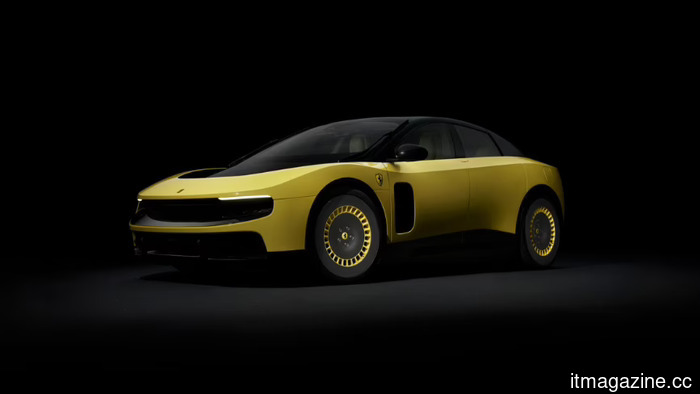 The CEO of Ferrari states that the Luce is worthy of...
CEO Vigna justified the €550,000 price of the EV as reasonable considering its innovative features. His predecessor suggested that the prancing horse emblem ought to be taken off the vehicle.
The CEO of Ferrari states that the Luce is worthy of...
CEO Vigna justified the €550,000 price of the EV as reasonable considering its innovative features. His predecessor suggested that the prancing horse emblem ought to be taken off the vehicle.
 Developers can no longer operate without AI. Research indicates that it could potentially be hindering their performance.
METR was unable to replicate its AI coding research as developers declined to participate without AI support. Amazon discontinued its token leaderboard. Uber exhausted its AI budget in just four months.
Developers can no longer operate without AI. Research indicates that it could potentially be hindering their performance.
METR was unable to replicate its AI coding research as developers declined to participate without AI support. Amazon discontinued its token leaderboard. Uber exhausted its AI budget in just four months.
 Microsoft warned a security researcher of potential criminal charges, sparking outrage within the cybersecurity community.
A researcher disclosed unaddressed vulnerabilities in Defender and BitLocker following an alleged account revocation by Microsoft. In response, Microsoft activated its Digital Crimes Unit.
Microsoft warned a security researcher of potential criminal charges, sparking outrage within the cybersecurity community.
A researcher disclosed unaddressed vulnerabilities in Defender and BitLocker following an alleged account revocation by Microsoft. In response, Microsoft activated its Digital Crimes Unit.
Berlin's Stark is securing €300M at a valuation of €2.5B. The kamikaze drone manufacturer was established 18 months ago.
The German strike drone startup increased its valuation to €2.5B within a few months. Its flagship drone, the Virtus, autonomously recognizes and eliminates targets upon impact.