
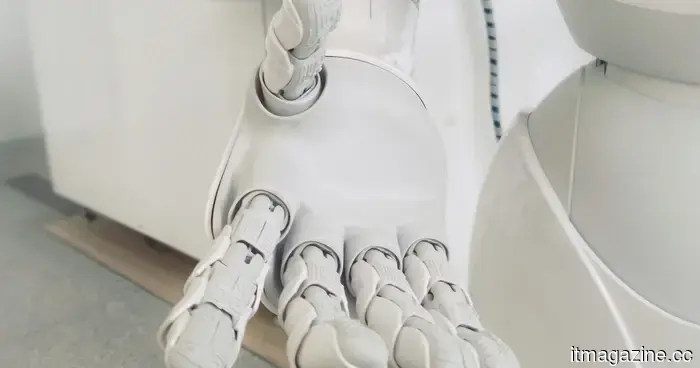
Similar to humans, this robot can listen to music and is able to perform it after only two minutes of self-training.
The successful experiments indicate a new paradigm for rehabilitation robotics, rooted in experiential learning.
In a neuro-robotics laboratory at the University of Southern California, a small mechanical hand heard a melody for the first time and successfully played it back on the first attempt, without any sheet music, pre-loaded scores, or extended supervised training (via USC Viterbi).
This system is referred to as the Musician Hand. It features four fingers, each operated by a tendon linked to a small electric motor, resembling the way muscles pull tendons in a human hand. It was developed by doctoral candidate Hesam Azadjou under the guidance of Professor Francisco Valero-Cuevas.
How did the robot learn this skill?
The learning process involved a method known as "motor babbling," which mimics the exploratory trial-and-error techniques that humans employ to master control over their limbs. Without any understanding of hands, keyboards, or music, the robot discovered that it could create sounds by pressing piano keys.
Initially, the robotic hand randomly pressed keys for two minutes, studying the association between finger movements and the sounds produced by the piano. From this short experience, it established the connection between motor commands (the finger movements) and outcomes (the sounds).
Upon hearing a melody of about 30 notes for the first time, created by Los Angeles-based composer Richard Tuttobene and titled “Robo Algo,” the Musician Hand converted the audio into a spectrogram, utilized neural networks to recognize the notes, and then generated the necessary commands to recreate the sequence successfully on the initial try.
What makes this more than just a musical novelty?
The researchers also held a blind audition where two judges evaluated the Musician Hand alongside four trained pianists without knowing which was the robot. At times, they could not differentiate between the human musicians and the robot.
In contrast, untrained individuals were unable to replay even the first few notes. Azadjou highlights that the human brain can solve complex motor challenges using less than 100 watts of power, comparable to a laptop charger, while conventional AI may require megawatt levels of power for similar tasks.
This type of streamlined, efficient, and experiential based learning could be utilized in wearable robotic devices for everyday use, such as exoskeletons for individuals with Parkinson's and personalized rehabilitation robots. This research received backing from the NSF and DARPA.
For over five years, Shikhar has effectively simplified advancements in consumer technology and shared them...
Dell intensifies focus on 5G cellular connectivity for its high-end business laptops in the US.
The new launch marks Dell’s strongest assertion that 5G cellular connectivity is essential for all premium business laptops, rather than just specific enterprise categories.
On May 29, 2026, Dell introduced a series of new laptops, just four days prior to Computex 2026 in Taipei on June 2. Almost every flagship model in this new lineup includes optional 5G cellular connectivity in their specifications. While this feature has typically been reserved for ultraportable or enterprise-grade devices, Dell is indicating that always-connected laptops are now a mainstream necessity.
Acer’s new Swift Air 14 aims to compete with the MacBook Neo, though it may be at a disadvantage.
Acer finally presents a contender to the MacBook Neo, albeit not a flawless one.
When Apple launched the MacBook Neo in March at $599, powered by the A18 chip, it posed a significant challenge for Windows laptop manufacturers, quickly emerging as a highly recommended choice for students and casual users who did not specifically require Windows.
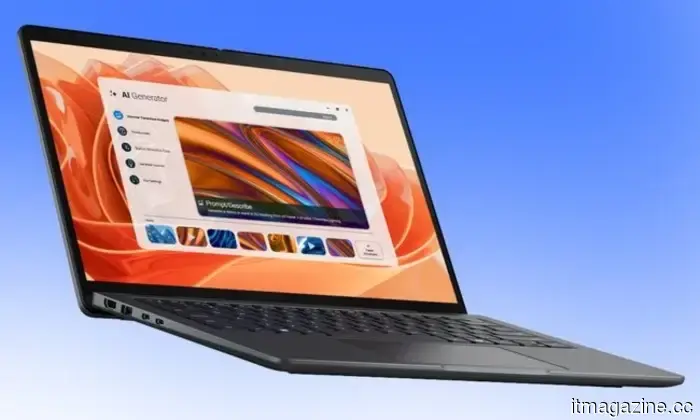
Acer is now looking to counter this with the Swift Air 14, a 14-inch laptop unveiled just ahead of Computex 2026. Starting at $699, it is equipped with Intel’s new Core Series 3 chips, also known as Wildcat Lake. On paper, it appears to be one of the initial serious efforts to create a more affordable Windows laptop capable of competing with Apple’s Neo without appearing entirely inferior.
I evaluated numerous menu bar apps, narrowing it down to five that have proven their worth on my Mac in 2026.
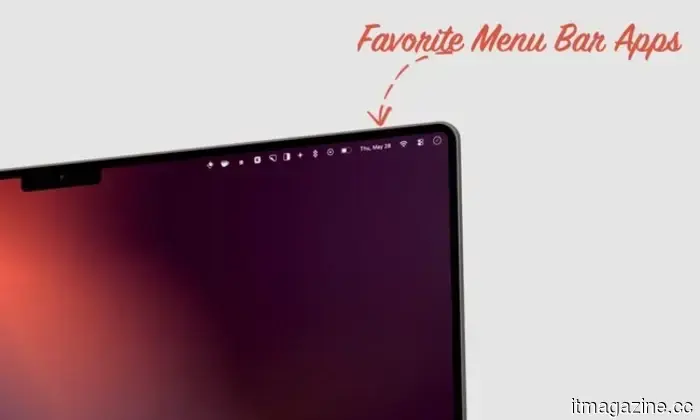
One of my favorite aspects of macOS is its compatibility with Menu Bar apps. These small applications reside in your Menu Bar and help you perform tasks without needing to open full applications.
As the number of Menu Bar apps you can install is limited before it becomes cluttered, I view this space as valuable. Each app strives to occupy this spot, but only a select few genuinely deserve to be there.

Other articles
 As AI proliferates with rapid responses, studies indicate that the essence of the internet is fading.
A recent joint research effort by UC Riverside scientists reveals that as an increasing number of individuals rely on AI for information, the internet is diminishing in the emotional richness and human reasoning that initially made it valuable to explore.
As AI proliferates with rapid responses, studies indicate that the essence of the internet is fading.
A recent joint research effort by UC Riverside scientists reveals that as an increasing number of individuals rely on AI for information, the internet is diminishing in the emotional richness and human reasoning that initially made it valuable to explore.
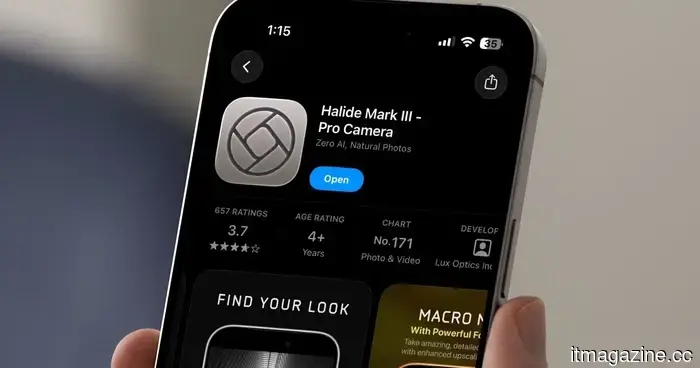 Halide Mark III introduces creative cinematic features to one of the top iPhone camera applications.
Halide Mark III has arrived, and it's a significant update. With new film-inspired Looks, an integrated Photo Lab for RAW editing, and a more streamlined design, it stands as the most comprehensive iPhone camera app to date.
Halide Mark III introduces creative cinematic features to one of the top iPhone camera applications.
Halide Mark III has arrived, and it's a significant update. With new film-inspired Looks, an integrated Photo Lab for RAW editing, and a more streamlined design, it stands as the most comprehensive iPhone camera app to date.
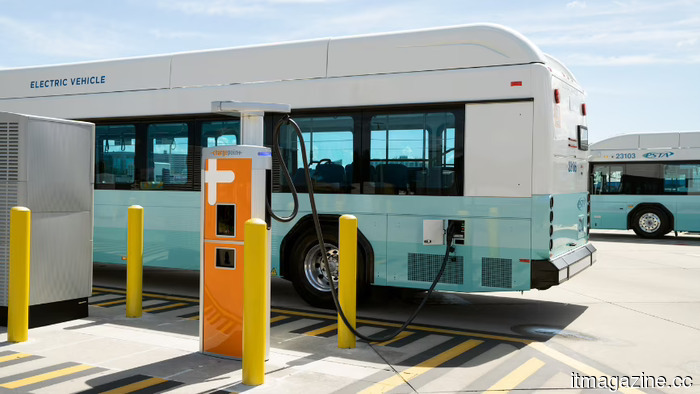 ChargePoint partners with Powers Parts for electric bus transit charging.
ChargePoint and Powers Parts have collaborated to offer charging solutions and fleet telematics to transit agencies operating PhoenixEV buses, filling the service void created by Proterra's bankruptcy.
CoStar acquires Zonda for $800 million to finalize its real estate data empire.
CoStar has purchased the new-home data platform Zonda for $800 million in cash, completing the final piece of a real estate information empire established through over 40 acquisitions totaling $7.3 billion.
ChargePoint partners with Powers Parts for electric bus transit charging.
ChargePoint and Powers Parts have collaborated to offer charging solutions and fleet telematics to transit agencies operating PhoenixEV buses, filling the service void created by Proterra's bankruptcy.
CoStar acquires Zonda for $800 million to finalize its real estate data empire.
CoStar has purchased the new-home data platform Zonda for $800 million in cash, completing the final piece of a real estate information empire established through over 40 acquisitions totaling $7.3 billion.
 In China, low-cost sodium batteries are already achieving performance levels comparable to those of Tesla.
A commercial sodium-ion battery developed in China is nearing performance levels similar to those of Tesla, utilizing more affordable materials and a double-aluminum structure that has the potential to compete with lithium-ion batteries in cost-sensitive electric vehicles and grid storage applications.
In China, low-cost sodium batteries are already achieving performance levels comparable to those of Tesla.
A commercial sodium-ion battery developed in China is nearing performance levels similar to those of Tesla, utilizing more affordable materials and a double-aluminum structure that has the potential to compete with lithium-ion batteries in cost-sensitive electric vehicles and grid storage applications.
 Tesla’s biggest competitor introduces self-driving technology with comprehensive crash coverage at a much lower price.
BYD is promoting its God’s Eye assisted-driving system by offering a crash-cost coverage guarantee and a 12,000 yuan upgrade fee, which is lower than Tesla’s assisted-driving package.
Tesla’s biggest competitor introduces self-driving technology with comprehensive crash coverage at a much lower price.
BYD is promoting its God’s Eye assisted-driving system by offering a crash-cost coverage guarantee and a 12,000 yuan upgrade fee, which is lower than Tesla’s assisted-driving package.
Similar to humans, this robot can listen to music and is able to perform it after only two minutes of self-training.
USC's Musician Hand learned to play the piano by ear in just two minutes through a process resembling infant motor babbling.