

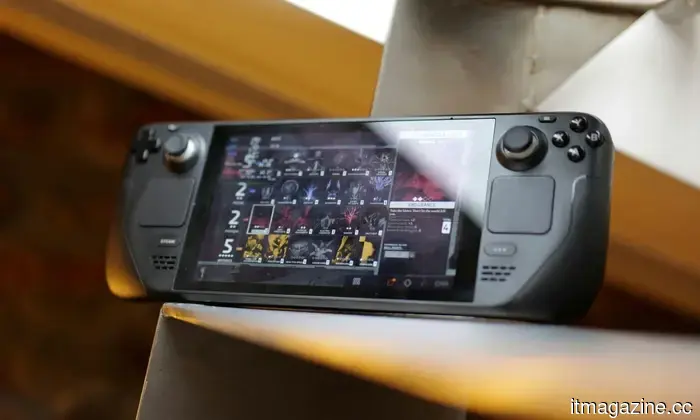
Valve has significantly increased the price of the Steam Deck OLED.
Valve has officially increased the prices of the Steam Deck OLED in the United States and several other global markets, with notable hikes. This makes Valve the latest major gaming platform holder to raise hardware prices in response to escalating component costs and ongoing global economic pressures.
The most significant increases are seen in the higher-end models. The cost of the 1TB Steam Deck OLED has risen to $950 in the US from the initial launch price of $650. Similarly, the 512GB OLED model has increased from $550 to $790.
As a result, the highest-tier Steam Deck OLED is nearing the pricing range of premium gaming laptops, which could seriously impact its attractiveness to mainstream consumers.
Valve cites rising memory costs and global supply chain issues as the reasons behind this price adjustment.
In a blog post detailing the changes, Valve mentioned that the new pricing reflects “increasing memory and storage costs” as well as broader logistical and economic challenges affecting the tech sector.
The updated prices are now:
- Steam Deck OLED 512GB: $790 USD
- Steam Deck OLED 1TB: $950 USD
These price increases also extend across various regions, including Canada, Europe, Australia, and the UK.
Interestingly, Valve confirmed that certified refurbished Steam Deck OLED models will maintain their previous pricing, which may appeal to budget-conscious consumers.
This price hike aligns with a larger trend in the gaming industry where, over the past year, companies like Sony and Microsoft have also raised console prices worldwide. Nintendo is similarly anticipated to increase prices for the upcoming Nintendo Switch 2 later this year.
Several factors are driving these rising costs, including escalating memory and storage prices, heightened demand for semiconductor production driven by AI, shipping disruptions, and geopolitical instability affecting global supply chains.
Additionally, rising oil prices connected to tensions in the Middle East and uncertainties surrounding international trade policies have elevated manufacturing and transportation costs across the tech industry.
Why this matters for gamers
The Steam Deck gained immense popularity by providing relatively affordable portable PC gaming compared to traditional gaming laptops. Valve’s competitive pricing positioned the handheld against devices like the ASUS ROG Ally and Lenovo Legion Go.
These new prices could alter that competitive landscape.
With the 1TB OLED model priced at nearly $1,000, it now aligns more closely with premium handheld gaming PCs that offer superior hardware and native Windows support. This might lead potential buyers to reconsider whether the Steam Deck still represents the best value in portable gaming.
The price increase also raises questions about Valve’s future hardware strategies. The company is expected to unveil a new Steam Machine later this year, although pricing details have yet to be revealed.
Valve hardware engineer Yazan Aldehayyat recently stated that the company aims to keep future products “competitive” and “affordable,” but the current Steam Deck price increases suggest that maintaining affordability in gaming hardware may become increasingly challenging.
For now, the original LCD Steam Deck models remain at their initial prices, which could help mitigate the impact for entry-level consumers.
However, if component shortages and AI-driven demand for chips continue to escalate, further price increases across the gaming hardware industry could be expected in the coming months.
The overarching concern for gamers is clear: portable gaming is no longer becoming more affordable, and the era of relatively inexpensive handheld PC gaming may be gradually coming to an end.

Other articles
 NATO establishes cyber partnerships with Microsoft, Palo Alto, and ESET.
NATO establishes strategic cybersecurity collaborations with Microsoft, Palo Alto Networks, and ESET during CyCon 2026 in Tallinn, focusing on the sharing of threat intelligence and coordinated defense efforts.
NATO establishes cyber partnerships with Microsoft, Palo Alto, and ESET.
NATO establishes strategic cybersecurity collaborations with Microsoft, Palo Alto Networks, and ESET during CyCon 2026 in Tallinn, focusing on the sharing of threat intelligence and coordinated defense efforts.
 Talkdesk introduces proactive AI agents for the retail and banking sectors.
Talkdesk introduces proactive AI agents for retail and financial services, automating outbound interactions such as cart recovery, loan pre-qualification, and collections.
Talkdesk introduces proactive AI agents for the retail and banking sectors.
Talkdesk introduces proactive AI agents for retail and financial services, automating outbound interactions such as cart recovery, loan pre-qualification, and collections.
 Ways QR Codes Can Contribute to Your Business Success
Utilizing a scannable code can enhance your business's conversion rates. Although QR codes were originally designed to overcome the constraints of 1D barcodes, their introduction as a means for mobile devices to obtain extra information has transformed the operations of numerous companies. Recommended Videos Short for quick-response codes, QR codes provide customers with a method to […]
Ways QR Codes Can Contribute to Your Business Success
Utilizing a scannable code can enhance your business's conversion rates. Although QR codes were originally designed to overcome the constraints of 1D barcodes, their introduction as a means for mobile devices to obtain extra information has transformed the operations of numerous companies. Recommended Videos Short for quick-response codes, QR codes provide customers with a method to […]
 ElevenLabs collaborates with Stan Lee Universe for AI voice technology.
ElevenLabs has incorporated Stan Lee's AI-generated voice and likeness into its platform via an agreement with Stan Lee Universe, introducing a book club, creative templates, and music filters.
ElevenLabs collaborates with Stan Lee Universe for AI voice technology.
ElevenLabs has incorporated Stan Lee's AI-generated voice and likeness into its platform via an agreement with Stan Lee Universe, introducing a book club, creative templates, and music filters.
 Meta introduces subscription plans for its AI chatbot priced at $7.99 and $19.99.
Meta introduces AI chatbot subscriptions for the first time, offering Meta One Plus at $7.99 per month and Premium at $19.99 per month, with a launch in Singapore, Guatemala, and Bolivia.
Meta introduces subscription plans for its AI chatbot priced at $7.99 and $19.99.
Meta introduces AI chatbot subscriptions for the first time, offering Meta One Plus at $7.99 per month and Premium at $19.99 per month, with a launch in Singapore, Guatemala, and Bolivia.
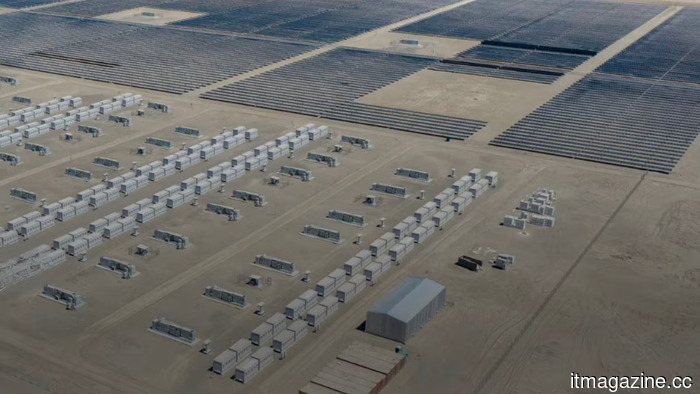 Chile's Atacama Desert is emerging as a worldwide center for battery production.
ContourGlobal has opened a $500 million solar and storage facility in Chile's Atacama Desert. By the end of 2026, Chile anticipates a battery storage capacity of 8,400 MW.
Chile's Atacama Desert is emerging as a worldwide center for battery production.
ContourGlobal has opened a $500 million solar and storage facility in Chile's Atacama Desert. By the end of 2026, Chile anticipates a battery storage capacity of 8,400 MW.
Valve has significantly increased the price of the Steam Deck OLED.
Valve has significantly raised the prices of the Steam Deck OLED globally, attributing the increase to the rising costs of memory, storage, and logistics that are affecting the gaming hardware sector.