

Taiwan believes that NVIDIA chips were illegally transported to China through a transshipment route in Japan.
Three suspects, including a senior vice president from Super Micro, are facing charges for exporting US-restricted servers to Japan through fraudulent documents and then to mainland China. According to a Bloomberg report on Wednesday, Taiwanese prosecutors believe that these individuals successfully smuggled at least one shipment of Nvidia AI chips to mainland China after first sending them to Japan.
This case marks Taiwan's first public criminal prosecution regarding the diversion of AI chips and has significant implications for both Tokyo and Washington. The trio was apprehended last week by Taiwan’s Keelung District Prosecutors Office. They are accused of falsifying export declaration documents to hide that Super Micro Computer servers containing US-restricted Nvidia chips were meant for China.
The individuals involved are Yih-Shyan “Wally” Liaw, a senior vice president of business development at Super Micro and a board member; Ruei-Tsang “Steven” Chang, a sales manager based in Taiwan; and Ting-Wei “Willy” Sun, a contractor. All three were initially named in a US criminal indictment from March, which alleged that a larger smuggling operation worth $2.5 billion was moving Super Micro servers through a network spanning the US, Taiwan, Thailand, Hong Kong, and China.
The new aspect of this week's Bloomberg report involves the Japan stage. Taiwanese investigators now suspect that at least one shipment used Japan as an intermediary before the servers were sent on to mainland China. Japan has not been identified as an active participant in the alleged operation; instead, it is thought that the shipment was listed as a legitimate export to Japan before being redirected. The crucial question that Tokyo and Taipei are reportedly investigating together is whether Japanese customs records support this theory.
This case fits into a broader context that has altered how Taipei views its export control strategies. Over the past two years, the US has pressured Taiwan to take a more proactive stance on monitoring AI chip exports to China, a stance that Taiwan, due to its complex commercial ties with mainland Chinese semiconductor demand, has traditionally resisted. The prosecution represents a notable shift on the island.
Nvidia’s CEO Jensen Huang has publicly stated that Chinese AI labs operating on either smuggled or domestically produced chips pose a strategic issue for the United States; this Taiwan case reinforces that argument.
The Japanese dimension adds complexity to the diplomatic landscape. Japanese authorities have generally aligned with US export control goals regarding advanced semiconductors and have tightened regulations on domestic chip manufacturing equipment exports to China in accordance with US restrictions. If the Bloomberg report is accurate and the servers were truly transshipped through Japan, Tokyo may face pressure to enhance its own re-export controls and cooperate with Taipei regarding the specific routing networks involved. Beijing’s internal stance on AI talent and funding has also hardened as of 2026, leading to increased demand with a higher price tolerance for smuggling.
For Super Micro, the related US criminal case continues to progress in New York; the company has stated it is cooperating with US authorities. Yih-Shyan Liaw remains on the board, although prior reports from Bloomberg indicated discussions about succession are underway. While the Keelung prosecutors' office has not formally charged the three suspects, the detention period is being extended as further evidence is sought.
Other articles
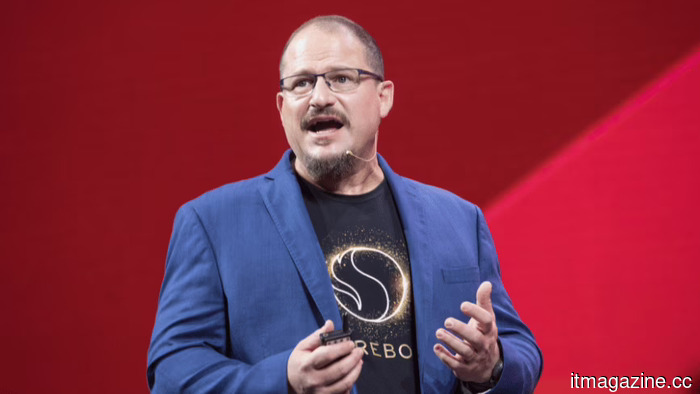 The Qualcomm-ByteDance ASIC agreement is intentionally structured to navigate US export restrictions.
Qualcomm has secured a supply and manufacturing-services agreement for AI chips with ByteDance, the parent company of TikTok, aimed at adhering to US export control limits.
The Qualcomm-ByteDance ASIC agreement is intentionally structured to navigate US export restrictions.
Qualcomm has secured a supply and manufacturing-services agreement for AI chips with ByteDance, the parent company of TikTok, aimed at adhering to US export control limits.
 China’s market regulator imposes fines on Luxshare and Wingtech due to their deal unwinding.
China's SAMR has imposed fines on Luxshare and Wingtech for procedural breaches related to their failed asset transaction, indicating stricter enforcement of merger regulations.
China’s market regulator imposes fines on Luxshare and Wingtech due to their deal unwinding.
China's SAMR has imposed fines on Luxshare and Wingtech for procedural breaches related to their failed asset transaction, indicating stricter enforcement of merger regulations.
 Micron nears $1 trillion as UBS identifies a route to $1.8 trillion within a year.
UBS analyst Timothy Arcuri increased his price target for Micron to $1,625 on Tuesday, suggesting a valuation of $1.8 trillion, based on the premise that long-term HBM agreements will shorten the memory cycle.
Micron nears $1 trillion as UBS identifies a route to $1.8 trillion within a year.
UBS analyst Timothy Arcuri increased his price target for Micron to $1,625 on Tuesday, suggesting a valuation of $1.8 trillion, based on the premise that long-term HBM agreements will shorten the memory cycle.
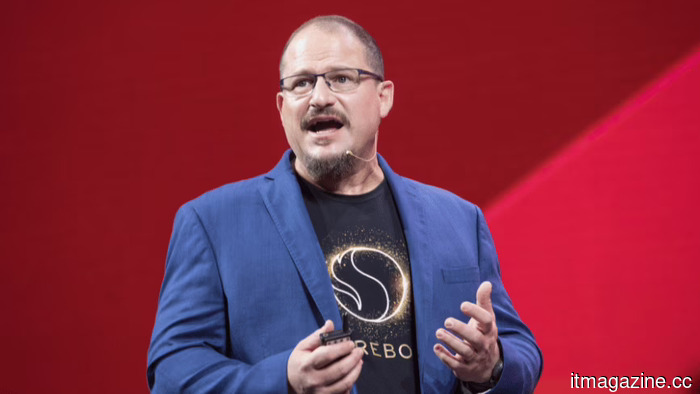 The Qualcomm-ByteDance ASIC agreement is intentionally structured to navigate US export regulations.
Qualcomm has entered into an agreement with ByteDance, the parent company of TikTok, for the supply and manufacturing services of AI chips, aimed at adhering to US export-control limits.
The Qualcomm-ByteDance ASIC agreement is intentionally structured to navigate US export regulations.
Qualcomm has entered into an agreement with ByteDance, the parent company of TikTok, for the supply and manufacturing services of AI chips, aimed at adhering to US export-control limits.
 Airbnb spearheads a $58 million Series C funding round for WeRoad and appoints its CEO to manage its hotel operations.
The Milan-based group-adventure travel platform WeRoad has secured $58 million in a Series C funding round, led by Airbnb, which acquired a 10% share and appointed CEO Andrea D’Amico to head its hotels division.
Airbnb spearheads a $58 million Series C funding round for WeRoad and appoints its CEO to manage its hotel operations.
The Milan-based group-adventure travel platform WeRoad has secured $58 million in a Series C funding round, led by Airbnb, which acquired a 10% share and appointed CEO Andrea D’Amico to head its hotels division.
 The ECB advises eurozone banks to enhance their cyber-security measures as AI alters the landscape of threats.
The ECB has informed banks in the eurozone that they need to enhance their cyber-security measures due to AI-driven attack tools, according to a formal statement released on Wednesday after weeks of private advice.
The ECB advises eurozone banks to enhance their cyber-security measures as AI alters the landscape of threats.
The ECB has informed banks in the eurozone that they need to enhance their cyber-security measures due to AI-driven attack tools, according to a formal statement released on Wednesday after weeks of private advice.
Taiwan believes that NVIDIA chips were illegally transported to China through a transshipment route in Japan.
Taiwanese prosecutors believe that at least one shipment of Nvidia AI chips, which are restricted by the US, was illegally transported to China through Japan, marking Taiwan’s inaugural public case of AI chip diversion.