

The ASIC agreement between Qualcomm and ByteDance is structured to navigate US export restrictions intentionally.
The parent company of TikTok, ByteDance, is set to purchase millions of Qualcomm application-specific chips for its AI data centers and collaborate with Qualcomm to move its own chip design from concept to production. According to a Bloomberg report on Tuesday, Qualcomm has finalized an agreement to provide ByteDance with millions of application-specific integrated circuits, marking the chip maker’s most significant effort yet to penetrate the AI data center market over the past two years.
Sources familiar with the deal indicate that ByteDance will utilize the Qualcomm ASICs to support its AI agent software. Following the announcement, Qualcomm’s stock increased by approximately 5%, with intraday gains exceeding 8%.
The agreement consists of two main parts. The first involves a direct ASIC supply arrangement, wherein ByteDance has committed to sufficient volumes to become Qualcomm's first publicly identified major customer of AI-focused chips.
The second crucial aspect is a chip-manufacturing service arrangement, through which Qualcomm will assist ByteDance in bringing an internally designed semiconductor, which has already been completed, into mass production. Essentially, ByteDance has engaged Qualcomm as both a supplier and a manufacturing partner.
This arrangement is significant as it circumvents U.S. export controls. As per current public information, Qualcomm’s ASICs comply with the legal performance thresholds established by the U.S. Commerce Department for chip exports to Chinese companies. ByteDance has also designed its in-house chip to adhere to these thresholds, which makes this deal commercially valuable yet politically defensible in a way that direct sales of advanced Nvidia GPUs to China are not.
Qualcomm faces a challenging strategic landscape as it has traditionally generated most of its revenue from smartphone modems and Snapdragon application processors. The AI data center market is largely dominated by Nvidia’s GPUs and several custom ASIC programs operated by major players like Google (TPU), Amazon (Trainium), Meta (MTIA), and Microsoft (Maia). Entering this market as an external supplier is more complicated than it appears, given the unique nature of workloads, software stacks, and packaging needs. Securing ByteDance as a client is significant, as it is one of the largest non-hyperscaler customers that Qualcomm could realistically attract, and its AI agent software workload aligns well with the inference-heavy applications designed for Qualcomm’s architecture.
For ByteDance, this deal arrives amid a tightening environment from Beijing, where authorities have been limiting the travel of top AI talent and instructing major firms, including ByteDance, to avoid accepting U.S. capital in funding rounds without prior approval. Acquiring inference chips from a U.S. designer within the legal thresholds allows ByteDance to navigate domestic regulations while still relying on Western design intellectual property for its computation needs.
The agreement also reflects the broader movement of Chinese AI companies seeking alternatives to Nvidia for their computing requirements. Jensen Huang has pointed out that Chinese AI labs utilizing alternative silicon represents a significant shift to monitor. While Huawei has been a notable alternative, Qualcomm now emerges as another option.
The pivotal question now is whether this will further diversify the Chinese AI hardware landscape or accelerate local design and production, ultimately influencing how the broader Chinese AI industry acquires hardware through the latter half of 2026. Qualcomm has chosen not to comment on the particulars of the ByteDance arrangement, which is expected to ramp up through 2026 and 2027.
Other articles
 China’s market regulator imposes fines on Luxshare and Wingtech due to their deal unwinding.
China's SAMR has imposed fines on Luxshare and Wingtech for procedural breaches related to their failed asset transaction, indicating stricter enforcement of merger regulations.
China’s market regulator imposes fines on Luxshare and Wingtech due to their deal unwinding.
China's SAMR has imposed fines on Luxshare and Wingtech for procedural breaches related to their failed asset transaction, indicating stricter enforcement of merger regulations.
 Airbnb spearheads a $58 million Series C funding round for WeRoad and appoints its CEO to manage its hotel operations.
The Milan-based group-adventure travel platform WeRoad has secured $58 million in a Series C funding round, led by Airbnb, which acquired a 10% share and appointed CEO Andrea D’Amico to head its hotels division.
Airbnb spearheads a $58 million Series C funding round for WeRoad and appoints its CEO to manage its hotel operations.
The Milan-based group-adventure travel platform WeRoad has secured $58 million in a Series C funding round, led by Airbnb, which acquired a 10% share and appointed CEO Andrea D’Amico to head its hotels division.
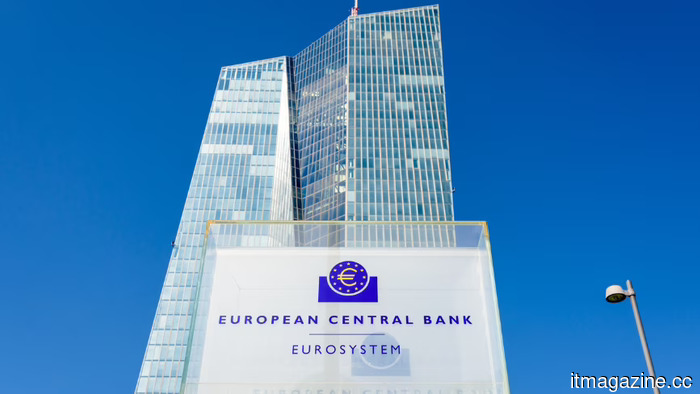 ECB advises eurozone banks to enhance cyber-security measures due to changing threat landscape caused by AI.
The ECB announced on Wednesday that eurozone banks need to strengthen their cyber-security measures due to AI-driven attack tools, following weeks of private recommendations.
ECB advises eurozone banks to enhance cyber-security measures due to changing threat landscape caused by AI.
The ECB announced on Wednesday that eurozone banks need to strengthen their cyber-security measures due to AI-driven attack tools, following weeks of private recommendations.
 The Qualcomm-ByteDance ASIC agreement is intentionally structured to navigate US export restrictions.
Qualcomm has secured a supply and manufacturing-services agreement for AI chips with ByteDance, the parent company of TikTok, aimed at adhering to US export control limits.
The Qualcomm-ByteDance ASIC agreement is intentionally structured to navigate US export restrictions.
Qualcomm has secured a supply and manufacturing-services agreement for AI chips with ByteDance, the parent company of TikTok, aimed at adhering to US export control limits.
 China's market regulator has imposed fines on Luxshare and Wingtech due to their termination of a deal.
China's SAMR has imposed fines on Luxshare and Wingtech for procedural breaches related to their failed asset deal, indicating a stricter approach to merger enforcement.
China's market regulator has imposed fines on Luxshare and Wingtech due to their termination of a deal.
China's SAMR has imposed fines on Luxshare and Wingtech for procedural breaches related to their failed asset deal, indicating a stricter approach to merger enforcement.
 China’s market regulator imposes fines on Luxshare and Wingtech regarding the termination of their agreement.
China's SAMR has imposed fines on Luxshare and Wingtech for procedural errors related to their failed asset deal, indicating stricter enforcement of merger regulations.
China’s market regulator imposes fines on Luxshare and Wingtech regarding the termination of their agreement.
China's SAMR has imposed fines on Luxshare and Wingtech for procedural errors related to their failed asset deal, indicating stricter enforcement of merger regulations.
The ASIC agreement between Qualcomm and ByteDance is structured to navigate US export restrictions intentionally.
Qualcomm has established an agreement with ByteDance, the parent company of TikTok, for the supply and manufacturing of AI chips, aimed at remaining compliant with US export-control limits.