
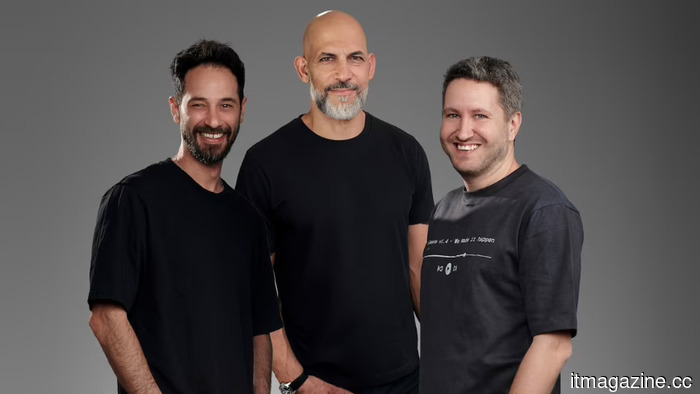
Airis Labs emerges from stealth mode with $60 million and a proposal focused on video intelligence for defense agencies.
The defence-AI startup founded in Tel Aviv has secured a $31 million Series B funding round led by PSG Equity, bringing its total funding to $60 million as it expands its operations in the US from Washington DC. Airis Labs, which has been operating in stealth mode for the past two and a half years, publicly announced its achievements on Tuesday, including the Series B funding.
This funding round also involves TLV Partners, Stepstone Group, Redseed Ventures, and angel investors like Eyal Waldman, the former co-founder and CEO of Mellanox, whose company was acquired by Nvidia for approximately $7 billion in 2020.
Airis positions itself with a specific focus, rather than under the broad “AI for defence” label that many startups have used to attract funding. The company has developed what it refers to as a video-first intelligence platform. This software processes fragmented visual data, including footage from security cameras, drones, body cameras, smartphones, social media, and what it calls “user-generated field intelligence,” producing structured machine-readable output that analysts and AI agents can query, interpret, and act on.
The way Airis defines its category differentiates it from conventional video analytics, open-source intelligence platforms, and general data-fusion tools. Its primary clientele consists of government organizations globally, with recognition in the Oracle Defense Ecosystem.
The challenge that Airis aims to tackle is widely recognized in the defence-AI sector. Government investigators and military intelligence units are overwhelmed with unstructured visual data. An urban incident investigation can yield thousands of hours of various footage, while a drone mission can generate terabytes of unindexed video. Human analysts struggle to sift through such large volumes quickly enough to identify relevant operational signals before they become outdated.
Airis has focused its business model on creating software that transforms this overwhelming visual data into searchable, structured intelligence.
The competitive landscape is significant and merits mention. Palantir’s Project Maven remains the leading US defence-AI project for video analysis, while Helsing represents the European counterpart with a broader battlefield-AI focus. Anduril, Scale AI’s defence branch, and several newer Israeli startups, including BlueGreen Vision and ION-X, operate in similar spaces. Airis distinguishes itself by claiming that its platform was developed in real operational contexts from the start, suggesting tighter user experience and workflow integration compared to its competitors.
Airis was established in 2023 in Tel Aviv by Noam Friedman (CEO), Rotem Abeles (CPO), and Amos Lahav (CBO), with a team composed of alumni from Palantir, Meta, Israeli Unit 8200, and the wider Israeli AI industry.
PSG Equity also merits a mention. Founded in 2014, the firm has invested in over 130 software and tech-enabled companies and has locations in Boston, Kansas City, London, Madrid, Paris, and Tel Aviv. Rotem Shacham, the PSG director who spearheaded the investment in Airis, was previously a principal at Viola Ventures and has a background in Unit 8200, similar to much of Airis’s founding team. This connection indicates a closely aligned cap table.
However, Airis Labs has yet to reveal standard key details typically sought after in a stealth exit defence-AI announcement: the specific government agencies that are paying clients, the current revenue run-rate, and how their product stacks up against named competitors in operational benchmarks. The company claims it operates with global government organizations and that its platform has been validated by its users rather than through external benchmarks. This perspective is a thoughtful approach on the qualitative side but raises concerns regarding procurement transparency. The next 18 months will clarify these issues.
Other articles
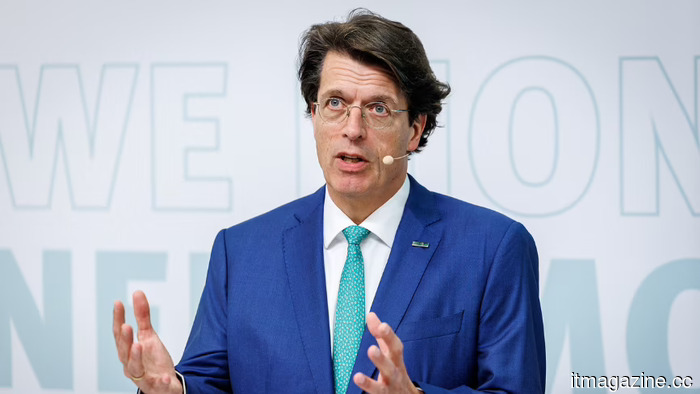 Schaeffler and Spire collaborate to construct sovereign European satellites in Germany.
Schaeffler and Spire Global have entered into a Memorandum of Understanding (MoU) to create sovereign-European space hardware and satellite systems in Germany, expanding Spire's Munich facility for defense clients.
Schaeffler and Spire collaborate to construct sovereign European satellites in Germany.
Schaeffler and Spire Global have entered into a Memorandum of Understanding (MoU) to create sovereign-European space hardware and satellite systems in Germany, expanding Spire's Munich facility for defense clients.
 YouTube will now automatically mark videos that are generated by AI.
YouTube is transitioning from optional creator disclosures to automated AI detection of videos, featuring noticeable labels and permanent indicators for content created using its tools or validated by C2PA metadata.
YouTube will now automatically mark videos that are generated by AI.
YouTube is transitioning from optional creator disclosures to automated AI detection of videos, featuring noticeable labels and permanent indicators for content created using its tools or validated by C2PA metadata.
 Spotify now enables listeners to clip and share snippets from any podcast.
Spotify introduces Podcast Clips, allowing listeners to cut and share audio snippets from episodes using a new scissors icon, accessible globally on mobile for both free and Premium users.
Spotify now enables listeners to clip and share snippets from any podcast.
Spotify introduces Podcast Clips, allowing listeners to cut and share audio snippets from episodes using a new scissors icon, accessible globally on mobile for both free and Premium users.
 The broader perspective on property valuation: e2Value explains the significance of historical context in a new age of AI.
Todd Rissel, CEO of e2Value, discusses how decades of changes in economics, construction methods, and consumer expectations render historical context crucial for precise AI-based property valuation.
The broader perspective on property valuation: e2Value explains the significance of historical context in a new age of AI.
Todd Rissel, CEO of e2Value, discusses how decades of changes in economics, construction methods, and consumer expectations render historical context crucial for precise AI-based property valuation.
 Spotify now enables users to clip and share segments from any podcast.
Spotify introduces Podcast Clips, allowing listeners to cut and share audio snippets from episodes using a new scissors icon, accessible globally on mobile for both free and Premium users.
Spotify now enables users to clip and share segments from any podcast.
Spotify introduces Podcast Clips, allowing listeners to cut and share audio snippets from episodes using a new scissors icon, accessible globally on mobile for both free and Premium users.
 EXCLUSIVE: The director and cast of Backrooms discuss the process of transforming a viral web series into one of A24’s most disturbing horror films.
Kane Parsons, Chiwetel Ejiofor, and Renate Reinsve discuss how A24’s Backrooms transforms the popular viral liminal horror series into a chilling psychological film that explores themes of isolation, liminal spaces, and emotional trauma.
EXCLUSIVE: The director and cast of Backrooms discuss the process of transforming a viral web series into one of A24’s most disturbing horror films.
Kane Parsons, Chiwetel Ejiofor, and Renate Reinsve discuss how A24’s Backrooms transforms the popular viral liminal horror series into a chilling psychological film that explores themes of isolation, liminal spaces, and emotional trauma.
Airis Labs emerges from stealth mode with $60 million and a proposal focused on video intelligence for defense agencies.
Defence-AI startup Airis Labs has come out of stealth mode with a total of $60 million in funding, which includes a Series B round of $31 million led by PSG Equity. The company is now relocating its scaling operations to Washington DC.