
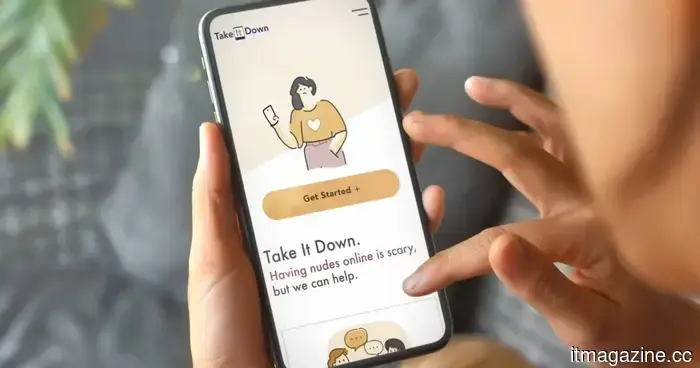
You can legitimately request apps to remove your nudes, provided you can successfully navigate the process.
For years, individuals affected by revenge porn and nonconsensual deepfake images had nearly no reliable means to have such content removed. State laws were inconsistent, and technology platforms either delayed action or failed to respond altogether. However, this is beginning to change.
As of May 19, the Take It Down Act has come into full effect in the United States. This law mandates that online platforms remove nonconsensual intimate images, whether real or AI-generated, within 48 hours of receiving a valid report. Platforms that do not comply could face civil fines of up to $53,088 for each violation.
The scope of the act is extensive. It encompasses social media apps, gaming platforms, dating apps, and virtually any service that hosts user-generated content. This means that companies like Meta, TikTok, Snapchat, Reddit, Discord, Pinterest, Bumble, Roblox, and even Walmart must adhere to these regulations.
How are the major tech companies responding to this?
Here's where it gets complicated. Wired contacted 14 significant companies to inquire about the process for filing a takedown request, but the responses were not reassuring. While several representatives expressed support for the legislation, they could not clearly articulate how individuals could actually report inappropriate content.
Some platforms were not even ready with their reporting forms until the law took effect, despite having a full year to prepare. Notably, X, which faced criticism earlier this year after Grok generated thousands of nonconsensual images of women, did not respond at all.
Experts caution that the reporting process is one of the most neglected aspects of the law. Many individuals needing to submit such requests are teenagers, who may not fully understand their rights or feel uncomfortable dealing with legal jargon.
Many platforms do not test their reporting forms with actual users before launching them. There is also a significant risk that if a submission lacks even a single required detail, a platform may use that as an excuse to postpone or dismiss the request entirely.
The more significant frustration lies in the fact that these platforms often utilize rigid reporting forms that allow little room for context. Coupled with a general lack of transparency, many users fear that their report will be ignored if their situation does not fit neatly into the platform’s established violation categories.
How does the takedown request process function?
The removal of nonconsensual intimate images is intended to be a straightforward process; however, not every platform simplifies it. Once a platform receives a valid request, it has 48 hours to determine its legitimacy. If approved, the platform must remove the reported content and locate any identical copies elsewhere on the platform.
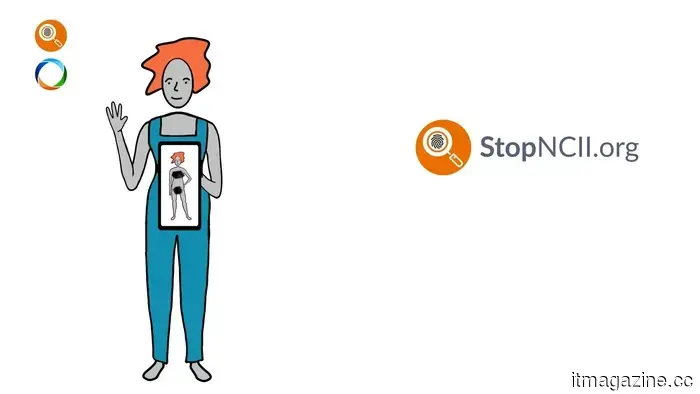
Many major platforms utilize an industry tool known as StopNCII to assist with this process. This tool employs matching algorithms to identify abusive images and flag duplicates across all participating platforms. Platforms such as Reddit, TikTok, Snap, Microsoft Bing, and Meta’s services, including Facebook, Instagram, and Threads, are included in this initiative. Additionally, you can open a case directly on the StopNCII website to have your content added to their scanning database.
For minors, the National Center for Missing and Exploited Children provides a dedicated, one-step service to assist in the removal of explicit images. The FTC has also created a specific website to report platforms that fail to remove content.
How to report nonconsensual intimate imagery on major platforms?
Here’s a brief guide on how to request the removal of nonconsensual intimate images from major platforms, along with direct links for reporting.
Google and YouTube: Google provides a specific takedown request form that allows the submission of up to ten links simultaneously. There is also a separate form specifically for YouTube content.
Meta (Facebook, Instagram, Threads): Meta states that it has been compliant for several months. Detailed instructions for submitting removal requests across Facebook, Instagram, Threads, and Meta AI can be found on Meta’s help page.
TikTok: A dedicated form is integrated with the in-app reporting tool, accessible via the Share button on any post.
Bumble: You can complete a form in its help center for reporting. The company assures that all reports are reviewed promptly.
Reddit: Logged-in users can directly report individual posts by clicking the Report button on the post and selecting “Non-consensual intimate media.”
Snap: Snapchat offers a general reporting form where users can flag nonconsensual or threatened leaks of intimate imagery, including AI-generated content.
Roblox: Removal requests can be submitted via the ‘Report Abuse’ menu or through a form located in its help center.
Epic Games: Visit Epic’s illegal content reporting form, select “Cyber violence” or “Cyber violence against women,” and then choose the relevant nonconsensual imagery option.
LinkedIn: Anyone, even those without an account, can submit a removal request through LinkedIn’s Help Center.
Walmart: Sellers on Walmart’s platform can upload images, making them subject to the Take It Down Act. A dedicated removal request form is available

Other articles
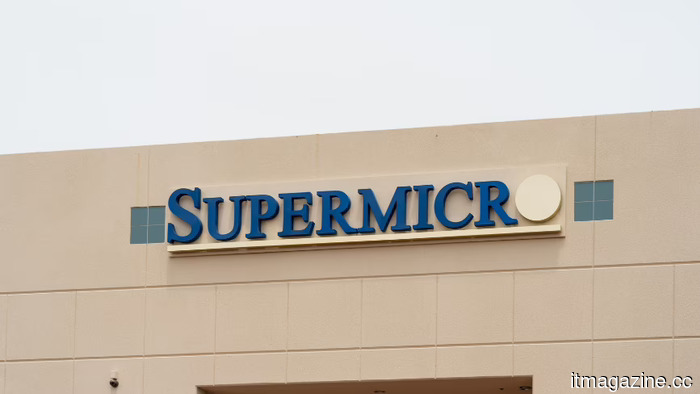 Taiwan takes steps to detain three individuals for purportedly exporting high-end AI servers to China illegally.
Prosecutors in Taiwan are aiming to detain three people, among them Yih-Shyan 'Wally' Liaw, a co-founder of Supermicro, due to alleged use of counterfeit documents to export advanced Nvidia AI chips to China.
Taiwan takes steps to detain three individuals for purportedly exporting high-end AI servers to China illegally.
Prosecutors in Taiwan are aiming to detain three people, among them Yih-Shyan 'Wally' Liaw, a co-founder of Supermicro, due to alleged use of counterfeit documents to export advanced Nvidia AI chips to China.
 Grok's federal delay is undermining the growth narrative of SpaceX's IPO.
Elon Musk's Grok has not succeeded in turning its GSA OneGov agreement into acceptance among federal agencies, as downloads decreased from 20 million in January to 8.3 million in April.
Grok's federal delay is undermining the growth narrative of SpaceX's IPO.
Elon Musk's Grok has not succeeded in turning its GSA OneGov agreement into acceptance among federal agencies, as downloads decreased from 20 million in January to 8.3 million in April.
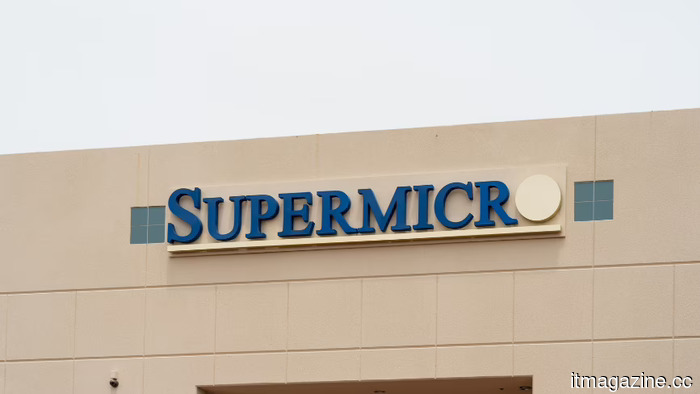 Taiwan takes action to detain three individuals for purportedly exporting high-end AI servers to China in violation of regulations.
Prosecutors in Taiwan are pursuing the detention of three people, including Supermicro co-founder Yih-Shyan 'Wally' Liaw, for allegedly using counterfeit documents to export advanced Nvidia AI chips to China.
Taiwan takes action to detain three individuals for purportedly exporting high-end AI servers to China in violation of regulations.
Prosecutors in Taiwan are pursuing the detention of three people, including Supermicro co-founder Yih-Shyan 'Wally' Liaw, for allegedly using counterfeit documents to export advanced Nvidia AI chips to China.
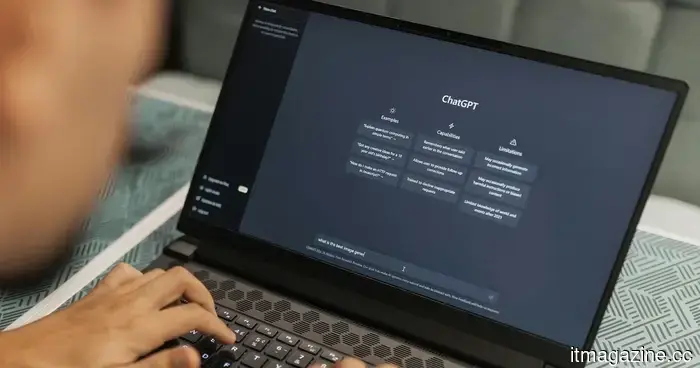 Studies indicate that educational institutions should be cautious about relying heavily on AI text detectors.
Researchers at UF evaluated the five leading AI text detectors and discovered that false negative rates reached up to 99.6%. A minor adjustment in vocabulary was enough to completely bypass the majority of these detectors.
Studies indicate that educational institutions should be cautious about relying heavily on AI text detectors.
Researchers at UF evaluated the five leading AI text detectors and discovered that false negative rates reached up to 99.6%. A minor adjustment in vocabulary was enough to completely bypass the majority of these detectors.
 Grok’s delay at the federal level is hindering SpaceX’s IPO growth narrative.
Elon Musk's Grok has struggled to turn its GSA OneGov agreement into actual usage by federal agencies, as downloads declined from 20 million in January to 8.3 million in April.
Grok’s delay at the federal level is hindering SpaceX’s IPO growth narrative.
Elon Musk's Grok has struggled to turn its GSA OneGov agreement into actual usage by federal agencies, as downloads declined from 20 million in January to 8.3 million in April.
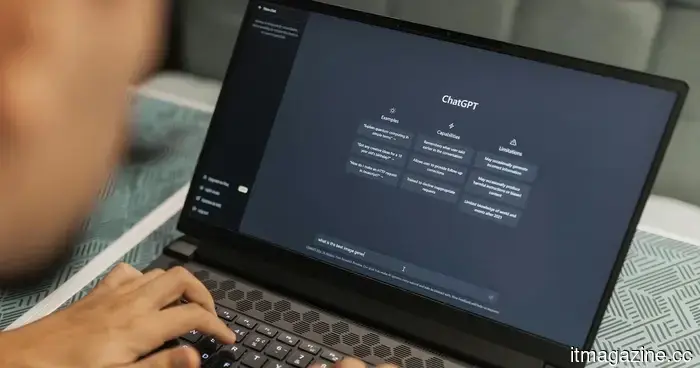 Studies indicate that educational institutions should not overly rely on AI text detectors.
Researchers at UF evaluated the five leading AI text detectors and discovered that the false negative rates could be as high as 99.6%. A minor adjustment in vocabulary was sufficient to bypass the majority of these detectors.
Studies indicate that educational institutions should not overly rely on AI text detectors.
Researchers at UF evaluated the five leading AI text detectors and discovered that the false negative rates could be as high as 99.6%. A minor adjustment in vocabulary was sufficient to bypass the majority of these detectors.
You can legitimately request apps to remove your nudes, provided you can successfully navigate the process.
The Take It Down Act is now fully implemented, granting victims the legal authority to have nonconsensual intimate images removed within 48 hours.