
Studies indicate that educational institutions should be cautious about relying heavily on AI text detectors.
A study from the University of Florida indicates that these tools are so unreliable that the entire foundation for claims regarding AI-generated academic writing may need to be reassessed entirely.
Here’s an unsettling consideration for academic institutions that currently employ AI detectors to monitor submissions from students and researchers: these tools are not as effective as institutions believe.
Research presented at the recent 2026 IEEE Symposium on Security and Privacy by University of Florida researchers asserts that commercially available AI-generated text detectors are “poorly suited for deployment in academic or high-stakes contexts.”
This is a diplomatic way of saying that universities are making significant career-impacting decisions based on results from inherently unreliable tools.
What were the findings of the research?
Patrick Traynor, Ph.D., a professor and interim chair of UF’s Department of Computer & Information Science & Engineering, led a team that evaluated the five most widely used commercial AI text detectors.
The team used approximately 6,000 research papers accepted at leading security conferences prior to the emergence of ChatGPT, tasked Language Learning Models (LLMs) with generating copies of those papers, and then assessed both sets with the AI detectors.
The findings revealed false positive rates between 0.05% and 68.6%, and, even more surprisingly, false negative rates from 0.3% to 99.6%. The upper end of this range is nearly 100%, indicating that the least effective detector failed to identify almost all AI-generated text.
While two of the five detectors initially performed adequately, their effectiveness diminished significantly when the researchers prompted the LLM to alter its outputs using more sophisticated language (the paper refers to this as a lexical complexity attack).
Why is this issue significant beyond academic integrity?
Traynor expressed it succinctly: “We really can’t use them to adjudicate these decisions. People’s careers are on the line here.” An accusation of AI-generated writing in a submission can irreparably damage a researcher’s reputation, yet relying on tools that make such accusations is perilous.
The assertion is that the evidence surrounding widespread AI involvement in academic writing is itself dubious. “For every study claiming a specific percentage of academic work is AI-generated, we actually lack tools to assess any of that,” Traynor noted.
His research not only critiques the tools but also highlights a systemic failure of due diligence by institutions that have implemented these tools without requiring proof of their accuracy.




Other articles
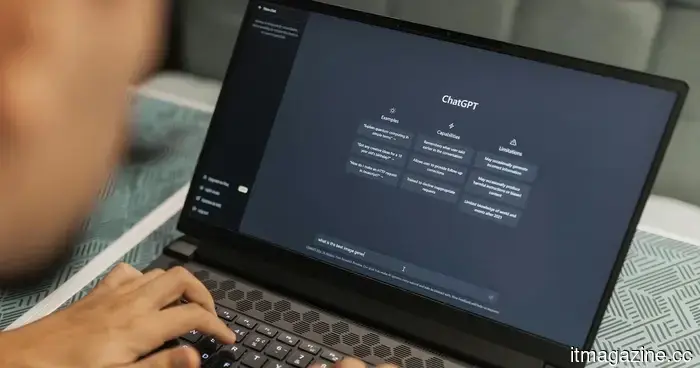 Studies indicate that educational institutions should not overly rely on AI text detectors.
Researchers at UF evaluated the five leading AI text detectors and discovered that the false negative rates could be as high as 99.6%. A minor adjustment in vocabulary was sufficient to bypass the majority of these detectors.
Studies indicate that educational institutions should not overly rely on AI text detectors.
Researchers at UF evaluated the five leading AI text detectors and discovered that the false negative rates could be as high as 99.6%. A minor adjustment in vocabulary was sufficient to bypass the majority of these detectors.
 Taiwan takes action to detain three individuals for purportedly exporting high-end AI servers to China in violation of regulations.
Prosecutors in Taiwan are pursuing the detention of three people, including Supermicro co-founder Yih-Shyan 'Wally' Liaw, for allegedly using counterfeit documents to export advanced Nvidia AI chips to China.
Taiwan takes action to detain three individuals for purportedly exporting high-end AI servers to China in violation of regulations.
Prosecutors in Taiwan are pursuing the detention of three people, including Supermicro co-founder Yih-Shyan 'Wally' Liaw, for allegedly using counterfeit documents to export advanced Nvidia AI chips to China.
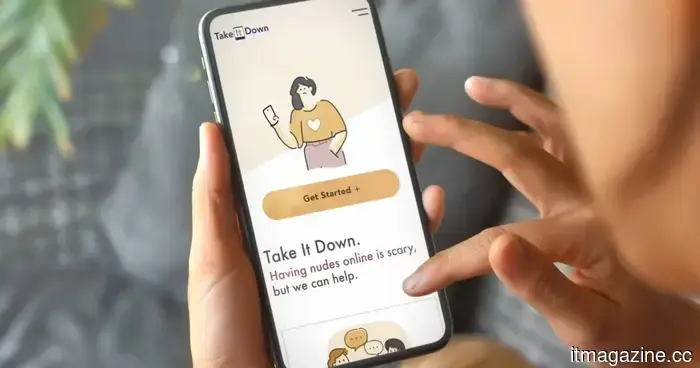 You can legitimately request apps to remove your nudes, provided you can successfully navigate the process.
The Take It Down Act is now fully implemented, granting victims the legal authority to have nonconsensual intimate images removed within 48 hours.
You can legitimately request apps to remove your nudes, provided you can successfully navigate the process.
The Take It Down Act is now fully implemented, granting victims the legal authority to have nonconsensual intimate images removed within 48 hours.
 Grok’s delay at the federal level is hindering SpaceX’s IPO growth narrative.
Elon Musk's Grok has struggled to turn its GSA OneGov agreement into actual usage by federal agencies, as downloads declined from 20 million in January to 8.3 million in April.
Grok’s delay at the federal level is hindering SpaceX’s IPO growth narrative.
Elon Musk's Grok has struggled to turn its GSA OneGov agreement into actual usage by federal agencies, as downloads declined from 20 million in January to 8.3 million in April.
 Grok's federal delay is undermining the growth narrative of SpaceX's IPO.
Elon Musk's Grok has not succeeded in turning its GSA OneGov agreement into acceptance among federal agencies, as downloads decreased from 20 million in January to 8.3 million in April.
Grok's federal delay is undermining the growth narrative of SpaceX's IPO.
Elon Musk's Grok has not succeeded in turning its GSA OneGov agreement into acceptance among federal agencies, as downloads decreased from 20 million in January to 8.3 million in April.
 Taiwan takes steps to detain three individuals for purportedly exporting high-end AI servers to China illegally.
Prosecutors in Taiwan are aiming to detain three people, among them Yih-Shyan 'Wally' Liaw, a co-founder of Supermicro, due to alleged use of counterfeit documents to export advanced Nvidia AI chips to China.
Taiwan takes steps to detain three individuals for purportedly exporting high-end AI servers to China illegally.
Prosecutors in Taiwan are aiming to detain three people, among them Yih-Shyan 'Wally' Liaw, a co-founder of Supermicro, due to alleged use of counterfeit documents to export advanced Nvidia AI chips to China.
Studies indicate that educational institutions should be cautious about relying heavily on AI text detectors.
Researchers at UF evaluated the five leading AI text detectors and discovered that false negative rates reached up to 99.6%. A minor adjustment in vocabulary was enough to completely bypass the majority of these detectors.