
Malaysia has issued a statutory demand to TikTok due to shortcomings in content moderation.
The Malaysian Communications and Multimedia Commission (MCMC) has issued its first official enforcement action under Section 39 of the Online Safety Act 2025, targeting TikTok, which could face a maximum financial penalty of RM10 million if it does not present a viable moderation plan. According to a report by Reuters on Thursday, MCMC has formally demanded that TikTok address what regulators describe as a chronic inability to manage inappropriate content on its platform.
This demand represents the initial implementation of Section 39 under the Online Safety Act 2025, which has been effective since January 1, 2026. The context for this demand is the deemed-licensing framework first outlined by Bloomberg in December 2025, which requires large social media platforms with at least eight million users in Malaysia (including TikTok, Meta, Telegram, and WeChat) to operate as licensees under the Communications and Multimedia Act 1998.
The enforcement notice from MCMC in January 2026 triggered the statutory-duty framework. Section 39 of the Online Safety Act allows MCMC to impose a financial penalty of up to RM10 million on any non-compliant provider, which can be recovered as a civil debt. Communications Minister Fahmi Fadzil has been publicly escalating toward this enforcement for almost nine months. In a September 2025 report by Free Malaysia Today, he warned that TikTok "may face legal action for failing to address ongoing issues regarding content moderation." Regulators have specifically pointed out gaps in TikTok’s handling of Tamil-language live-streaming and short-form video moderation.
From January to August 2025, MCMC requested the removal of 86,732 videos from TikTok, achieving an 86% removal rate, leaving 10,730 videos that were not taken down. The new statutory demand requires TikTok to submit a formal moderation plan that includes measurable commitments regarding staffing and to demonstrate compliance within a defined timeframe. TikTok’s previous responses to MCMC have not satisfied the regulator, particularly concerning the number of Tamil and Malay language moderators managing content on TikTok Live and short-form videos.
During a September 2025 meeting, where Fahmi escalated the situation to a public threat, it was noted that this was the third such session in which TikTok did not provide numerical answers regarding moderator counts. The regulatory environment extends beyond Malaysia's specific demand; in the UK, Ofcom's enforcement of the Online Safety Act is imposing similar demands on TikTok, Roblox, Facebook, Instagram, Snapchat, and YouTube, with fines already issued ranging from £520,000 to £1.05 million against smaller non-compliant providers.
Additionally, a recent FTC complaint by Fairplay and the NCSE against Roblox in the US aligns with the broader movement toward holding platforms accountable, particularly in terms of child safety. As framed by Bloomberg, Malaysia has emerged as the most proactive Section 39-style regulator in Southeast Asia.
However, the demand does not clarify the exact timeframe TikTok has to submit the moderation plan, nor does it specify the exact incidents that prompted this formal demand, beyond the overall history of engagement sessions, or the precise financial penalty amount being considered within the RM10 million statutory limit. The report on Thursday marks the first clear test of this situation. TikTok's forthcoming response, due within the statutory timeframe, will be a crucial indication of how the deemed-licensing framework influences operational moderation commitments among major platforms engaging with Malaysian users.
Other articles
 Manus is targeting a $1 billion fundraising effort to facilitate its buyout from the Meta acquisition following a blockage from China.
Manus AI, the Singapore-based agentic-AI start-up at the heart of China's regulatory obstruction regarding Meta's over $2 billion acquisition in December, is considering a new funding round of up to $1 billion to support the unwinding process.
Manus is targeting a $1 billion fundraising effort to facilitate its buyout from the Meta acquisition following a blockage from China.
Manus AI, the Singapore-based agentic-AI start-up at the heart of China's regulatory obstruction regarding Meta's over $2 billion acquisition in December, is considering a new funding round of up to $1 billion to support the unwinding process.
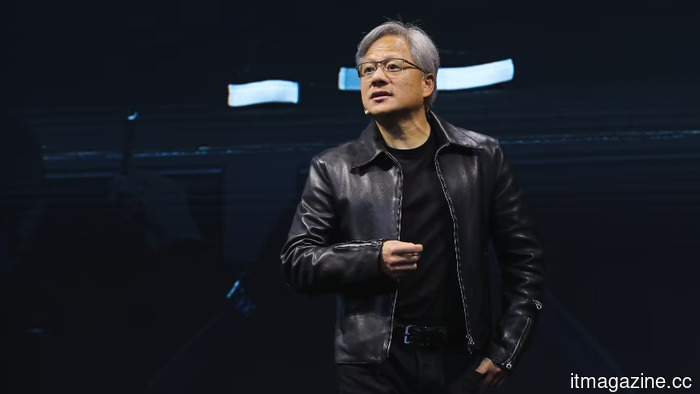 China halts imports of NVIDIA's RTX 5090D V2 while Jensen Huang visited Beijing.
On May 15, 2026, China halted the issuance of import permits for Nvidia's RTX 5090D V2, coinciding with CEO Jensen Huang's presence in Beijing with Donald Trump's state visit delegation.
China halts imports of NVIDIA's RTX 5090D V2 while Jensen Huang visited Beijing.
On May 15, 2026, China halted the issuance of import permits for Nvidia's RTX 5090D V2, coinciding with CEO Jensen Huang's presence in Beijing with Donald Trump's state visit delegation.
 Google's latest tool will eliminate the lengthy delay for iOS apps to be available on your Android device.
Google's Android Studio Migration Assistant can transfer iOS projects to native Android by converting features, assets, and interfaces via an automated workflow.
SpaceX submits S-1, paving the way for what could become the largest IPO in history.
SpaceX has submitted its S-1 prospectus to the US SEC, paving the way for what could become the biggest IPO in the history of financial markets.
Google's latest tool will eliminate the lengthy delay for iOS apps to be available on your Android device.
Google's Android Studio Migration Assistant can transfer iOS projects to native Android by converting features, assets, and interfaces via an automated workflow.
SpaceX submits S-1, paving the way for what could become the largest IPO in history.
SpaceX has submitted its S-1 prospectus to the US SEC, paving the way for what could become the biggest IPO in the history of financial markets.
 AMD has dedicated over $10 billion to support Taiwan's AI ecosystem, with ASE, SPIL, and Helios as the prominent outcomes.
AMD has revealed investments exceeding $10 billion in Taiwan's AI semiconductor sector, designating ASE and SPIL as its packaging partners, while the rack-scale Helios platform is planned for customer deployment in the second half of 2026.
AMD has dedicated over $10 billion to support Taiwan's AI ecosystem, with ASE, SPIL, and Helios as the prominent outcomes.
AMD has revealed investments exceeding $10 billion in Taiwan's AI semiconductor sector, designating ASE and SPIL as its packaging partners, while the rack-scale Helios platform is planned for customer deployment in the second half of 2026.
 Illuminate an entire fence for just $20: this 16-pack of solar lights is available at a 56% discount.
This article is presented in collaboration with AUDERWIN. The AUDERWIN solar fence lights are now priced at $20.99, a savings of $27: they are IP65 waterproof, offer three color temperature options, and require no wiring. The AUDERWIN solar fence lights have become a popular choice in the affordable outdoor lighting segment for a good reason, and the 16-pack is currently discounted to […]
Illuminate an entire fence for just $20: this 16-pack of solar lights is available at a 56% discount.
This article is presented in collaboration with AUDERWIN. The AUDERWIN solar fence lights are now priced at $20.99, a savings of $27: they are IP65 waterproof, offer three color temperature options, and require no wiring. The AUDERWIN solar fence lights have become a popular choice in the affordable outdoor lighting segment for a good reason, and the 16-pack is currently discounted to […]
Malaysia has issued a statutory demand to TikTok due to shortcomings in content moderation.
The Communications and Multimedia Commission of Malaysia has formally issued a Section 39 statutory demand to TikTok due to an ongoing inability to manage inappropriate content.