
Manus is targeting a $1 billion fundraising effort to facilitate its buyout from the Meta acquisition following a blockage from China.
Beijing has instructed the Singapore-based agentic AI startup to reverse Meta’s acquisition of over $2 billion from December. In response, Manus is reportedly seeking to raise the funds necessary to buy itself back. According to Bloomberg, Manus AI, the Singapore-headquartered agentic-AI startup at the center of the Chinese regulatory block on Meta’s acquisition, is considering a new capital raise of up to $1 billion to fund the reversal of the deal that was finalized just five months ago.
If successful, this capital raise would value Manus significantly above the $2 billion that Meta paid in December, essentially turning the reversal into a recapitalization. The acquisition Manus aims to reverse is atypical in its structure. In late April, China's National Development and Reform Commission (NDRC) mandated Meta to reverse the acquisition, citing potential violations of Chinese investment regulations and concerns over the outflow of strategically significant AI technology. Meta has been preparing for the reversal within a tight timeframe set by regulators.
The corporate history of Manus complicates the regulatory situation. The company was established in China and moved its headquarters and core team to Singapore last year following a US-led funding round, with the majority of its Chinese workforce let go and the operational entity renamed to Singapore-based Butterfly Effect. By the time Meta acquired Manus in December, the company was legally recognized as a Singapore entity. However, the NDRC maintains that the Chinese origin of the underlying technology and the team’s prior employment in China still subject the company to Chinese investment-review regulations.
Bloomberg’s report indicates that the new $1 billion raise would be utilized to buy back Meta’s interest, fund necessary data removal and separation for the unwind, and stabilize Manus as a standalone business for the upcoming operational year. Manus reportedly achieved a run rate exceeding $100 million ARR just eight months after launching its first general-purpose AI agent, forming its operational backbone.
Manus's valuation in the Meta deal suggested a roughly fourfold increase over the $500 million valuation established in the April 2025 round led by Benchmark. The broader geopolitical context ties into this situation; the NDRC’s decision serves as a prominent example of Beijing’s willingness to apply cross-border investment enforcement to Singapore-based companies with Chinese technology origins. Legal analyses by O’Melveny have highlighted this precedent as significant for any US-led AI deals involving target companies with Chinese roots, irrespective of their current incorporation location. This suggests that relocating to Singapore may no longer provide a straightforward solution to mitigate Chinese investment review risks.
For Manus, the capital raise positions the company to compete robustly within the agentic-AI sector while establishing a sufficiently strong balance sheet. The operational environment in Singapore is also becoming increasingly dynamic; for instance, OpenAI recently announced a $235 million applied AI lab in Singapore, and the city-state is positioning itself as the premier AI hub in the Asia-Pacific for Western-aligned and AI-sovereignty-conscious companies.
As of now, Manus has not disclosed the investors it is negotiating with for the $1 billion round or indicated a target timeline for the recapitalization. The news regarding the potential Manus raise marks the first public indication of how this financial endeavor might progress. The next critical update will come either through a formal funding announcement from Manus or a disclosure from Meta regarding the economic terms of the unwind, whichever occurs first within the NDRC’s deadline timeframe.
Other articles
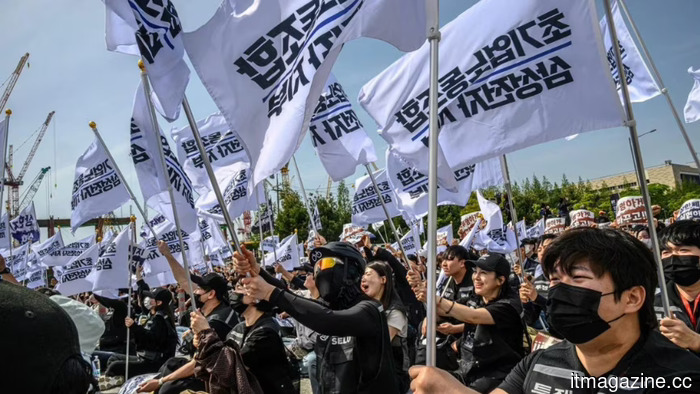 Samsung chip employees were presented with an average bonus of $340,000 while the union aims for a $1 million bonus and is considering an 18-day strike.
Samsung Electronics will provide its chip employees with an average bonus of approximately $340,000 for the year, while the union advocates for compensation nearer to $1 million per worker and gets ready for an 18-day strike.
Samsung chip employees were presented with an average bonus of $340,000 while the union aims for a $1 million bonus and is considering an 18-day strike.
Samsung Electronics will provide its chip employees with an average bonus of approximately $340,000 for the year, while the union advocates for compensation nearer to $1 million per worker and gets ready for an 18-day strike.
 Illuminate an entire fence for just $20: this 16-pack of solar lights is available at a 56% discount.
This article is presented in collaboration with AUDERWIN. The AUDERWIN solar fence lights are now priced at $20.99, a savings of $27: they are IP65 waterproof, offer three color temperature options, and require no wiring. The AUDERWIN solar fence lights have become a popular choice in the affordable outdoor lighting segment for a good reason, and the 16-pack is currently discounted to […]
Illuminate an entire fence for just $20: this 16-pack of solar lights is available at a 56% discount.
This article is presented in collaboration with AUDERWIN. The AUDERWIN solar fence lights are now priced at $20.99, a savings of $27: they are IP65 waterproof, offer three color temperature options, and require no wiring. The AUDERWIN solar fence lights have become a popular choice in the affordable outdoor lighting segment for a good reason, and the 16-pack is currently discounted to […]
 Starling's profit for FY26 declines once more as the neobank sets aside more funds for potential credit losses.
According to Bloomberg, Starling Bank's annual profit declined once more for the year ending 31 March 2026, as the UK neobank, supported by Goldman, set aside more provisions for expected credit losses related to its retail lending portfolio.
Starling's profit for FY26 declines once more as the neobank sets aside more funds for potential credit losses.
According to Bloomberg, Starling Bank's annual profit declined once more for the year ending 31 March 2026, as the UK neobank, supported by Goldman, set aside more provisions for expected credit losses related to its retail lending portfolio.
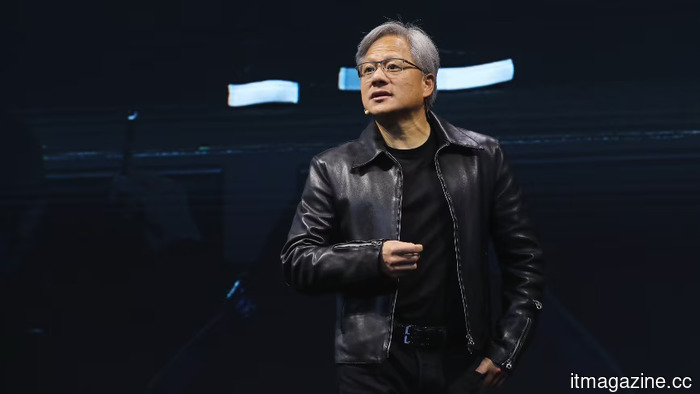 China has prohibited the import of NVIDIA's RTX 5090D V2 while Jensen Huang was present in Beijing.
On May 15, 2026, China ceased issuing import permits for Nvidia's RTX 5090D V2 during the same week that CEO Jensen Huang was in Beijing with Donald Trump's state-visit delegation.
China has prohibited the import of NVIDIA's RTX 5090D V2 while Jensen Huang was present in Beijing.
On May 15, 2026, China ceased issuing import permits for Nvidia's RTX 5090D V2 during the same week that CEO Jensen Huang was in Beijing with Donald Trump's state-visit delegation.
 Manus seeks to raise $1 billion to facilitate its buyout from the acquisition by Meta following a block from China.
Manus AI, the Singapore-based agentic-AI startup at the center of China's regulatory obstruction regarding Meta's over $2 billion acquisition in December, is considering a new funding round of up to $1 billion to support the unwinding process.
Manus seeks to raise $1 billion to facilitate its buyout from the acquisition by Meta following a block from China.
Manus AI, the Singapore-based agentic-AI startup at the center of China's regulatory obstruction regarding Meta's over $2 billion acquisition in December, is considering a new funding round of up to $1 billion to support the unwinding process.
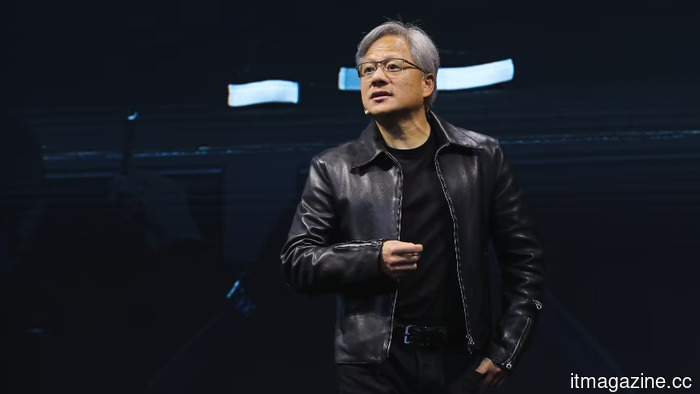 China halts imports of NVIDIA's RTX 5090D V2 while Jensen Huang visited Beijing.
On May 15, 2026, China halted the issuance of import permits for Nvidia's RTX 5090D V2, coinciding with CEO Jensen Huang's presence in Beijing with Donald Trump's state visit delegation.
China halts imports of NVIDIA's RTX 5090D V2 while Jensen Huang visited Beijing.
On May 15, 2026, China halted the issuance of import permits for Nvidia's RTX 5090D V2, coinciding with CEO Jensen Huang's presence in Beijing with Donald Trump's state visit delegation.
Manus is targeting a $1 billion fundraising effort to facilitate its buyout from the Meta acquisition following a blockage from China.
Manus AI, the Singapore-based agentic-AI start-up at the heart of China's regulatory obstruction regarding Meta's over $2 billion acquisition in December, is considering a new funding round of up to $1 billion to support the unwinding process.